

)
When you walk into a gym, one of the first decisions you may make is whether to spend a few minutes on the treadmill or hop onto a stationary bike before picking up the weights. Both can raise your heart rate, increase blood flow and prepare your body for exercise, but they do not affect your muscles in the same way. For someone planning a strength-training session, the purpose of those first 10 minutes should not be to exhaust yourself. Instead, the goal is to gradually warm up the body, loosen the joints and prepare the muscles and nervous system for the movements that follow. So, is 10 minutes of cycling better than 10 minutes on a treadmill before strength training? The answer depends largely on what you are training that day, your fitness level and how hard you perform the warm-up.
Why Warm-Up Matters Before Strength Training
Starting heavy resistance exercises when your body is completely cold can make the first few sets feel more difficult. A proper warm-up gradually increases body temperature and blood circulation while preparing your muscles and joints for movement. A warm-up can also give you an opportunity to rehearse the movement patterns you are about to perform. However, there is an important distinction between warming up and doing cardio training. If you spend 10 minutes sprinting on a treadmill or cycling at a very high resistance before lifting weights, you may enter your strength session already fatigued. That can affect the quality of your repetitions and potentially reduce the amount of weight or volume you can handle. The ideal pre-strength-training cardio session should therefore feel controlled rather than exhausting.
10 Minutes On The Treadmill
Walking on a treadmill is one of the simplest ways to warm up before strength training. A comfortable walk gradually increases your heart rate and body temperature without necessarily placing excessive stress on the muscles. You can increase the speed slightly or introduce a modest incline if walking at a normal pace does not feel challenging enough. Treadmill walking can be particularly useful before:
- Full-body workouts
- Upper-body training
- Chest workouts
- Back workouts
- Shoulder sessions
- General gym sessions
The treadmill also provides a weight-bearing activity, which means your body is supporting itself as you walk. However, if you increase the incline or speed significantly, your legs and glutes may begin to fatigue. This can be counterproductive if your next session involves heavy squats, lunges, deadlifts or other lower-body exercises.
What About 10 Minutes Of Cycling?
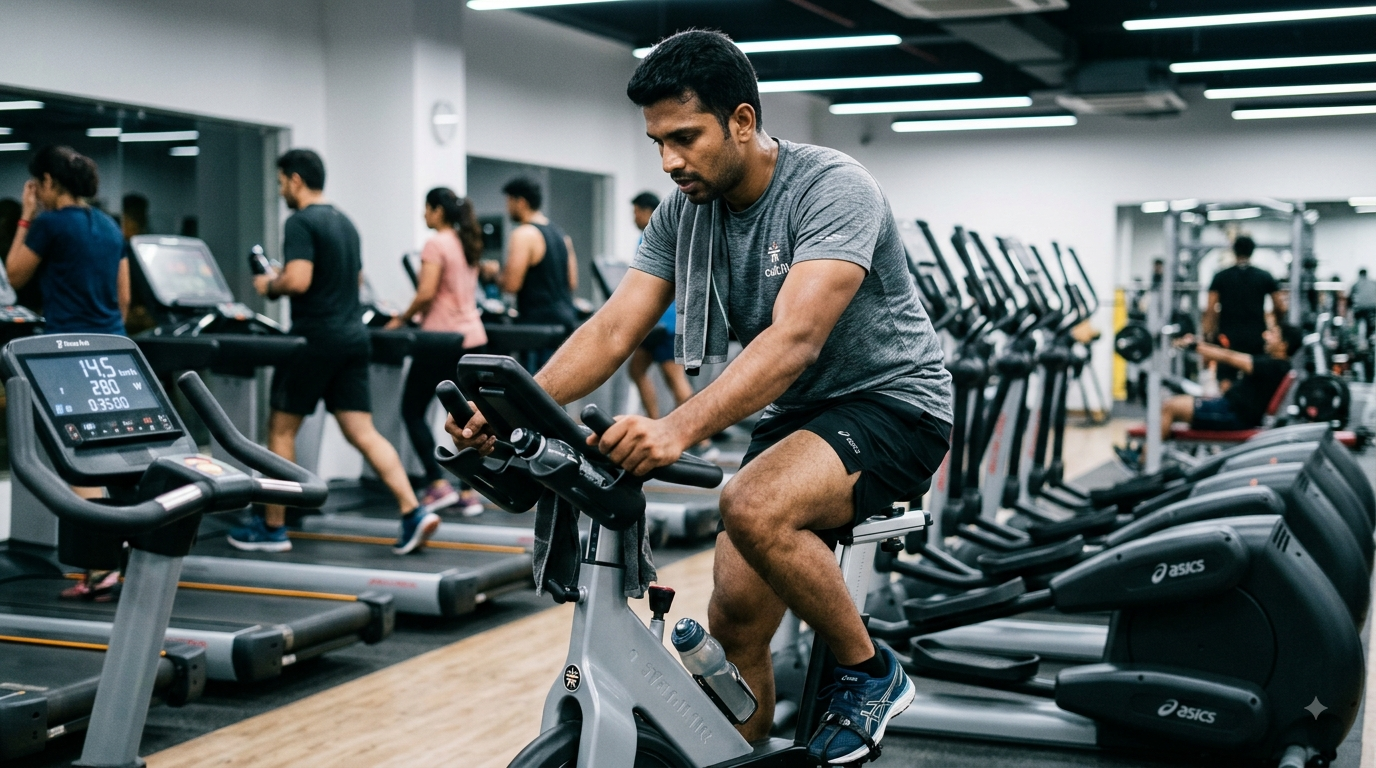
Cycling provides another effective way to raise your body temperature before lifting weights. Because you are seated, cycling generally produces less impact on the joints than running. This can make it a comfortable option for people who prefer lower-impact movement. It can also be particularly useful before a lower-body strength session when performed at a light-to-moderate intensity. The key, however, is resistance. Pedalling against very high resistance for 10 minutes can turn a warm-up into a mini leg workout. Your quadriceps, hamstrings and glutes may already be tired before you begin squats or leg presses. For a warm-up, choose a resistance that allows you to pedal comfortably while gradually increasing your heart rate.
Which One Is Better Before Strength Training?
There is no universal winner. If you are doing an upper-body workout, either option can work well because the primary goal is simply to raise your body temperature without tiring the muscles you are about to train. If you are doing a heavy leg workout, light cycling may be a comfortable option, particularly if you want a low-impact warm-up. However, keep the resistance low enough that your legs do not feel fatigued. Treadmill walking can also work well before leg day, provided you avoid turning the warm-up into a demanding cardio session. For someone preparing for a general full-body workout, the choice can simply come down to preference.
Don't Forget Dynamic Mobility
Ten minutes on a treadmill or bike should not necessarily be the entire warm-up. Cardio raises your overall body temperature, but it does not necessarily prepare every joint and muscle for the specific movements you are about to perform.
Adding a few minutes of dynamic movements can make your warm-up more specific to your workout. For example, before a lower-body session, you could include controlled bodyweight squats, hip movements and leg swings. Before an upper-body workout, shoulder circles, arm movements and light resistance-band exercises may help prepare the relevant muscles and joints. The exact warm-up should depend on the exercises you plan to perform.
Should You Do Your Heaviest Sets Immediately?
If your first major exercise is a heavy squat, bench press or deadlift, performing a few lighter warm-up sets can help prepare your body for the working weight. For example, rather than immediately attempting your heaviest weight, gradually increase the resistance through several controlled sets. This allows you to practise your technique and assess how your body feels before reaching your working weight.
Avoid Turning Your Warm-Up Into A Workout
One of the most common mistakes is assuming that a harder warm-up is automatically a better warm-up. If your goal is strength, you want to arrive at your main lifts feeling prepared not exhausted. Ten minutes of moderate treadmill walking may be more useful than 10 minutes of intense running. Similarly, easy cycling may be preferable to cycling against maximum resistance. Signs that you may be doing too much include heavy breathing, burning muscles, unusual fatigue or feeling that your legs are already tired before your strength session begins.
What If Your Goal Is Weight Loss?
If your primary goal is losing body fat, both cycling and treadmill walking can contribute to your overall physical activity. However, the few minutes you spend warming up should not be viewed as the main driver of fat loss. Your overall calorie intake, daily movement, resistance training, sleep and dietary habits have a much larger influence on your long-term results. Strength training is particularly valuable during weight loss because maintaining muscle mass is an important part of achieving a healthier body composition. You can therefore use the treadmill or bike as a warm-up without worrying about which machine burns slightly more calories during those 10 minutes.
There is no clear winner between 10 minutes of cycling and 10 minutes on the treadmill before strength training. Both can effectively prepare your body when performed at an appropriate intensity. Choose the treadmill if you enjoy walking and want a simple, weight-bearing warm-up. Choose cycling if you prefer lower-impact movement or find the bike more comfortable. Most importantly, keep the intensity moderate. The purpose of a pre-workout warm-up is to prepare your body for strength training, not to drain your energy before you start lifting. A few minutes of easy cardio followed by workout-specific dynamic movements and lighter warm-up sets can be a more effective approach than simply trying to sweat as much as possible before touching the weights.
Disclaimer: This content including advice provides generic information only. It is in no way a substitute for a qualified medical opinion. Always consult a specialist or your own doctor for more information. NDTV does not claim responsibility for this information.