





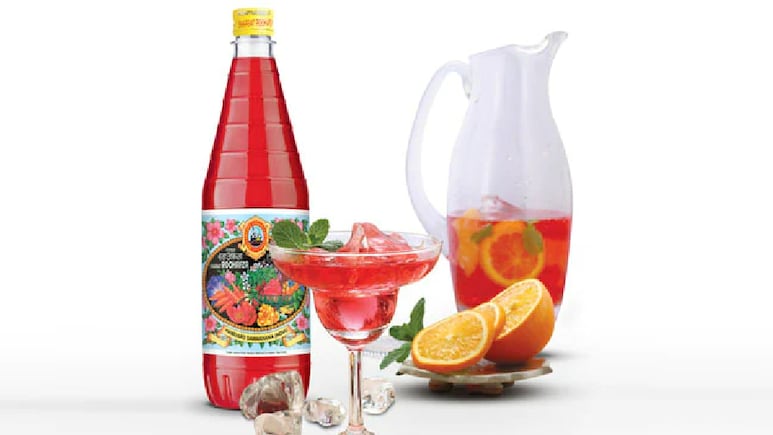
In a major tax relief for Hamdard Laboratories, the Supreme Court on Wednesday held that Sharbat Rooh Afza cannot be pushed into a higher tax bracket simply because it is marketed as a "sharbat."
At the centre of the dispute was whether Rooh Afza - which contains 10 per cent fruit juice (8 per cent pineapple and 2 per cent orange) blended with invert sugar syrup and herbal distillates - could legally be categorised as a "fruit drink" or whether it should fall under the residuary category meant for goods not specifically classified elsewhere.
For licensing purposes, the product had been described as a "non-fruit syrup containing 10% fruit juice", since it did not meet the higher fruit content threshold prescribed under food safety norms for a "fruit syrup".
Also Read: After Pune Success, Swiggy Launches 'Toing' In Delhi-NCR For Ordering Affordable Meals
A bench of Justices BV Nagarathna and R Mahadevan noted that the drink derives its beverage identity from fruit-based ingredients and is intended for dilution and consumption. The court held that Rooh Afza would qualify as a "fruit drink" under the relevant taxation law.
Allowing a batch of appeals filed by Hamdard (Wakf) Laboratories, the manufacturer of Rooh Afza, the top court set aside the 2018 judgments of the Allahabad High Court and tax authorities. The High Court had upheld the classification of the product as an "unclassified" item taxable at 12.5 per cent under the residuary entry of the Uttar Pradesh Value Added Tax (UPVAT) Act.
The Supreme Court instead ruled that Rooh Afza is classifiable under Entry 103 of Schedule II (Part A) of the UPVAT Act as a "fruit drink/processed fruit product", attracting a concessional VAT rate of 4 per cent for the assessment period between January 1, 2008 and March 31, 2012.
Also Read: Startup Delivers Pitch To Venture Firm On Massive Cake To Secure Investment, Impresses Internet
The revenue authorities had relied on a clarification issued under food safety regulations stating that a "fruit syrup" must contain at least 25 per cent fruit juice.
Since Rooh Afza contains only 10 per cent, the department argued it could not be treated as a fruit drink for tax purposes.
Rejecting this argument, the Supreme Court made it clear that regulatory classification under food safety law cannot determine fiscal interpretation unless the taxing statute expressly adopts such definitions.
Track Latest News Live on NDTV.com and get news updates from India and around the world

