





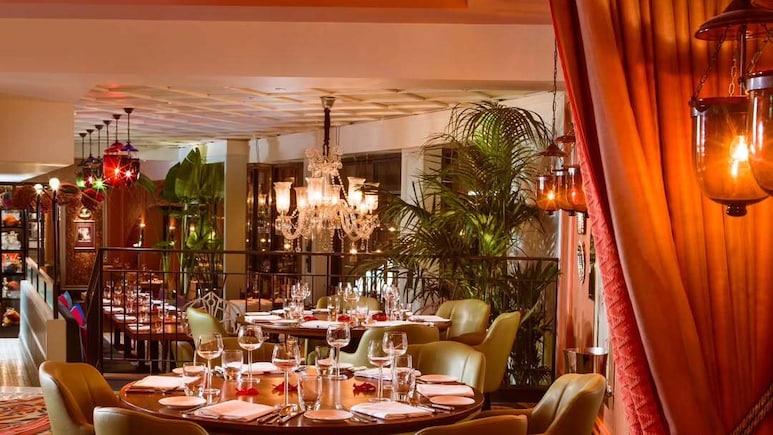
A public petition urging King Charles III to lend his moral support has brought renewed attention to the uncertain future of Veeraswamy, Britain's oldest surviving Indian restaurant. The campaign has drawn thousands of signatures and widespread media coverage, turning what began as a commercial lease dispute into a national conversation. Supporters argue that Veeraswamy is not just another restaurant on London's most famous shopping street, but a cultural institution worth preserving. Founded in 1926, Veeraswamy has occupied the same corner of Regent Street for almost 100 years. Established by Edward Palmer, a former Anglo-Indian army officer, the restaurant was conceived as a refined introduction to Indian cuisine for British diners at a time when such food was still unfamiliar to most of London.
Over the decades, its richly decorated interiors and formal dining style helped position Indian food as something that could sit comfortably alongside European fine dining. Veeraswamy's dining rooms became known not just for their curries but for their sense of occasion, attracting diplomats, politicians, visiting dignitaries and generations of loyal regulars. In more recent years, the restaurant's reputation was reinforced when it received a Michelin star, underlining its continued relevance in a crowded and competitive dining scene.
A Lease Dispute That Triggered Alarm
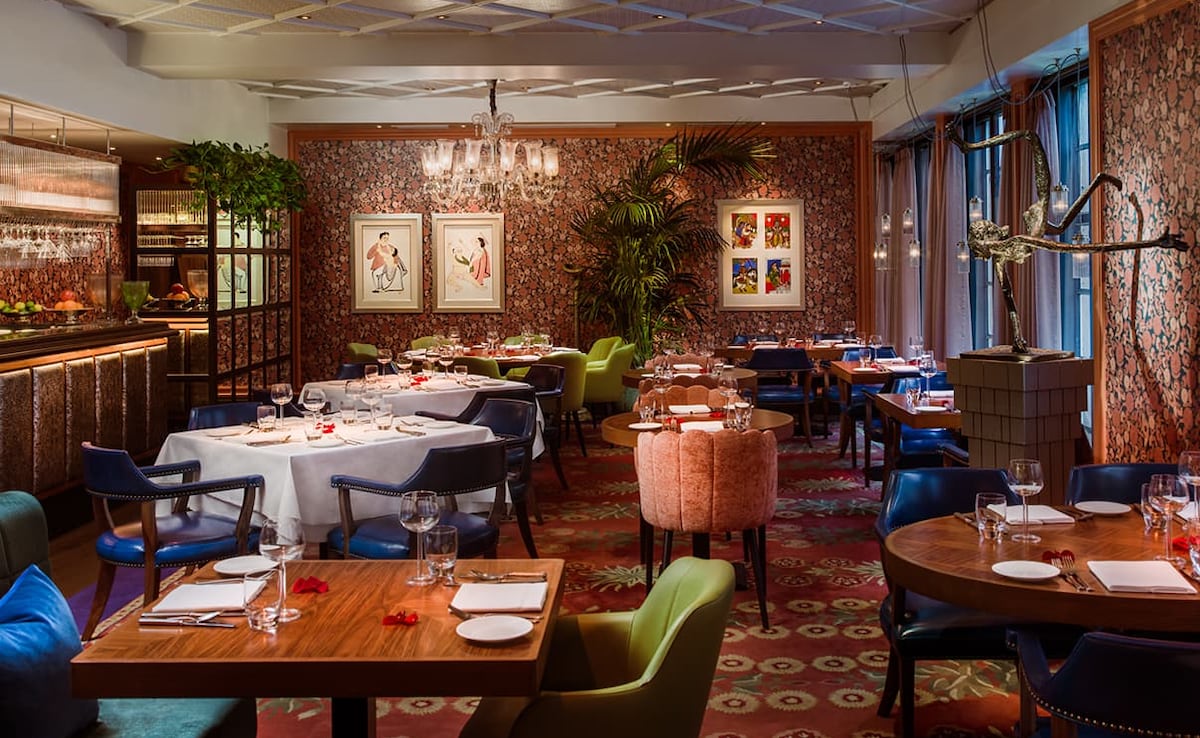
The immediate threat to Veeraswamy's future stems from a dispute with its landlord, the Crown Estate, which owns the Regent Street building where the restaurant is located. The Crown Estate has said it plans to reconfigure the property to better support office use on the upper floors. Veeraswamy's owners have challenged the decision through the courts, arguing that the proposed redevelopment would effectively end a historic business that has traded continuously from the site for generations.
In the online petition, the owners state, "The Crown Estate, which owns the building, is seeking to reclaim the restaurant's small ground-floor entrance - just 11 square metres - making the mezzanine-level dining room inaccessible. This would force Veeraswamy to shut down. The rationale is tied to building refurbishment, but practical alternatives exist that would allow the restaurant to remain, without hindering the wider development."
Why Chefs And Restaurateurs Have Spoken Out
The prospect of closure has prompted a vocal response from Britain's restaurant community. Prominent chefs and restaurateurs have signed open letters and public appeals warning that the loss of Veeraswamy would represent more than a single business failure. For many in the industry, the restaurant is seen as a foundational reference point. This support has helped push the story beyond hospitality circles and into wider public debate.
Heritage Versus Commercial Reality
At the heart of the dispute is a familiar urban tension. Regent Street is among the most valuable retail and commercial corridors in the world, and landlords face strong pressure to maximise returns through redevelopment. From that perspective, the Crown Estate has argued that it must manage its portfolio responsibly and adapt buildings to modern commercial needs.
Campaigners counter that Veeraswamy represents a different kind of value: one that cannot be measured solely in rent or floor space. They describe it as a living archive of Anglo-Indian dining. In their view, removing the restaurant from its historic site would sever that story from its physical setting.
Why The Petition Targets The King
The King does not personally own or control the Crown Estate, nor does he have the legal authority to intervene in commercial leasing decisions. Instead, the petition is aimed at the monarch's symbolic role. As a long-time advocate for heritage, architecture and community institutions, King Charles is seen as someone whose concern could encourage all sides to reconsider their positions.
Beyond the legal arguments and petitions, Veeraswamy's story highlights how a single restaurant on Regent Street holds nearly a century of changing tastes, shifting power dynamics, and evolving ideas of what British food culture includes.
Track Latest News Live on NDTV.com and get news updates from India and around the world

