




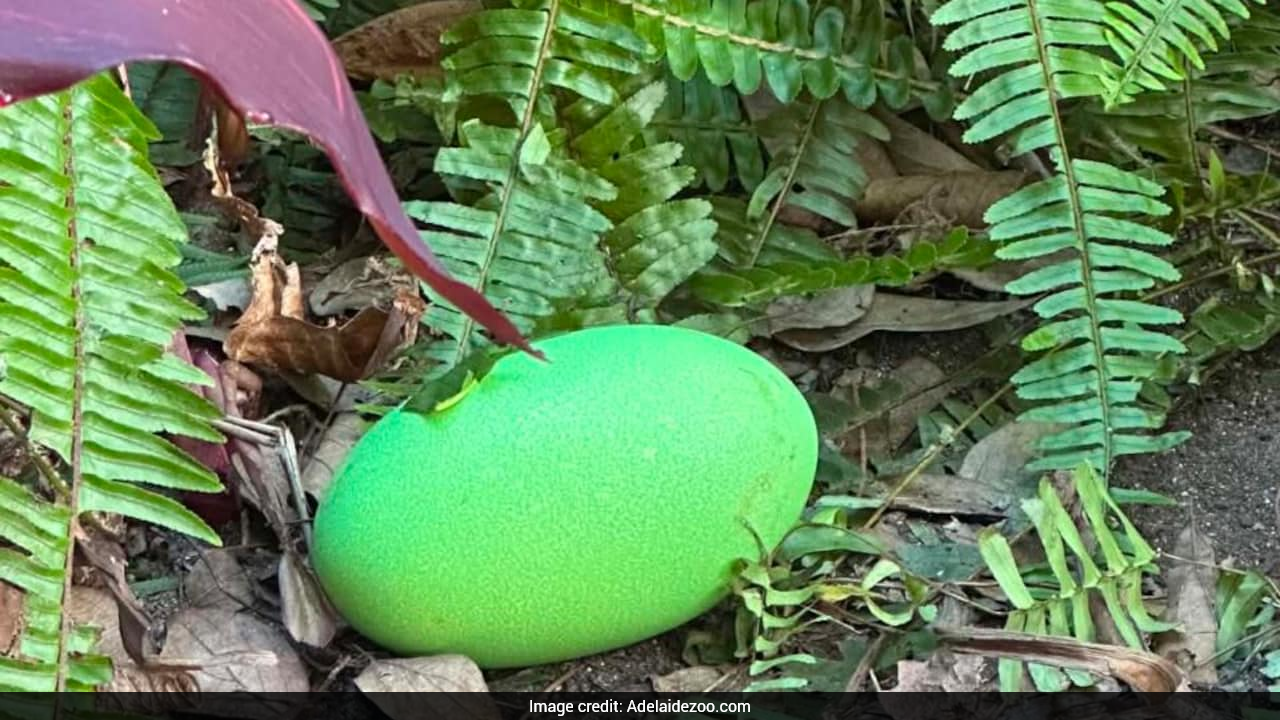
Keepers at an Australian zoo are celebrating a major milestone after welcoming their first cassowary egg in over three decades. According to details shared by the official website of the zoo, the bright, neon-green egg was laid by Martina, a 10-year-old female Southern cassowary, alongside a 13-year-old male named Jeffrey. Zookeepers say it marks the first time cassowary eggs have been produced at the facility since 1992, ending a long 34-year wait.
Apart from its rare appearance, the egg stood out because of its striking, fluorescent green colour. According to the experts, the unusual shade comes from biliverdin, a natural pigment commonly found in bird eggshells.
-

-
 Best Of NDTV World Summit 2026 | Defining Conversations, Big Ideas
-
 PM Modi Says 'Parasite' Congress Hurts 'Honest' Dissent Movements
-
 "Some Dreaming Of Disorder": PM Modi's Dig At Rahul Gandhi
-
 PM Modi Highlights India's Firsts: Fast Breeder Reactor, Hydrogen Train, Asian Games Medals
-
 "UN's Limits Clearly Visible": PM Modi Presses For 'New Solutions' At NDTV Summit
-
 "World That Relied On India's Brainpower Now Trusts Its Mindpower": PM Modi
-
 Non-Oil Trade With India Went Up 50% In 3 Years: UAE Minister At NDTV Summit
-
 "Some Dreaming Of Disorder": PM's "Failed Product Of Congress" Jibe At Rahul Gandhi
-
 'Viksit Bharat Not Just For Us': PM Modi's Top Quotes At NDTV World Summit
-
 Has Indian Cuisine Arrived At The Global Stage? What Vir Sanghvi Believes
In the wild, this vibrant colour serves a practical purpose for survival. Because cassowaries build their nests on the forest floor, the bright green colour acts as camouflage, helping the eggs blend into the surroundings and stay hidden from hungry predators.
Also read | Tricked By Fake Lottery On Facebook, 71-Year-Old In Singapore Loses Rs 16 Lakh Savings
Erin, Team Supervisor Birds and Free Flight, said that the team was thrilled after discovering the egg. "This is really exciting news for us because it has been 34 years since we've had successful cassowary chicks here at Adelaide Zoo, so the team and myself included are very excited," Erin said, as quoted by the zoo website.
"Martina and Jeffrey have only been paired since August this year, and this is the first time they've ever been put together."
Native to the dense rainforests of Australia and nearby regions, cassowaries are massive, flightless birds often called some of the closest living relatives to dinosaurs.
Also read | Butter Chicken-Stuffed Idli Sparks 'Outrage' Online, Internet Calls It 'Culinary Crime'
Interestingly, once the eggs are laid, the mother leaves the duties behind, letting the father take over incubation and chick-rearing responsibilities entirely.
The website added that the Southern Cassowaries are generally solitary birds and can be aggressive towards one another outside breeding season.
Hence, it was extremely difficult for the team to monitor the pair before deciding the time was right for an introduction.
The zoo officials further noted that the breeding recommendation came through the managed programme for the species. After that, the keepers closely watched Martina and Jeffrey.
"We were really watching their behaviours to make sure that we paired them at the right time," Erin said.
"We were looking for things like vocalisations - a low rumble or boom call - and whether they were more tolerant of eating near each other.
"We removed parts of the shade cloth between them and put their food alongside each other at the fence line so we could watch how comfortable they were around one another."
Track Latest News Live on NDTV.com and get news updates from India and around the world

