





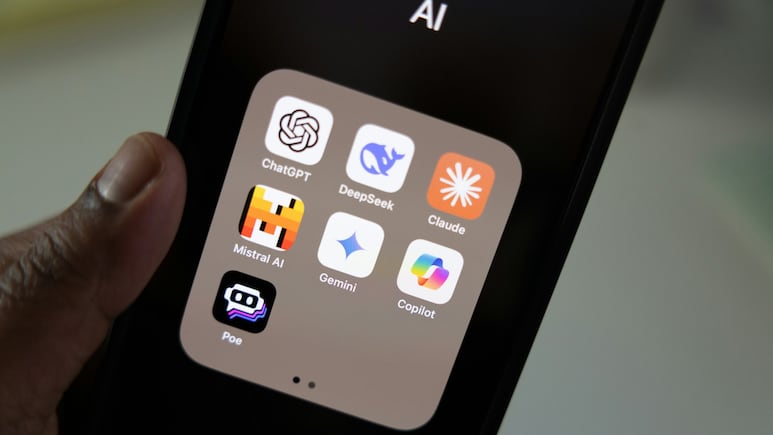
Three Indian-origin cybersecurity researchers used Anthropic's Claude AI to exploit vulnerabilities in OpenAI's systems and gain access to employee accounts and a private software repository, according to media reports. The researchers, Mohan Pedhapati, Harsh Jaiswal and Rahul Maini, are part of cybersecurity startup Hacktron AI. They were testing OpenAI's systems as part of its bug bounty programme, which rewards researchers for finding and reporting security vulnerabilities. The Wall Street Journal reported that the team managed to chain two vulnerabilities together and reach OpenAI's internal systems in less than 72 hours.
How the researchers got into OpenAI
The research began with OpenAI's community forum, which runs on third-party software called Discourse. The researchers found a vulnerability linked to the way the software processed certain image files.
They used Anthropic's Claude to help develop an exploit for the vulnerability. According to The Wall Street Journal, Claude Opus 5 helped the researchers turn their findings into working exploit code after an earlier attempt with an older version of the model had failed. The researchers then used the vulnerability to gain remote access to OpenAI's Discourse environment.
From there, the researchers found another weakness involving OpenAI's single sign-on system. This allowed them to obtain authentication information linked to ChatGPT and Codex accounts belonging to OpenAI employees.
Quartz reported that the researchers then used one of the compromised employee accounts to gain access to OpenAI's private GitHub environment. The account was connected to GitHub through the company's sign-on system, creating a route into an internal repository.
Access to private code repository
The researchers were able to demonstrate that they could reach OpenAI's internal code repository. However, they did not download or examine the company's source code.
Instead, they used an employee's Codex account to submit a pull request to the private repository. This served as proof that the researchers had gained access.
Quartz reported that the researchers said the potential scope of the access was significant, but they stopped short of retrieving files from the repository. OpenAI subsequently fixed the vulnerabilities and revoked affected access.
The incident also shows how AI is changing cybersecurity research. According to Quartz, the researchers completed the operation in under 72 hours and spent less than $3,000 on AI tokens. OpenAI paid Hacktron AI a $6,500 bug bounty after the vulnerabilities were reported.
Claude was not the only AI tool used
While Claude played an important role in helping the researchers develop the initial exploit, it was not responsible for the entire operation.
Quartz reported that Hacktron used OpenAI's own GPT-5.6 Sol model for much of the subsequent work after Claude helped get the operation started. This means the incident involved multiple AI tools being used by human researchers rather than an autonomous AI independently attacking OpenAI.
The Wall Street Journal has reported the incident as part of a growing series of cases highlighting the cybersecurity risks and capabilities of increasingly powerful AI systems.
Track Latest News Live on NDTV.com and get news updates from India and around the world

