





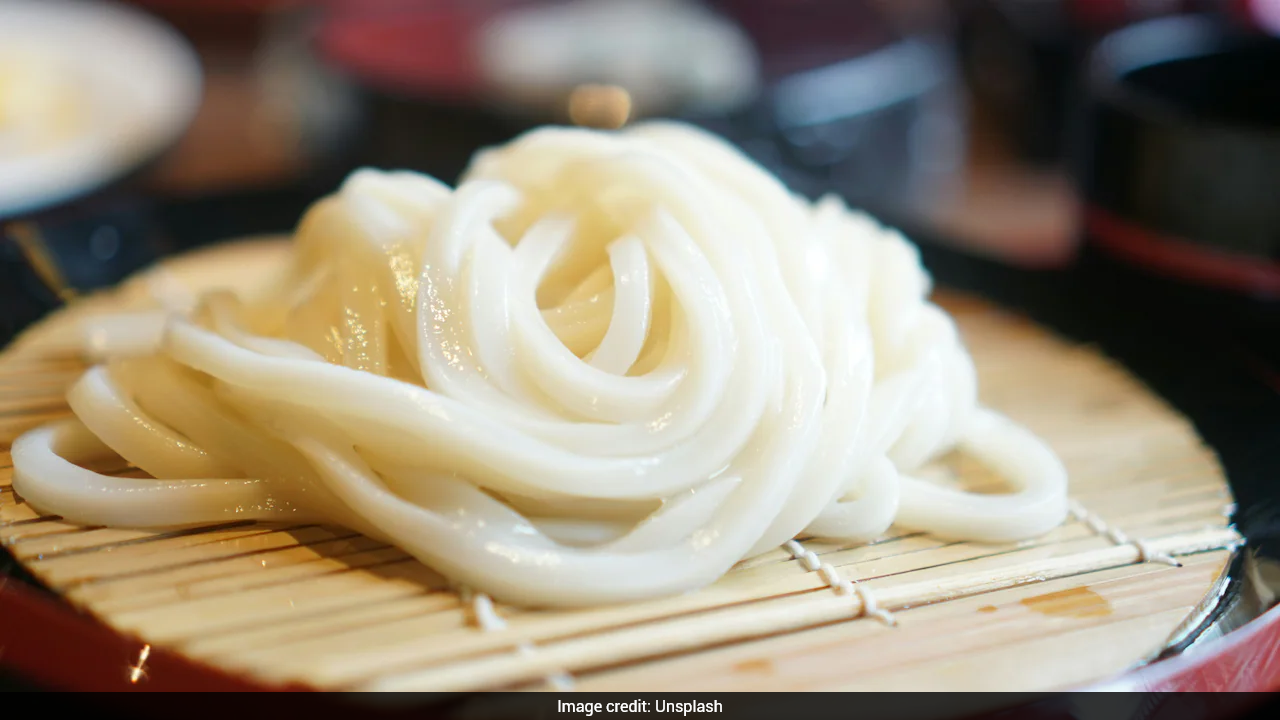
Japanese researchers have managed to convert waste noodles into biodegradable paper, giving these soggy, discarded udon a second life, Japan Today reported. Professor Naotaka Tanaka of Kagawa University's Faculty of Agriculture developed the project. He established the technology by applying research into microorganisms and cellulose-producing bacteria.
"With large amounts of udon noodles being discarded in Kagawa Prefecture, I thought repurposing them could help reduce food waste," Tanaka said as quoted. "The process of converting discarded udon into sugar was relatively simple, so I decided to put the idea into practice."
Also read | Boss Gives Employee Extra Day Off After 10-Day Leave To "Settle In", Internet Reacts
The team has developed a method to recycle waste udon noodles, which are common in the region known as Japan's udon capital," into a type of biodegradable paper.
Instead of sending expired or uneaten noodles to landfill, they're broken down, processed with plant fibres, and pressed into sheets.
The resulting paper is sturdy enough for everyday use and breaks down naturally, unlike conventional paper made with heavy chemical processing. It also helps cut food waste from noodle shops and factories that often have surplus stock.
Also read | Bengaluru Couple Gives Inside Tour Of Their Rs 60,000 Rent Society, Internet Says "Worth The Money"
Kagawa produces a huge volume of udon, so turning the leftovers into a usable material tackles problems of waste and resource use simultaneously. Researchers say the paper could be used for packaging, bags, or stationery, with more testing underway to expand applications.
It's a practical example of the circular economy in action, which proves that even lunch leftovers can be reimagined as something useful.
"I wanted to contribute to society by making use of the region's unique characteristics," he said. "I hope the initiative can serve as a model for reducing food waste."
Track Latest News Live on NDTV.com and get news updates from India and around the world

