The problem with saying goodbye to something that has lived rent-free in pop culture for nearly a decade is that everyone arrives at the farewell carrying wildly different expectations.
Some want devastation. Some want comfort. Some want a mic-drop moment that redefines television history. And some just want to see a group of kids who once pedalled through Hawkins on bicycles make it out alive.
The Stranger Things finale understands this chaos of emotion, even if it doesn't always know how to tame it.
By the time the final chapter rolls in, Stranger Things is no longer the scrappy nostalgia experiment it once was. It is a global behemoth, a Netflix crown jewel, a show that outgrew its small-town horror roots somewhere between mixtape needle drops and monster mythology flowcharts.
The finale leans into that weight unapologetically. It's big, loud, sentimental, frequently indulgent and unmistakably final. Whether that finality feels daring or safe depends largely on what you wanted from it.
The plot, without giving anything away, picks up exactly where things left off and wastes no time diving into its endgame. The central conflict is clear, the stakes are theoretically sky-high, and the show commits to stretching its climax across an expansive, movie-length runtime.
There are parallel missions, desperate plans, psychic battlegrounds, and more callbacks than a reunion tour. The mechanics of the Upside Down, the villain's origins, and the rules governing this universe are all dragged into the light: sometimes helpfully, sometimes clumsily.
If you've ever felt that Stranger Things mythology was both fascinating and overcomplicated, the finale doesn't exactly simplify matters, but it does attempt to bring coherence where there was once chaos.
Where the episode falters slightly is in how much of this spectacle takes place in abstract, CGI-heavy spaces. Earlier seasons thrived on tangible fear: kids running through malls, monsters lurking in familiar corners, danger bleeding into everyday life.
Here, much of the action exists in realms that feel emotionally distant, even when the consequences are massive. The result is a finale that looks enormous but occasionally struggles to feel visceral.
Still, Stranger Things has always been less about monsters than about people, and when the finale remembers that, it shines. The show's greatest strength remains its characters, and nearly everyone gets a moment - sometimes subtle, sometimes overt - that acknowledges who they were when this story began and who they've become.
Not all arcs land with equal impact, and a few choices feel more obligatory than organic, but the emotional intent is sincere. The Duffers clearly care about these characters, and that affection comes through in the quieter exchanges, the shared glances, and the moments where the chaos briefly fades.
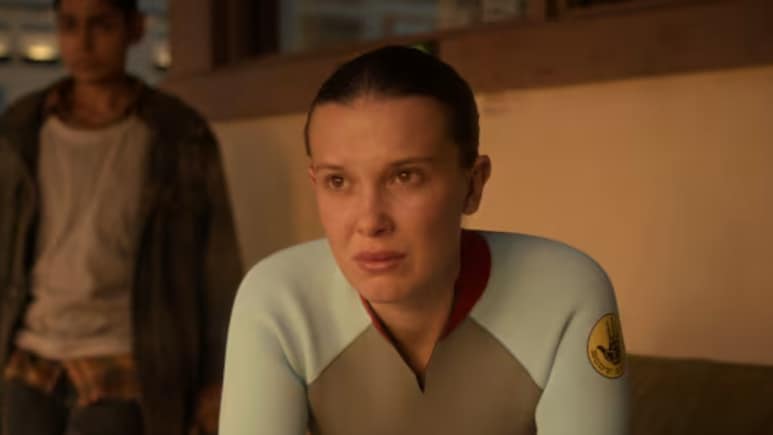
Performances across the board are solid, with a few standouts rising above the noise. Jamie Campbell Bower continues to bring an unsettling physicality to the antagonist, while Millie Bobby Brown carries the emotional weight of the finale with a confidence that shows how far both she and the series have come.
The ensemble chemistry, once the show's defining magic, flickers back to life most convincingly in the final stretch, when the story allows the characters to simply exist together rather than sprint toward the next plot beat.
Tonally, the finale walks a careful line between darkness and reassurance. For a show that built its reputation on horror aesthetics, it ultimately prioritises closure over cruelty.
That choice will frustrate viewers hoping for bold narrative risks, but it aligns with what Stranger Things has always been at heart: a coming-of-age story disguised as a sci-fi thriller.
The real ending here isn't about defeating evil; it's about growing up, letting go, and accepting that some chapters end not with screams, but with silence.
The final act leans heavily into sentiment, sometimes to excess. There are moments that feel drawn out, scenes that linger longer than necessary, and a sense that the show is reluctant to let go of its own mythology.
Yet there's also something undeniably moving about watching a story take the time to say goodbye.
The needle drops still hit, the nostalgia is worn proudly on its sleeve, and the series closes by looking both backwards and forward, aware that what mattered most was never the Upside Down, but the people who survived it together.
Stranger Things doesn't reinvent television with its finale, nor does it completely betray itself. Instead, it delivers an ending that feels true to what the show became, rather than what it once was.
It's imperfect, emotionally generous, occasionally messy, curiously hollow and deeply aware of its place in pop culture history.
Like growing up itself, it's not as scary as it once promised to be, but it's satisfying enough to make the goodbye stick.
Also Read: Stranger Things Season 5 Volume 2 Review: A Series Running On Goodwill Alone
-
Winona Ryder, David Harbour, Finn Wolfhard, Millie Bobby Brown, Gaten Matarazzo, Caleb McLaughlin, Noah Schnapp
