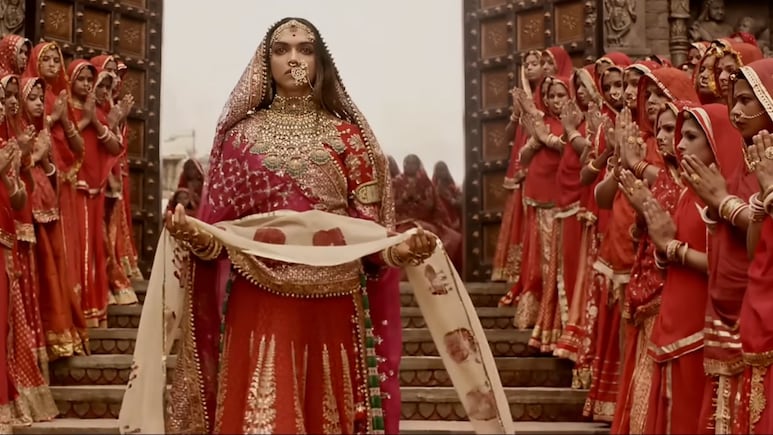
The debate around the Jauhar scene in Padmaavat has found its way back into the spotlight, years after the film's release. This time, writer Prakash Kapadia has defended the sequence and said the filmmakers showed what they understood to be the reality of the period.
Prakash Kapadia, who co-wrote the Sanjay Leela Bhansali directorial, spoke about the criticism surrounding the scene. He said the team did not create the sequence without research and relied on historical material while making the film.
-

-
 Best Of NDTV World Summit 2026 | Defining Conversations, Big Ideas
-
 PM Modi Says 'Parasite' Congress Hurts 'Honest' Dissent Movements
-
 "Some Dreaming Of Disorder": PM Modi's Dig At Rahul Gandhi
-
 PM Modi Highlights India's Firsts: Fast Breeder Reactor, Hydrogen Train, Asian Games Medals
-
 "UN's Limits Clearly Visible": PM Modi Presses For 'New Solutions' At NDTV Summit
-
 "World That Relied On India's Brainpower Now Trusts Its Mindpower": PM Modi
-
 Non-Oil Trade With India Went Up 50% In 3 Years: UAE Minister At NDTV Summit
-
 "Some Dreaming Of Disorder": PM's "Failed Product Of Congress" Jibe At Rahul Gandhi
-
 'Viksit Bharat Not Just For Us': PM Modi's Top Quotes At NDTV World Summit
-
 Has Indian Cuisine Arrived At The Global Stage? What Vir Sanghvi Believes
"We made the film according to our research and what is written in history books," Prakash said while speaking to the Hindustan Times.
The writer also pointed out that a film can be understood differently by different viewers. However, when it came to the Jauhar sequence, he stood by the way it was shown in Padmaavat.
"Every person interprets the film differently. What we showed, including the jauhar scene, was the reality of those times; it cannot be changed now. The situation was that of 'do or die'. Woh log (the male warriors) kesariya kar ke utare thhe."
Prakash Kapadia's comments come after Swara Bhasker recently questioned the way Jauhar was depicted in the film. The criticism has once again brought attention to the choices made by Sanjay Leela Bhansali and his team while presenting the period drama.
Prakash Kapadia, however, said he had not been following Swara Bhasker's comments closely. He also felt that a viewer's mindset can affect how they respond to a film.
"It depends on the person's mood; even if it's a good film and you watch it with a bad state of mind, you will find it bekaar. It's also about intention; whether you are going as a viewer, or watching it to find something controversial, or to find negativity... With Padmaavat, people had raised objections even before watching the film and had protested on the streets. The same conversation is continuing years later, so what can I say? Let people say what they want to."
Prakash Kapadia also explained the reference to Kesariya in the film. The term is linked to the practice associated with Rajput warriors who wore saffron before going into battles where they did not expect to return. It was linked to the idea of fighting until death when there was little hope of survival.
Padmaavat had faced protests and objections even before its 2018 release. The film starred Deepika Padukone as Rani Padmavati, Shahid Kapoor as Maharawal Ratan Singh and Ranveer Singh as Alauddin Khilji. It was inspired by Malik Muhammad Jayasi's 16th-century epic poem Padmavat.
