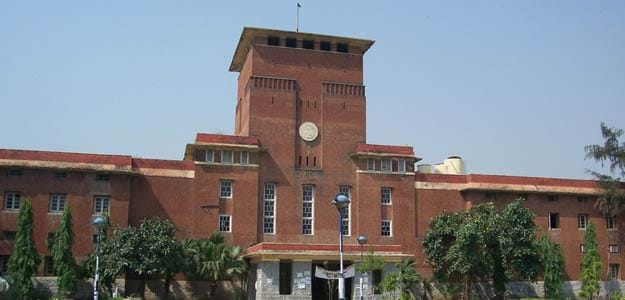

Delhi University has issued a month-long ban on protests, public meetings, rallies and assemblies of five or more people on its campus, citing law and order concerns after a violent confrontation involving student groups near the Maurice Nagar area of north Delhi.
The order, effective from today, prohibits demonstrations, slogan-shouting and any activity that may disrupt traffic or public tranquillity.
The DU proctor's notification, citing advisories from the Assistant Commissioner of Police, stated that unrestricted public gatherings on campus could obstruct traffic, threaten public safety, and disturb peace and such protests have, in the past, "escalated and spread widely." The order will remain active for one month unless withdrawn earlier.
Protest Over UGC Equity Rules Turns Chaotic
The ban follows a protest on February 13 and 14 near the Arts Faculty and outside the Maurice Nagar Police Station in north Delhi over proposed University Grants Commission (UGC) Equity Regulations 2026, which are aimed at addressing caste-based discrimination on campuses but have sparked sharp differences among student bodies.
What began as a demonstration in support of the regulations escalated into violent clashes between rival student groups, with reports of pushing, shouting, and scuffles outside the Arts Faculty gate. Videos of the confrontation circulated on social media, prompting police intervention. Police later registered cross-FIRs after complaints from both sides.
A female YouTuber present to cover the protest alleged she was manhandled by members of one group, including having her clothes pulled and being roughly pushed, raising concerns about safety of media persons at campus protests. Police have said CCTV footage is being examined as part of the investigation.
Student activists also claimed that when some members went to register complaints at Maurice Nagar Police Station, they were reportedly confronted by others who hurled verbal threats, including rape and murder threats, intensifying the tense situation. Police maintained that large deployments prevented further violence.
Dissent Voices
Not all university figures welcome the clampdown.
Mithuraaj Dhusiya, an elected member of the Executive Council of Delhi University, strongly objected to the move, arguing that while protests must remain peaceful, a blanket prohibition amounts to an unacceptable clampdown on democratic expression.
"It is true that all protests and movements against wrong policies of the government, University and its constituent colleges have to be totally peaceful, and it is the duty of the University to ensure this. However, clampdown on protests and movements in the guise of 'obstruction of traffic' etc in the University is not acceptable at all," he said.
"This order needs to be immediately rolled back!" he added.
