





Solar panels without an upfront installation cost, while continuing to get the existing electricity subsidy, 2.3 lakh Delhi households are set to get this benefit under a revamped solar policy approved by the Delhi Cabinet on Tuesday.
The Cabinet approved the second amendment to the Delhi Solar Energy Policy, 2023, under which eligible domestic consumers with average electricity consumption of up to 400 units can get rooftop solar systems of up to 3 kW installed at zero upfront cost, subject to technical feasibility.
For households consuming up to 200 units, the existing 100 per cent electricity subsidy will continue after the solar system is installed.
The government has set a target of installing rooftop solar systems on 2.30 lakh homes and adding 500 MW of additional rooftop solar capacity by March 2027.
Who Can Get Free Solar Panels In Delhi?
Domestic consumers with average monthly electricity consumption of up to 400 units in FY 2025-26 will be eligible for rooftop solar systems of up to 3 kW, subject to technical feasibility.
The key change is that eligible consumers will not have to make the initial payment for installation.
For a 3 kW system, the Centre provides a subsidy of ₹78,000. The Delhi government will provide another ₹78,000 as capital subsidy and cover the remaining gap between the subsidy and the tendered cost of the solar plant through an additional top-up.
The policy is aimed at removing one of the biggest hurdles to rooftop solar adoption- the upfront cost.
Will Free Electricity Continue After Installing Solar?
Yes, for eligible consumers using up to 200 units.
The Delhi government has said its existing 100 per cent electricity subsidy will continue even after an eligible household installs rooftop solar.
This means such households can continue to receive the subsidy while also using the power generated by their solar system.
A 3 kW solar system can generate around 300 units of electricity.
If the household generates more power than it consumes, the surplus can be supplied to the grid through net metering.
Consumers will be paid for surplus electricity supplied to the discom at the applicable rate, based on the average power purchase cost of the discom.
The government's aim is to turn Delhi households from simply electricity consumers into electricity generators.
What About Solar Panel Maintenance?
The government is also taking care of the initial maintenance.
The vendor installing the rooftop solar system will provide free operation and maintenance for the first five years.
After five years, consumers can opt for maintenance and insurance through electricity distribution companies or their empanelled agencies, subject to applicable charges.
The solar systems are expected to have a lifespan of around 25 years.
Net Metering Time Cut From 75 Days To 25
The government has also reduced the time taken for residential solar net metering.
The process, which earlier took around 75 days, will now take 25 days, according to the government.
Application and registration fees for residential solar systems of up to 10 kW have also been waived.
The scheme will be implemented through a utility-led aggregation model.
Indraprastha Power Generation Company Limited (IPGCL) will select vendors through competitive bidding and will handle vendor coordination, installation-related support and grievance redressal.
Delhi's Rooftop Solar Target
Delhi currently has around 10,073 solar installations, according to the government, with a significant number of them on government buildings. These installations are generating around 228 MW of solar power, according to government figures.
The new policy aims to add another 500 MW of rooftop solar capacity by March 2027.
The bigger target is to take rooftop solar to 2.30 lakh Delhi homes during the same period.
Rekha Gupta: Homes Should Generate Electricity
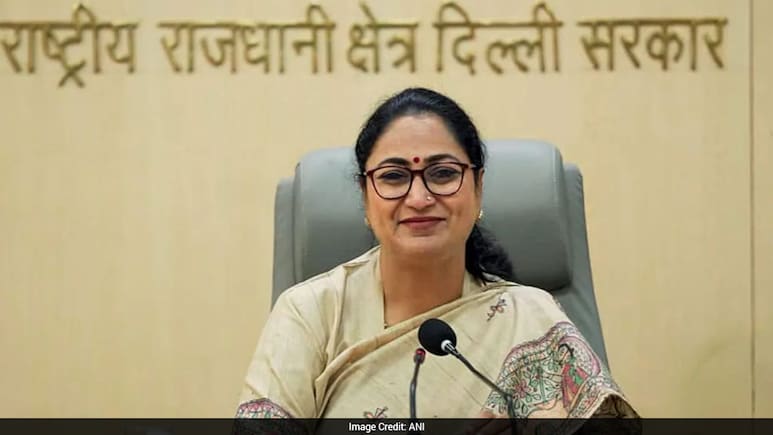
Chief Minister Rekha Gupta said the government's aim was to go beyond simply reducing electricity bills and encourage households to generate their own power.
"Our aim is not merely to reduce electricity bills but to turn Delhi's homes into homes that generate electricity."
She said the amended policy would make rooftop solar easier for ordinary households by removing the upfront financial burden.
The Delhi government has linked the move to Prime Minister Narendra Modi's PM Surya Ghar: Muft Bijli Yojana, saying the revised policy will give fresh momentum to rooftop solar adoption in the capital.
Ashish Sood On Free Electricity
Power Minister Ashish Sood said the Cabinet decision would secure Delhi's existing free electricity benefit while expanding rooftop solar adoption.
Taking a swipe at former Chief Minister Arvind Kejriwal, he said:
"For years, Arvind Kejriwal tried to frighten the people of Delhi by saying that if BJP came to power, muft bijli would be stopped."
Mr Sood said 2.30 lakh consumers will get rooftop solar systems at zero upfront cost, allowing them to generate their own electricity and potentially earn from surplus power supplied to the grid.
Track Latest News Live on NDTV.com and get news updates from India and around the world

