





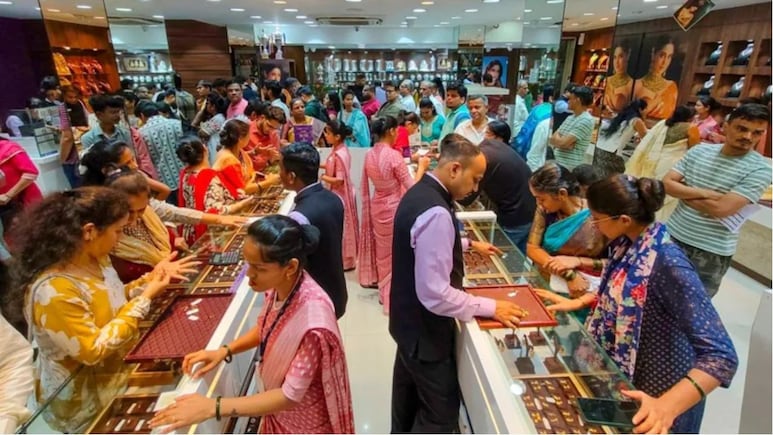
Gold Import Duty: Days after Prime Minister Narendra Modi urged citizens to avoid buying gold for a year, the government followed through with a hard policy move: it raised the effective import duty on gold and silver from 6 per cent to 15 per cent.
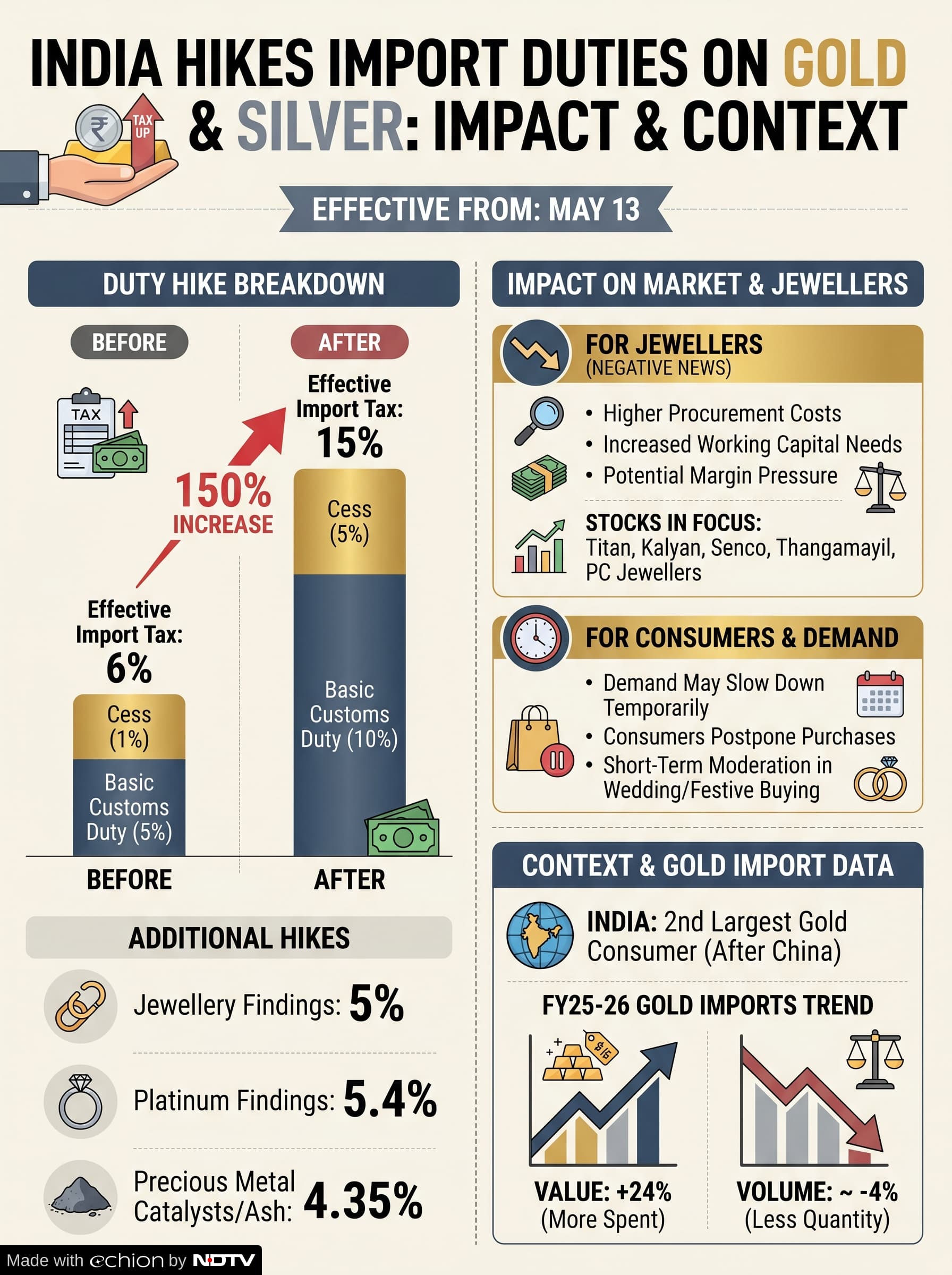
From May 13, gold now attracts 10 per cent Basic Customs Duty (BCD) and 5 per cent Agriculture Infrastructure and Development Cess (AIDC), up from 5 per cent and 1 per cent earlier. The change was notified by the Ministry of Finance under Customs Notification No. 16/2026.
This is not just a tax tweak. It is a macro-economic signal aimed at saving dollars, cooling gold demand, and protecting India's foreign exchange reserves at a time of global stress due to the ongoing Iran war.
Also Read | Layoffs Are Rising In Tech, But These Skills Are Helping People Unlock Better Pay
Here's what it changes:-
| Component | Earlier | Now |
| Basic Customs Duty | 5% | 10% |
| AIDC | 1% | 5% |
| Effective Import Duty | 6% | 15% |
Notably, the notification also revises duties on jewellery findings and certain industrial inputs, and offers concessional rates (4.35-5 per cent) for recycling/recovery categories like spent catalysts/ash containing precious metals-clearly nudging the industry toward recycling over fresh imports.
Gold, Silver Import Duty Hike: What Triggered The Move
India does not produce gold. Nearly all demand is met through imports, which are paid for in US dollars.
In 2025-26, gold imports made up 9-10 per cent of India's total import bill. In absolute terms, India paid $71.98 billion (a record) to import gold and meet domestic demand.
However, India's forex reserves have slipped from recent highs amid Middle East tensions and costly crude oil. And the International Monetary Fund (IMF) IMF projects a wider current account deficit (CAD) if the war drags on.
Therefore, India is taking pre-emptive steps to save its forex reserves. The math is simple: less gold buying = fewer dollars leaving India. Even a 30-40 per cent drop in gold imports can save $20-25 billion in a year.
How Will Import Duty Hike Impact Gold Prices
Gold becomes instantly costlier with this hike. Retail jewellery prices will reflect this quickly. At 9:59 am, gold was trading at 1,63,000 and silver at 2,96,600 -- both up by over 6 per cent -- at the multi commodity exchange (MCX).
At the time of filing this report, gold prices in India were around Rs 15,475 per gram for 24K carat, while silver was trading near Rs 278,000-Rs 290,000 per kg.
| Scenario | Duty Rate | Duty Amount on Rs 1,54,750 | Landed Value After Duty |
| Earlier structure | 6% | Rs 9,285 | Rs 1,64,035 |
| New structure | 15% | Rs 23,212 | Rs 1,77,962 |
(This increase is before adding: 3% GST, jeweller margins, and making charges.)
How This Deters Buyers
Gold buying in India is cultural (weddings, festivals) and financial (safe haven). The government is targeting both behaviours:
- Higher prices discourage investment buying
- PM's appeal discourages ceremonial buying
- Recent surge in gold ETFs (per World Gold Council) shows investors had already been shifting to paper gold
What To Expect Now:
- Investors may now shift to gold ETFs/digital gold
- Postponement of jewellery purchases
- Exchange of old gold for new jewellery
Why This Import Duty Hike Helps The Economy
- The move saves forex for essential imports like crude oil (India imports 88 per cent of its oil)
- Narrows CAD, supports the rupee
- Reduces speculative gold hoarding
- Pushes recycling and domestic value chains -- The order's concessional rates for recovery/recycling categories underline this intent
However, bullion dealers warn the grey market may revive. When duty gaps widen, smuggling becomes profitable. The illegal practise had reduced after tariff cuts in 2024. Now, with a 15 per cent duty:
- Illegal routes via neighbouring countries can re-emerge
- Cash transactions may rise
- Enforcement challenge for customs and DRI
Industry voices, including leaders from the India Bullion and Jewellers Association, have cautioned about this risk. "Business is now going to become difficult on the back of the Prime Minister's austerity measures and following the import duty hike in bullion. What the industry fears is that this will give rise to grey market... smuggling is likely to grow, setting up a parallel economy in the country," said Rajesh Rokde, chairman, All India Gems and Jewellery Council.
Impact On Bullion Traders & Jewellers
This is a direct hit on their business.
- Lower footfalls expected
- Working capital pressure as inventory costs rise
- Jewellery findings now taxed at 5-5.4 per cent
The industry is split between livelihood concerns and national interest positioning. Some trader groups have publicly backed the PM's call despite short-term pain. For instance, Malabar Gold & Diamonds has submitted a comprehensive proposal to the Government of India recommending strategic enhancements to the Gold Monetisation Scheme (GMS), supporting PM Modi's appeal on responsible gold consumption and the need to strengthen India's economic resilience.
The proposal, submitted by Mr MP Ahammad, Chairman, Malabar Group, to Finance Minister Nirmala Sitharaman and Commerce & Industry Minister Piyush Goyal, outlines practical measures aimed at increasing public participation in GMS. However, some traders have shut shops in opposition as well.
Experts see this as policy by persuasion and pricing. First, a moral appeal by the Prime Minister. And then, a fiscal barrier by the government. The message is clear: Gold is draining India's dollars. Pause it.
Track Latest News Live on NDTV.com and get news updates from India and around the world

