





In 2022, India's External Affairs Minister S Jaishankar stirred a debate across Europe when he said: "India's total purchase of oil from Russia in a month is probably less than what Europe does in an afternoon."
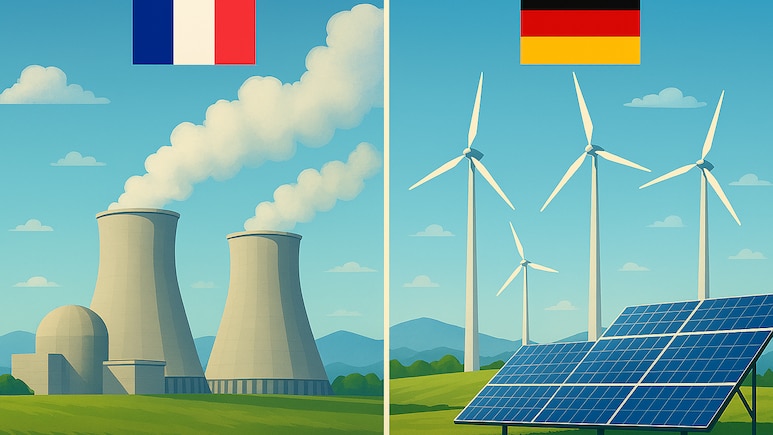
European diplomats still quote that line at conferences and policy forums. It is used to underline how deeply Europe is tied to Russian energy. More than four years into the conflict, two of Europe's largest economies -- France and Germany -- present sharply different energy stories.
One has leaned on nuclear power to cut fossil fuels. The other is still navigating a difficult transition away from imported oil and gas.
Also Read | Layoffs Are Rising In Tech, But These Skills Are Helping People Unlock Better Pay
Nuclear-Heavy, Fossil-Light France
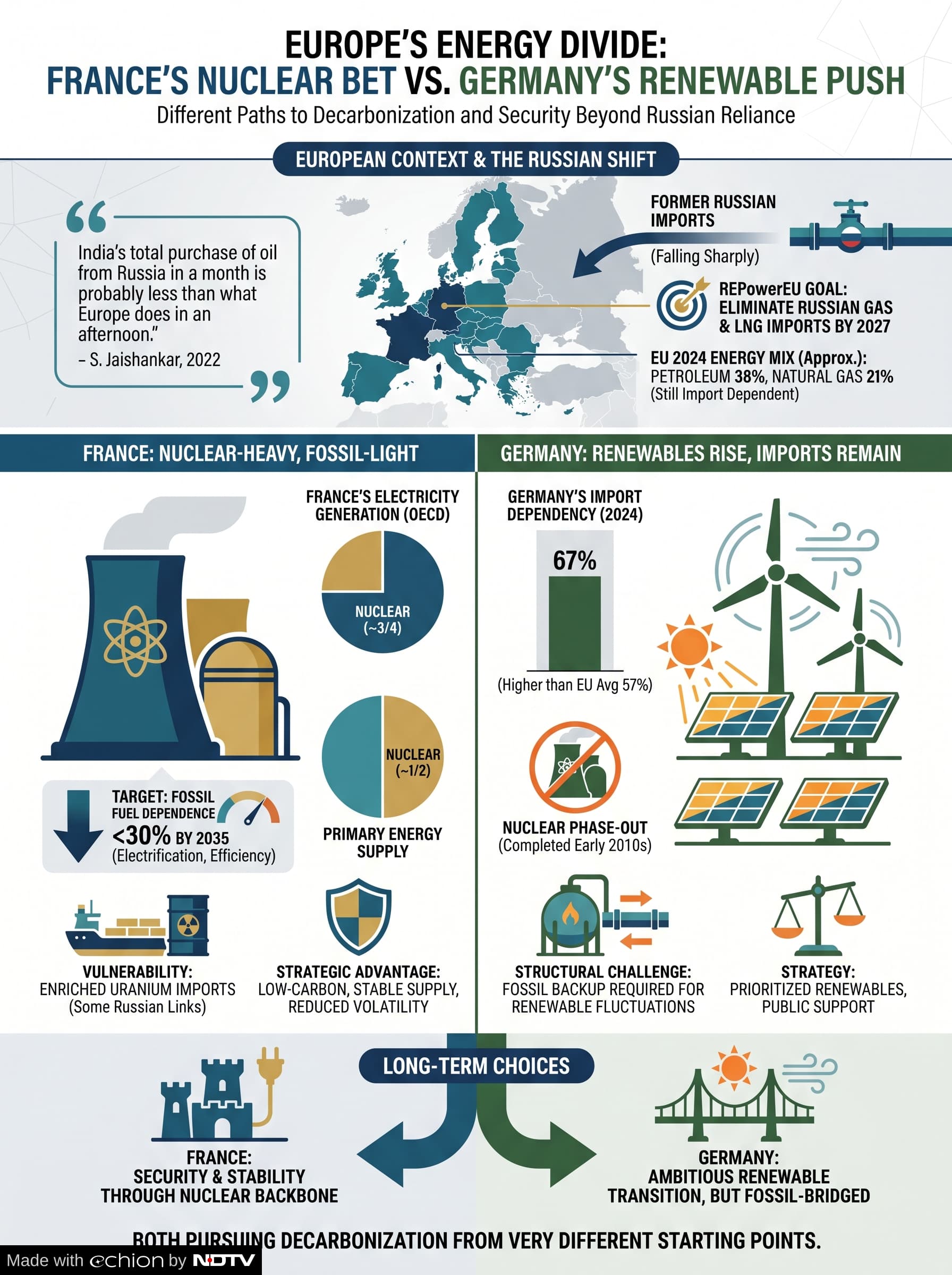
France's energy system is built around nuclear power. According to analysis by the Organisation for Economic Co-operation and Development (OECD), nuclear energy accounts for roughly three-quarters of France's electricity generation and close to half of its total primary energy supply. This is far higher than most European Union members.
Coal has almost disappeared from France's power mix. Broader fossil fuel consumption is also falling under long-term policy commitments.
According to French government strategy documents, the country aims to bring fossil fuel dependence to below 30 per cent by 2035. This is being driven by electrification, efficiency measures, and continued reliance on nuclear power for stable supply.
This structure has helped France shield itself from volatility in global oil and gas markets.
However, the picture is not entirely insulated from geopolitics. France still imports most of its oil and gas. Its nuclear sector also depends partly on imported enriched uranium, including supplies linked to Russian entities. This remains a strategic vulnerability.
Germany: Renewables Rise, Imports Remain
Germany's system looks very different. According to a report by Clean Energy Wire, Germany has rapidly expanded solar and wind capacity over the past decade. It has also committed to phasing out coal.
But despite this renewable push, Germany remains heavily dependent on imported fossil fuels. In 2024, Germany's energy import dependency stood at around 67 per cent, according to European energy data. This is higher than the EU average of roughly 57 per cent.
Germany's domestic fossil fuel production is limited. Oil and gas imports therefore remain essential to balance supply, especially when renewable output fluctuates.
The country's decision in the early 2010s to phase out nuclear power has added to this challenge. Gas and oil are still required as backup sources during the transition.
Energy In The EU Context
Across the European Union, petroleum products made up about 38 per cent of the energy mix in 2024, while natural gas accounted for around 21 per cent.
This shows that dependence on imported fossil fuels is not limited to Germany. After 2022, the EU imposed sanctions, diversified suppliers, and invested in new infrastructure to reduce reliance on Russian energy. The share of Russian oil and gas in EU imports has fallen sharply compared to pre-war levels.
Under the REPowerEU framework, the bloc plans to eliminate Russian pipeline gas and LNG imports by 2027.
This geopolitical shift has made energy policy a matter of security, not just climate action.
Strategy, Security & Long-Term Choices
France's decades-long investment in nuclear power now appears to be a strategic advantage. It provides low-carbon, stable electricity and reduces exposure to fossil fuel price swings.
Germany's strategy has been different. It prioritised renewables and public support for shutting nuclear plants. While solar and wind have grown quickly, fossil imports still play a central role in ensuring supply stability.
Energy analysts increasingly describe this as a structural challenge for Germany's long-term energy security. Both countries are pursuing decarbonisation. But they are doing so from very different starting points.
France's nuclear backbone acts as a buffer against fossil volatility. Germany's renewable growth, though ambitious, still depends on global oil and gas markets to keep the system running.
Track Latest News Live on NDTV.com and get news updates from India and around the world

