- The Indian government promotes E20 ethanol-blended fuel to reduce fossil fuel use and emissions
- A viral video falsely claimed ants infest fuel caps due to E20 petrol use in vehicles
- Bharat Petroleum clarified that ethanol fuel repels insects and contains no attractants for ants
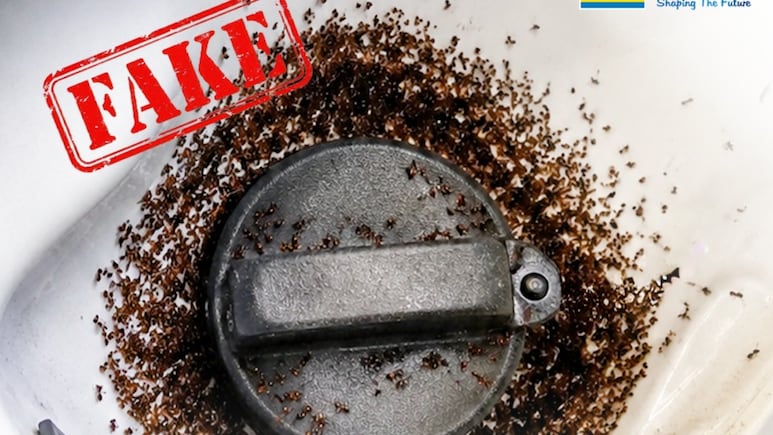
The Indian government is pushing for a transition from fossil fuels to cleaner fuel alternatives, with E20 currently the ethanol-blended fuel in use in the country. While there is acceptance among citizens, there has also been pushback, with multiple claims on social media that the fuel harms vehicles. In one such claim, a video went viral showing a car's fuel filler cap infested with ants, alleging that it happened because of E20 in the tank. However, Bharat Petroleum has now clarified that the video is misleading.
E85 एथेनॉल पेट्रोल डलवाने पहुंचा एक व्यक्ति, लेकिन उससे पहले उसकी गाड़ी पर चींटियों का जमावड़ा देखकर हर कोई हैरान रह गया। pic.twitter.com/anfz3tAk7P
— ʀᴜᴅʜʀᴀ ʏᴀᴅᴀᴠ🇮🇳 (@Rudhrayadav001) June 14, 2026
Ants In Fuel Filler Cap
The short clip circulating on social media shows a colony of ants near the fuel filler cap of a car. It is worth mentioning that the video does not show the entire vehicle. However, it specifically shows the E20 fuel sticker on the lid, indicating that the car is compatible with ethanol-blended fuel. While the origin of the video is not known, it has been widely circulated, with social media users believing the claim and disseminating the information further.
BPCL's Clarification
Addressing the claim, Bharat Petroleum Corporation Limited has issued a clarification, saying, "BPCL has examined the claims circulating on social media regarding ants congregating around vehicle fuel filler caps and their alleged association with E20 petrol.
BPCL has examined the claims circulating on social media regarding ants congregating around vehicle fuel filler caps and their alleged association with E20 petrol.
— Bharat Petroleum (@BPCLimited) June 17, 2026
Fuel-grade ethanol used for petrol blending is produced through fermentation and distillation processes that… pic.twitter.com/1qED7xBBhe
Fuel-grade ethanol used for petrol blending is produced through fermentation and distillation processes that eliminate residual sugars from the final product. Further, fuel ethanol contains denaturants, which are repellent to insects.
Upon blending, the characteristic hydrocarbon odour of petrol remains dominant over any inherent ethanol odour.
Also Read: Tesla Cybercab Technical Specifications Revealed: Check Range, And More
In addition, ethanol-blended petrol exhibits lower fuel vapour formation compared to conventional petrol. As a result, there is no identifiable attractant associated with E20 fuel that would cause ants or other insects to congregate around vehicle fuel caps.
Therefore, claims suggesting a link between E20 fuel and ant attraction have no scientific basis.
The claims being circulated on social media are baseless and are not supported by scientific evidence."
E20 Petrol
E20 petrol is a blend of conventional petrol and 20 per cent ethanol, a biofuel typically derived from crops like sugarcane and maize. The idea behind this fuel is simple: reduce India's dependence on imported crude oil while cutting down emissions. Ethanol burns cleaner than petrol, which helps lower carbon monoxide and other harmful pollutants.
Also Read: India-UK FTA To Allow Lower Import Duty On 3.78 Lakh UK Cars Over 15 Years
For everyday users, E20 petrol doesn't feel dramatically different, but it does require vehicles to be compatible. Many newer cars and two-wheelers sold in India are now designed or tuned to run on E20 without issues, while older vehicles may need minor adjustments or could see a slight drop in fuel efficiency.
Track Latest News Live on NDTV.com and get news updates from India and around the world
