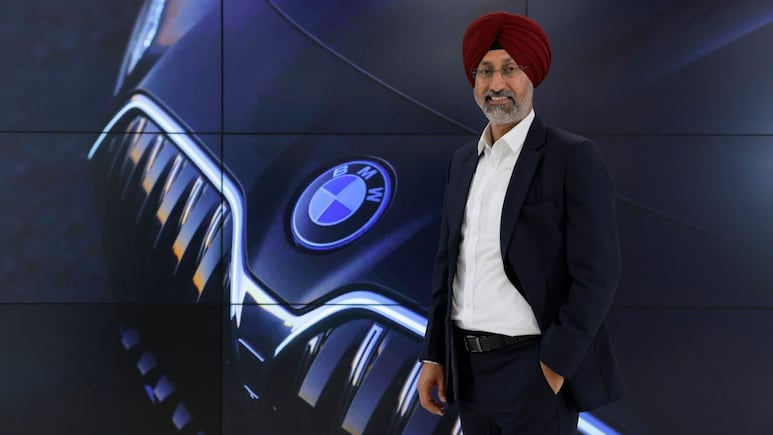
The long-awaited EU-India Free Trade Agreement (FTA), whose political declaration has now been announced after more than two decades of negotiations, could turn out to be a watershed moment for India's automobile industry. That is the clear message from Hardeep Singh Brar, President and CEO of BMW Group India, who described the deal as a "very calibrated step in the right direction" that comes at a crucial time amid global geopolitical and supply chain uncertainties.
Speaking to NDTV's Senior Executive Editor Aditya Raj Kaul, Brar said the agreement brings together two of the world's biggest economic power centres - the European Union and India - which together account for nearly a quarter of global GDP. "Why not? Looking at how the geopolitical things have panned out, this has come just at the right time," he said, underlining the strategic importance of the partnership.
Big Relief On Import Duties, But With Patience
For the Indian auto sector, the biggest headline is the gradual but steep reduction in import duties on cars coming from the EU. Currently, completely built imported cars attract duties of up to 110 per cent, making many high-end models prohibitively expensive for Indian buyers.
Under the proposed FTA roadmap, these duties will come down in stages. "The moment it comes down, once it is announced, it comes down to about 30 per cent, which is likely towards the end of 2027," Brar explained. Over a five-year period from the start of implementation, duties on high-end cars could eventually fall further, in some cases even towards 10 per cent.
Also Read - India-EU FTA: What It Really Means For Car Buyers- Explained
"This is a good 80 per cent drop from current levels for those cars which we are not able to import today," he said. Models such as BMW's XM or iX, and other top-end luxury cars, could suddenly become far more accessible to Indian consumers. According to Brar, once the deal is implemented, prices of imported luxury cars could fall by as much as 35-40 per cent, triggering fresh demand.
However, he was quick to caution consumers against expecting an immediate windfall. The technical negotiations, ratification by all 27 EU member states and implementation could take 18 to 24 months. "There is a lot of chatter that prices have slashed to half. That is not the case. It is a positive thing, but it is not immediate," he said.
Limited Impact On Mass Market, Big Upside For Luxury
Interestingly, Brar pointed out that nearly 95 per cent of BMW's India portfolio is already locally produced, with components imported at around 15 per cent duty. For these cars, the FTA will not make much difference to prices.
"The real benefit is going to be for the cars which we are importing today, which is just about 5 per cent of our volumes," he said. Over time, as prices come down and more models become viable for import, this share could rise to 8-10 per cent of overall sales.
Also Read - India-EU FTA: Auto Industry Reacts To Landmark Trade Deal
In the mass market and small car segments, Brar does not foresee dramatic changes. Even with lower duties, European-made small and mid-range cars are unlikely to undercut Indian manufacturers, because India's cost of manufacturing is already 40-50 per cent lower than Europe's. "Indian consumers are very value-conscious. If he is spending 30 to 40 per cent more and not getting the features he gets locally, he will not latch onto that," he noted.
A Big Opportunity For Indian Manufacturers In Europe
While much of the focus is on imports into India, Brar stressed that the FTA could be even more transformative for Indian carmakers looking outward. Under the deal, Indian manufacturers could eventually export to Europe at zero duty, opening up one of the world's most lucrative and demanding markets.
But there is a catch. "The first thing Indian OEMs need to do is brand acceptance in the European market," Brar said. European buyers, he pointed out, are extremely sensitive to quality, fit and finish. "If they see any kind of gaps or issues, they are very particular. It starts with the product and the quality of the product."
Also Read - India-EU FTA Makes These Cars Cheaper, But There's A Catch - Check List
He believes the next four to five years will be critical for Indian companies to upgrade quality standards, build brand credibility and prepare themselves for serious competition in Europe.
Stronger, Cheaper Supply Chains
Beyond cars, Brar sees the FTA as a stabiliser for global supply chains, which have been under stress due to conflicts and trade tensions. "You need some markets which can absorb the shock," he said, adding that deeper EU-India integration can reduce dependence on volatile trade routes and partners.
Cheaper access to high-quality European machinery could also bring down manufacturing costs in India, further strengthening the country's position as a global auto manufacturing hub.
A Win-Win Moment
Summing up, Brar called the EU-India FTA a "win-win situation" - one that will make luxury cars more accessible to Indian buyers, give a long-term export opportunity to Indian manufacturers, and improve resilience and efficiency across supply chains.
While the real impact will unfold over the next five years, the direction is clear: the deal could reshape the Indian auto industry's relationship with Europe and mark the beginning of a new, more integrated chapter in global automotive trade.
Track Latest News Live on NDTV.com and get news updates from India and around the world
