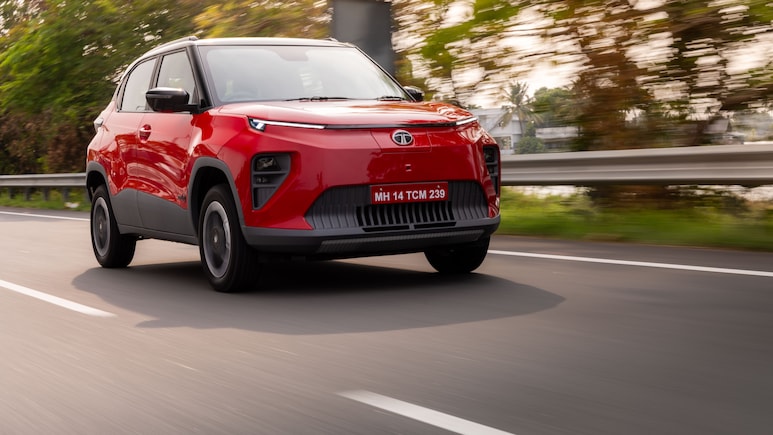
Tata Motors electric best-seller is ready with an update. We drove the Punch EV facelift in Kochi. It has a larger battery, a revised powertrain, a lower price and a few key omissions. Can it be your first EV? Read the first drive review to find out:
Tata Punch EV Facelift: More Range
The Tata Punch EV facelift now uses an LFP battery with a revised structure, shifting from cylindrical to prismatic cells. This allows more cells to be packaged in the same space, increasing density. The battery capacities are now 35 and 40 kWh, up from 25 and 30 kWh. The Long Range variant claims 468 km on a single charge, while Tata suggests around 355 km in daily use. The Medium Range variant has 355 km claimed range, with real world range around 260 km. Fast-charging performance has also improved in Punch EV, supporting speeds up to 65 kW.
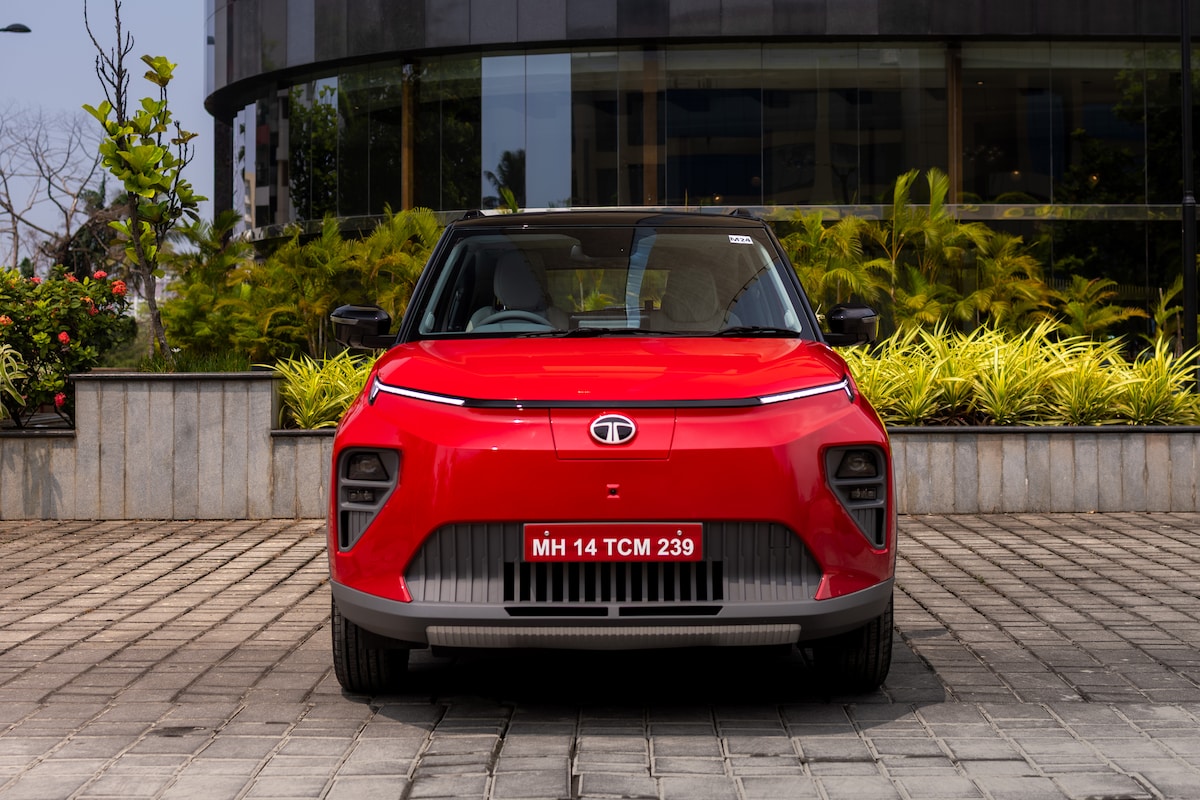
Tata Punch EV Facelift: Why Cheaper Than Before
The new Tata Punch EV brings meaningful updates beneath the surface, with a revised powertrain focused on improved efficiency. The electric motor, transmission, electronic and vehicle control units, onboard charger, and DC/DC converter have been packaged closer, touted as 6-1 powertrain, thereby reducing the number of semiconductors and overall components used. This compact integration lowers weight and enhances efficiency, translating into a better driving range.
Alongside these mechanical updates, Tata Motors has streamlined the feature set to reposition pricing. Rear disc brakes have been replaced with drum brakes, select variants have been discontinued, and features such as ambient lighting and the connected front light strip have been removed. These subtle omissions help make the Punch EV carry a lower price tag between Rs 9.69 lakh and 12.59 lakh (ex-showroom).
Also Read: BMW X3 30 xDrive M Sport Pro Review: A Complete Reset For BMW's Most Important SUV
Tata Punch EV Facelift: Drive Experience
The facelifted Tata Punch EV delivers a confident and reassuring drive experience. Driver visibility is impressive for the car's size, although the A-pillars are on the thicker side. The inclusion of a 360-degree camera helps offset this and proves useful in tight situations. Changes to the drivetrain have not significantly altered drive characteristics, despite the car being lighter than before. Power output for the 40 kWh variant remains unchanged at 129 hp, though torque sees a marginal reduction. Ride quality stands out as one of the most settled in the segment, while handling remains average, with noticeable body roll when pushed. Steering has slight vagueness around the dead centre. Acceleration is brisk, with a 0-100 kmph time of around nine seconds. Regeneration is offered in three levels and remains mild even at its strongest setting.
Also Read: Volkswagen Tayron R-Line Review: India's New Premium Three-Row SUV
Tata Punch EV Facelift: Range Tested
We set out to evaluate the real-world range of the Tata Punch EV facelift by driving it in mixed conditions. The test began with the battery at 98 per cent state of charge, with the trip meter reset. While we briefly switched between Sport and Normal modes, most of the drive was completed in Eco mode with level three regeneration. The air conditioning was set between 23 and 24 degrees with the blower at its lowest setting.
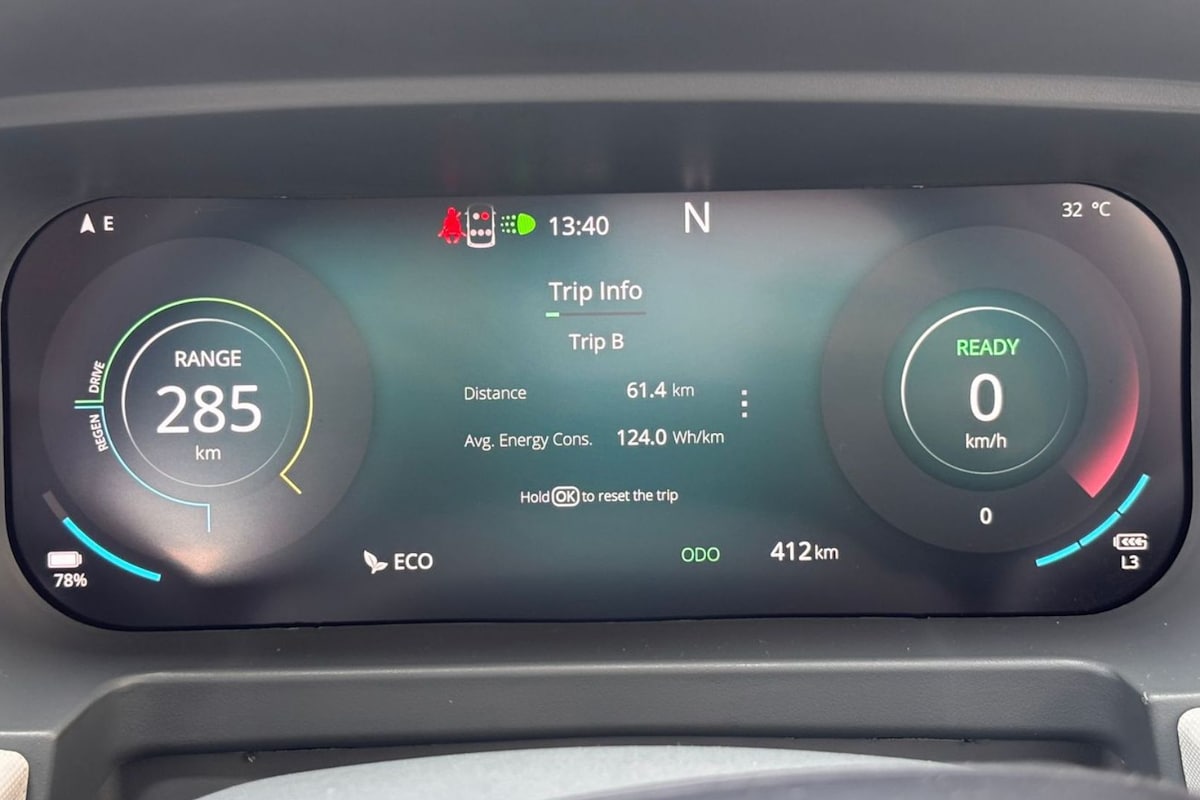
After returning to our starting point, the car had covered 61 km, showing an average consumption of 123 Wh/km. This translates to an estimated range of around 325 km on a full charge. Considering weather conditions, AC usage and brief stops during the drive, we believe the long-range Punch EV facelift can comfortably deliver a real-world range of 340 to 350 km.
Tata Punch EV Facelift: Design
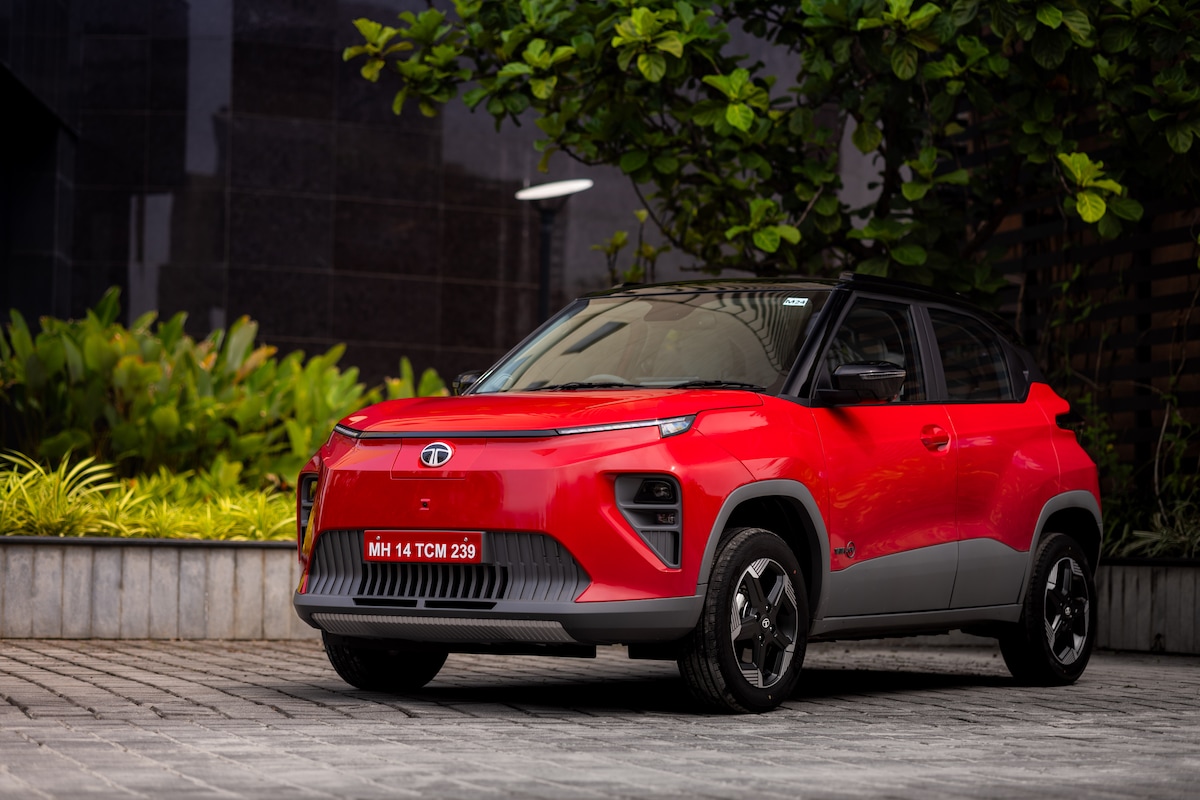
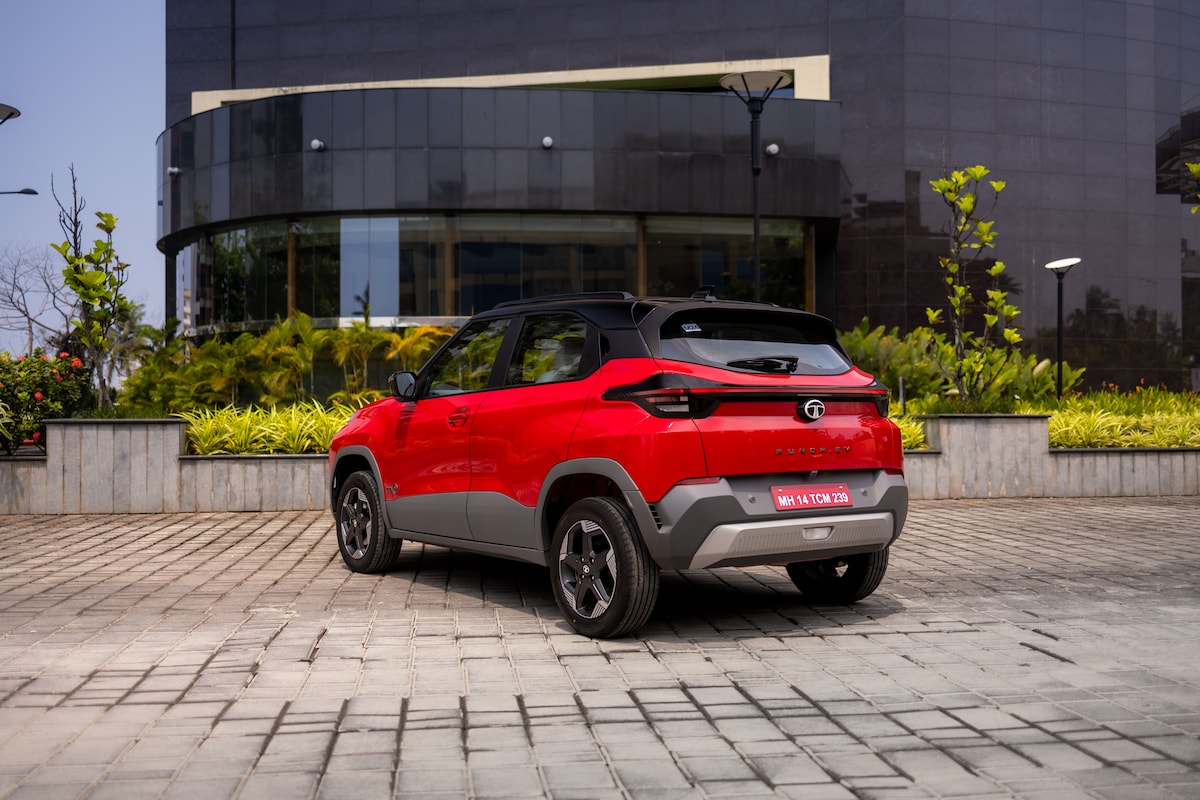
The Tata Punch EV facelift closely follows the design language of its petrol-powered counterpart, with a few EV-specific updates. The front end is closed off, with the charging flap neatly integrated. The chunky halogen headlamps have been replaced by sleek, ice-cube-shaped projector units that give the face a cleaner, more modern look. However, the absence of a traditional grille slightly softens its rugged stance. The new 16-inch alloy wheel design stands out and looks appealing, while buyers can choose from seven colour options, three of which are new. At the rear, the Punch EV gets connected LED tail-lamps spanning the width of the tailgate, and the side cladding is finished in grey instead of black.
Tata Punch EV Facelift: Comfort and Convenience
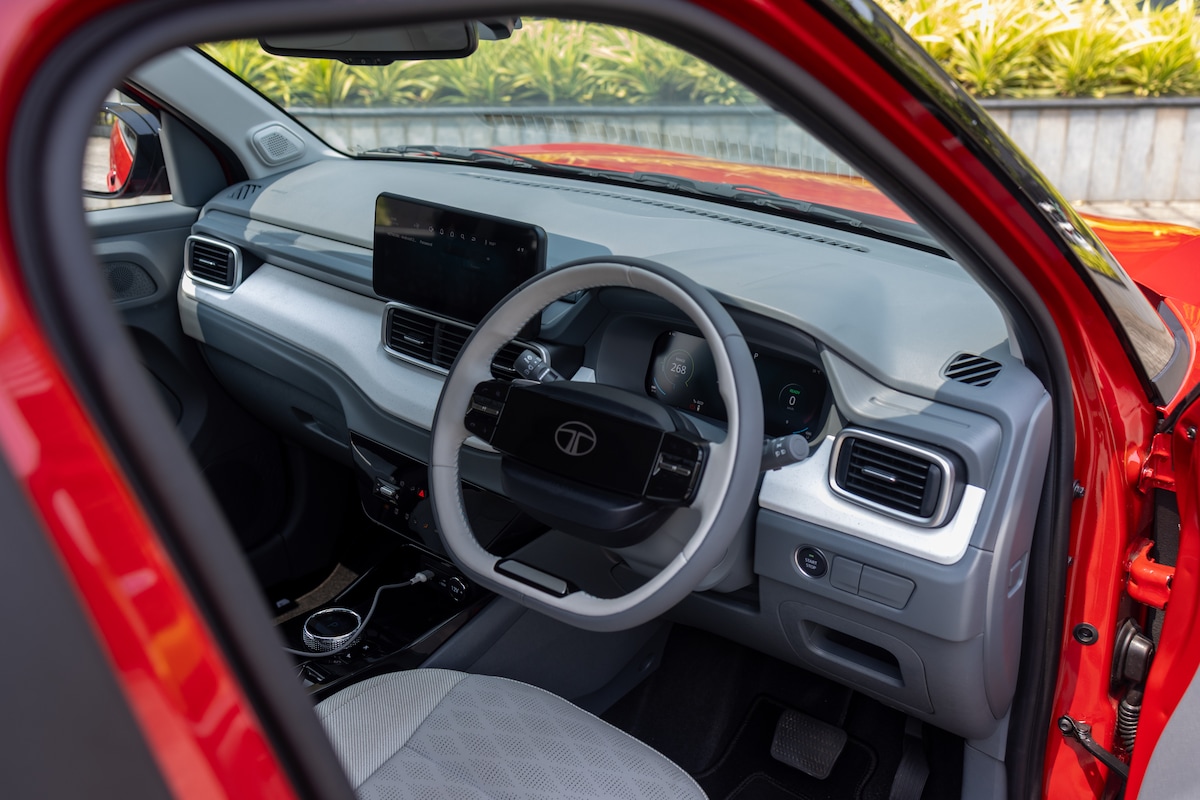
Inside, the feature list is extensive and includes several segment-firsts such as ventilated front seats, automatic climate control, a 12.3-inch touchscreen with connected car tech, a digital driver's display, wireless charging, a 360-degree camera and a sunroof. Glossy interior surfaces look premium but tend to attract fingerprints. Rear seat space is best for two adults, though the nearly flat floor helps, and the 366-litre boot can accommodate three large suitcases with room for smaller items.
Tata Punch EV Facelift: Verdict
The engineering updates beneath the surface are commendable and highlight Tata Motors' intent to democratise electric mobility. Despite a few quality concerns and minor design flaws inside the cabin, the Tata Punch EV facelift remains easy to live with. In the sub-Rs 10 lakh space, it stands out as a strong and well-rounded contender.
Track Latest News Live on NDTV.com and get news updates from India and around the world
