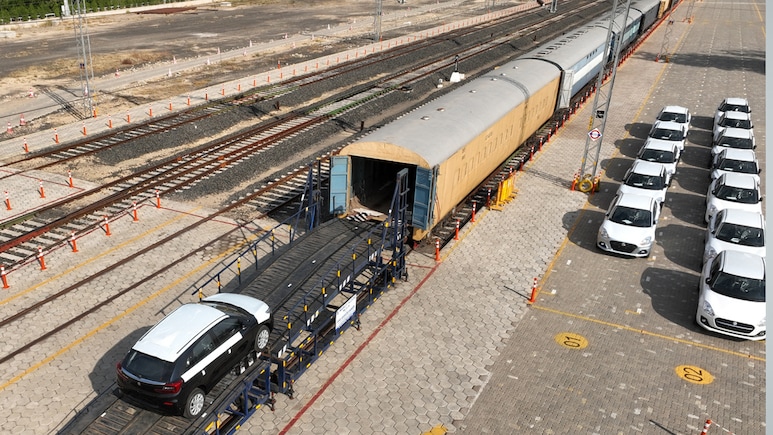
Maruti Suzuki has crossed a significant logistics milestone by dispatching more than three million vehicles using the Indian Railways. India's largest carmaker is relying on rail for its operations. The company has been using the rail network for over a decade, but the pace has accelerated sharply in recent years as it looks to cut costs, reduce emissions, and decongest highways.
Change In Maruti Suzuki's Logistics Strategy
Over the past ten years, Maruti Suzuki's share of vehicles moved by rail has risen from around 5 per cent to roughly a quarter of its total dispatches, reflecting a deliberate strategy to make rail a core pillar of its distribution model.
Also Read: Maruti Suzuki Baleno Based Toyota Starlet Scores 0 Star Safety Rating In GNCAP Test
Improved Delivery Timeline
The jump from two million to three million cumulative rail dispatches came in just about 21 months, making this the fastest million-vehicle addition via rail for the company so far. For dealers and customers, this has translated into more predictable delivery timelines as the rail network is less affected by weather disruptions, toll delays, or highway congestion.
Investment In Rail Transportation
Maruti Suzuki was also the first Indian automaker to obtain an Automobile Freight Train Operator (AFTO) licence, allowing it to run high-capacity, car-carrying rakes on the national rail network.
Also Read: Honda City Facelift Spied Ahead Of Official India Launch
The company has invested in dedicated in-plant railway sidings at its Manesar and Hansalpur (Gujarat) facilities, which together can handle up to 7.5 lakh vehicles a year, reducing the need to move cars by truck to distant loading points. From these plants, vehicles move through a hub-and-spoke network to more than 600 cities via 22 distribution hubs, tightening the link between factory and showroom.
Green Logistics
The rail shift is also central to Maruti Suzuki's "green logistics" push. The company's growing use of rail has cumulatively helped cut thousands of tonnes of carbon emissions and saved hundreds of millions of litres of fuel, supporting national targets on lowering oil imports and achieving net-zero by 2070.
With production capacity planned to nearly double to around four million units by FY 2030-31, the automaker aims to raise the rail share of its dispatches to about 35 percent over the next seven to eight years.
Benefits For Buyers
From a buyer's perspective, these changes are largely invisible, but they quietly shape how quickly and reliably a new car reaches the dealership yard. For Maruti Suzuki, the three million milestone represents a broader transition toward cleaner, more efficient vehicle logistics aligned with India's infrastructure and climate goals.
Track Latest News Live on NDTV.com and get news updates from India and around the world
