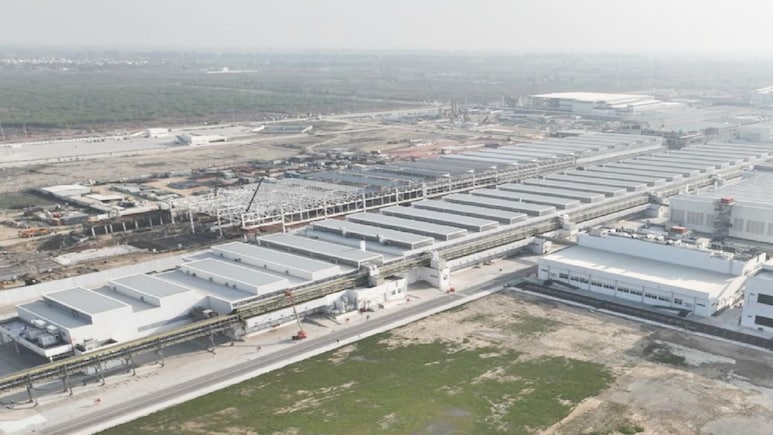
Maruti Suzuki has commissioned a 1 MWh Battery Energy Storage System at its Kharkhoda manufacturing facility in Haryana, adding another layer to its clean-energy efforts. The new system works alongside the 20 MWp solar power plant installed at the site in 2025 and is being used as a pilot project connected to the plant's internal electricity distribution network.
How The Battery Storage System Works
The BESS is designed to store surplus solar power generated during factory holidays or periods when electricity demand is low. Instead of letting that energy go unused, the system holds it and supplies it back when the plant needs more power. In practical terms, it acts like a large rechargeable battery for the facility.
Also Read: Volkswagen Hints At Lower-Spec Tayron Ahead Of July 10 Launch
Maruti Suzuki says the setup will help reduce renewable energy wastage while also supporting grid stability within the plant. As production activity grows at Kharkhoda, the battery storage system is expected to play a useful role in balancing energy supply and demand more efficiently.
Emissions And Sustainability Goals
According to the company, the BESS is expected to have an operating life of around 15 years. Over that period, it could help reduce nearly 54 tonnes of CO2 emissions every year by increasing the use of solar energy at the site.
Also Read: Hrithik Roshan Named Nissan's New Brand Ambassador, Tekton Launch In Focus
The automaker has said it remains committed to lowering both Scope 1 and Scope 2 emissions, even as manufacturing volumes rise. Its focus is not only on reducing carbon intensity, but also on bringing down absolute emissions from operations.
This approach is in line with the environmental targets of Suzuki Motor Corporation, Maruti Suzuki's parent company. Suzuki has set an interim goal of cutting Scope 1 and Scope 2 CO2 emissions by 42 per cent by FY2030-31, compared with FY2022-23.
Also Read: Nissan Tekton SUV Launched At Rs 10.49 Lakh: All About Duster-Based, Sierra Rival
A Step Toward Greener Manufacturing
Announcing the initiative, Mr Hisashi Takeuchi, Managing Director & CEO, Maruti Suzuki India Limited, said, "Maruti Suzuki is strongly aligned with India's focus on building self-reliant energy ecosystems. The introduction of Battery Energy Storage System (BESS) at our Kharkhoda facility is part of these continued efforts. With a lifecycle of about 15 years, BESS will help to reduce nearly 54 tonnes of CO2 emissions annually."
He added, "Going forward, our production volumes will increase from current levels. Despite this, we remain committed to lower Scope 1 & 2 emissions not only in terms of CO2 intensity but also absolute CO2 emissions in manufacturing. Our approach is in line with our parent company, Suzuki Motor Corporation's environmental vision, which has set an interim target to reduce Scope 1 & 2 CO2 emissions by 42% by FY 2030-31 compared with FY 2022-23."
Track Latest News Live on NDTV.com and get news updates from India and around the world
