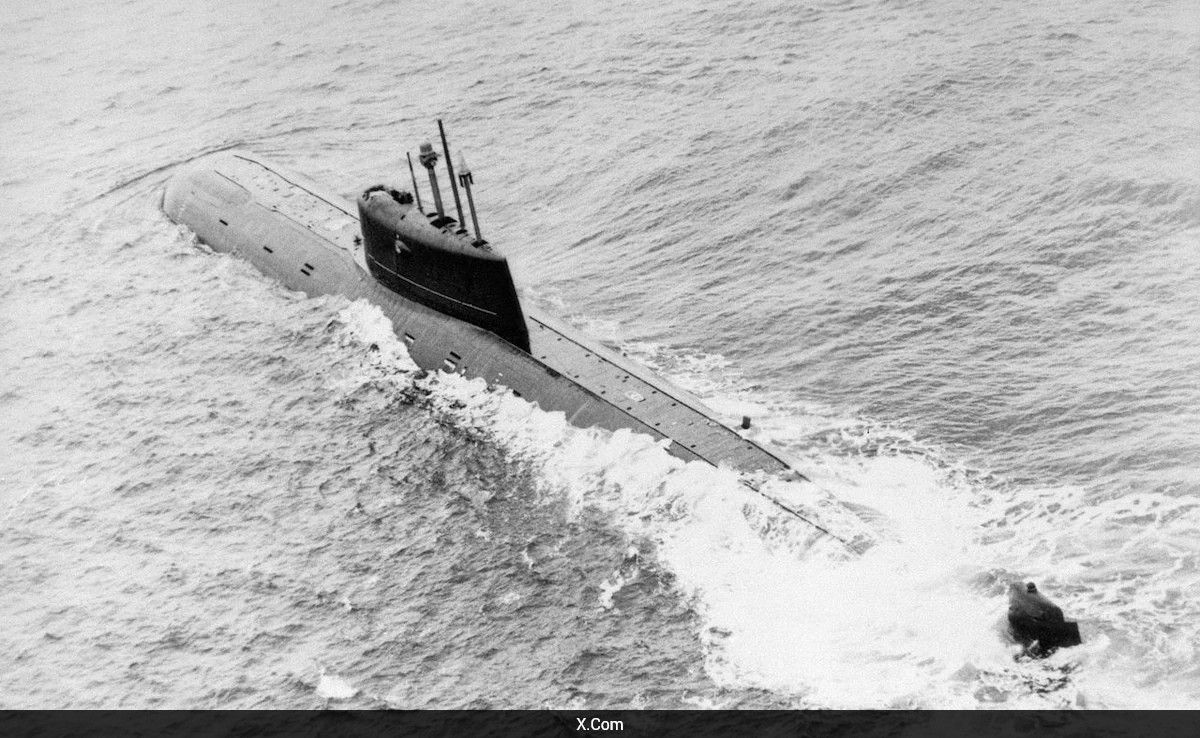
A Cold War-era Soviet nuclear submarine lying deep in the Norwegian Sea is continuing to leak radioactive material, according to a new scientific survey. The submarine, K-278 Komsomolets, sank in April 1989 after a fire onboard, killing most of its crew. It carried a nuclear reactor and two nuclear torpedoes, raising long-term environmental concerns.
A team led by marine radioecologist Justin Gwynn from Norway's Radiation and Nuclear Safety Authority has now analysed data from a detailed survey of the wreck. Their findings show that while the submarine is leaking radiation, the overall impact on the surrounding environment remains limited so far.
Researchers found that the reactor is slowly degrading and releasing radioactive substances in occasional bursts. Video footage captured by a remotely operated vehicle showed visible plumes escaping from parts of the hull, including a ventilation pipe and areas near the reactor.
"Releases from the reactor have occurred for over 30 years," the researchers write, but "there is little evidence of any accumulation of radionuclides in the near environment around the submarine as the released radionuclides appear to be rapidly diluted in the surrounding seawater."
Water samples taken close to the submarine revealed extremely high levels of radioactive isotopes such as strontium and cesium. However, these levels dropped sharply just a few metres away, suggesting the substances are quickly diluted in seawater.
Marine life around the wreck, including corals and sponges, showed only slightly raised radiation levels, with no visible damage observed. The surrounding seabed also showed little contamination.
Importantly, earlier repairs to seal the torpedo compartment appear to be holding, with no sign of weapons-grade plutonium leakage.
Scientists warn that the ageing wreck will continue to deteriorate over time, which could increase risks in the future. They stress the need for ongoing monitoring to better understand the long-term impact.
The study has been published in the journal Proceedings of the National Academy of Sciences.
Track Latest News Live on NDTV.com and get news updates from India and around the world


