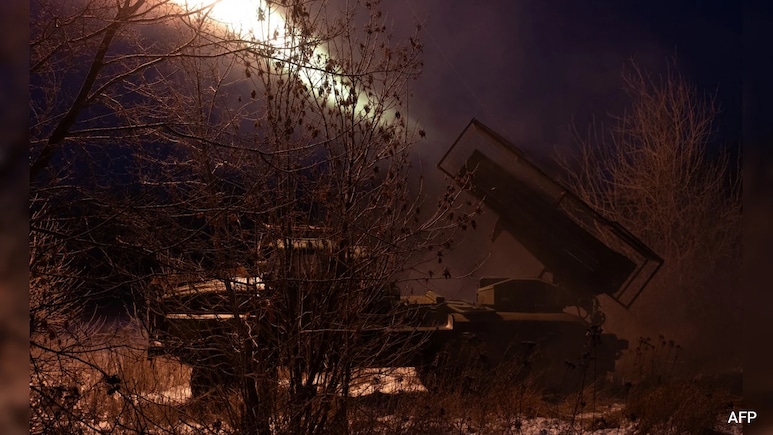
There are two sharply different narratives about the Russian economy.
One comes from Moscow. It says growth has held up despite Western sanctions. Inflation is easing. Forex reserves are at record highs. Debt is low. And the Ukraine war has not broken the system.
The other comes from European intelligence and several researchers. It says Russia is masking a weak, debt-driven, war-stretched economy with selective data, changing methods, and withholding datasets.
Sweden's Military Intelligence and Security Service (MUST), led by the country's military intelligence chief Thomas Nilsson, says Russia is presenting data "in a way that makes the country appear more resilient than it really is". According to Nilsson:-
- Real inflation may be closer to Russia's 15% key policy rate than the official 5.86%
- The budget deficit is larger than reported
- Russia would need oil above $100 per barrel for a year to repair its finances
- Financial indicators suggest banking stress ahead
- Russia is "living on debt", and the economy faces either a long recession or a shock.
However, official Kremlin data presents a calmer economic story. According to official data from the Ministry of Finance of the Russian Federation:-
- GDP grew 3.6% in 2023 and is projected around 3%+ in 2024 (IMF estimates align with Russian projections)
- Industrial production rose 3.5% in 2023
- The World Bank moved Russia into the high-income group using the Atlas method
- Foreign exchange reserves hit $734.6 billion in Nov 2025
- Gold reserves touched $310 billion
- Debt-to-GDP is around 19%, among the lowest globally
Meanwhile, Russian President Vladimir Putin has dismissed weak patches as "seasonal factors". The Central Bank of Russia expects inflation to slow to about 5 per cent by year-end. On paper, this does not look like an economy in distress.
Where The Doubts Begin
Researchers at the Stockholm Institute of Transition Economics (SITE) say that since 2022, Russian economic indicators have become "part of the propaganda narrative". They point to three patterns:
1) Data that stopped being published: After February 2022, dozens of agencies stopped releasing:
- Detailed foreign trade data
- Oil and gas production numbers
- Capital flow data
- Company financials
- Aviation and transport statistics
- Reserve composition details
- Nearly 500 datasets disappeared from official sites over two years, according to independent tracking projects.
2) Frequent changes in inflation methodology: Rosstat revised the basket and CPI methods multiple times between 2022 and 2024. The International Labour Organisation recommends such revisions once in five years. Russia did it four times in two years. Researchers argue this allows the weight of fast-rising goods to be reduced in the index.
3) Large positive revisions to past data: Real income, industrial output, and disposable income figures have later been revised upwards - often without explanation. For example, industrial production for 2022 was revised from -0.6 per cent to +0.6 per cent a year later.
4) The inflation puzzle: SITE and other analysts compared official CPI with an independent retail price tracker, the ROMIR FMCG deflator.
- Before 2022, both moved together. Correlation was +0.91.
- After 2022, correlation turned negative (-0.6).
- Using pre-2022 relationships, inflation in 2024 should have been above 25%, not single digits, they argue.
- This statistical break is one of the strongest arguments cited for possible manipulation.
Budget Math Tells Another Story
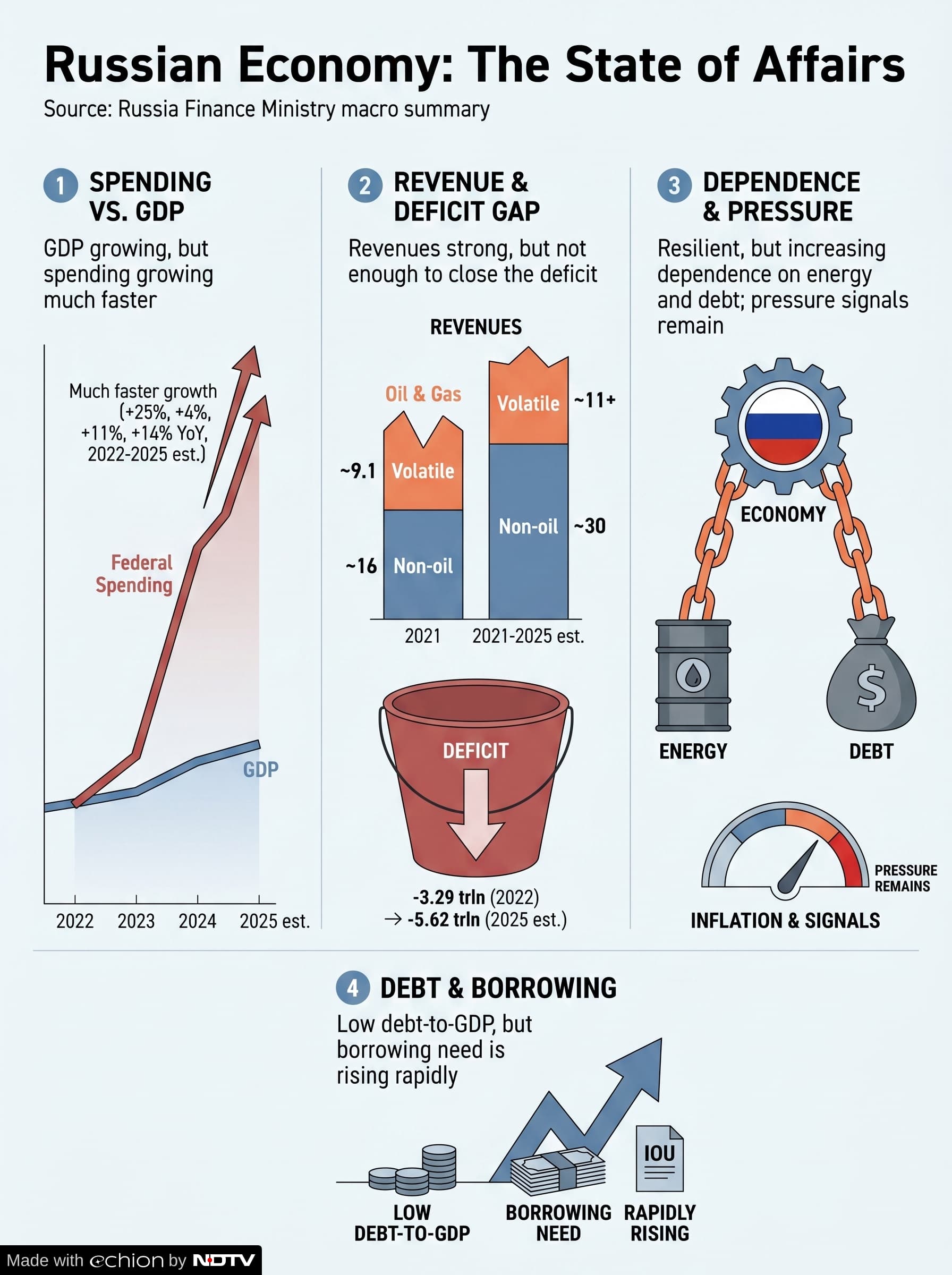
Data from Russia's own finance ministry shows a sharp shift in budget structure.
- Expenditure has surged since 2022
- Defence and security outlays have risen steeply
- Oil & gas revenues fluctuate with prices; but importers like India and China are ramping up supply amid the Iran war.
- Non-oil revenues (VAT, profit tax, import duties) have risen sharply
Besides, Russia is spending an estimated 47 billion rubles ($625 million) daily on the war in Ukraine, according to a report from Euromaidan Press. In 2025, Russia's direct defence spending reaching an estimated $137.9 billion to $142 billion -- roughly 7.3 per cent of the country's GDP.
At the same time, deficits have widened:
- 2022: -3.29 trillion rubles
- 2023: -3.23 trillion rubles
- 2024: -3.47 trillion rubles
- 2025: -5.62 trillion rubles
The non-oil deficit remains deeply negative. This means Russia still relies heavily on energy to balance books. This is where Nilsson's $100 oil comment fits.
West Is Misreading Russia?
A third view complicates the picture. Some analysts argue Western governments have cut themselves off from real Russian economic signals since 2014:
- Ratings agencies withdrew
- Business councils shut
- Embassies downsized
- Direct economic engagement ended
They say this has created an echo chamber where any positive Russian data is dismissed as fake, and any negative projection is amplified. This view says Russia is not collapsing, but is instead adapting into a war economy with lower civilian growth and higher state control.
Russian Economy: What Is Clearly Visible
Regardless of who is right on inflation or GDP:
- Russia is the most sanctioned country in history (over 15,000 sanctions)
- The economy is now military-centred
- Civilian sectors show strain
- Labour shortages are real
- High interest rates are hurting businesses
- Budget dependence on oil remains high
- Data transparency is far lower than pre-2022
The debate is no longer about whether Russia is under stress. It is. The debate is whether the stress is manageable and contained (Moscow's version), or masked and building toward a shock (Sweden/SITE view). And that depends on whether one trusts Rosstat's numbers.
Right now, many researchers say those numbers must be cited with caution. Because in Russia's case, statistics have become part of the war.
Track Latest News Live on NDTV.com and get news updates from India and around the world


