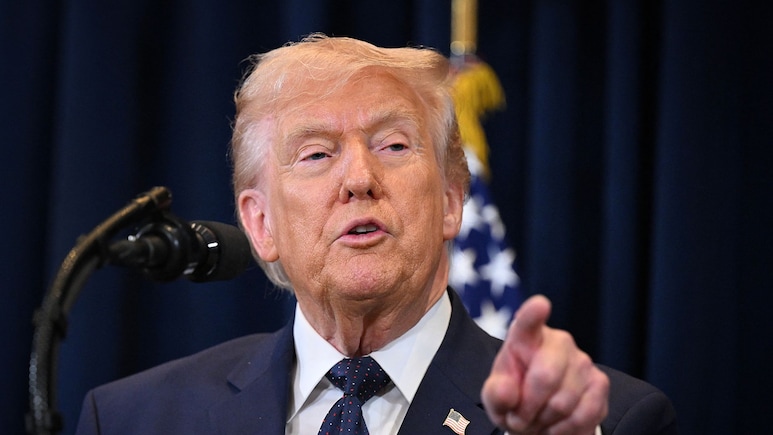
Three weeks into the US and Israel's unilateral war on Iran, Donald Trump is considering “winding down” after Tehran's retaliatory hits at energy sites, military assets, and even distant Western bases.
The US President said on Friday that Washington was “getting very close to meeting our objectives (in the war) as we consider winding down our great Military efforts in the Middle East.”
This came even as the US deployed 2,500 extra personnel. At the same time, the administration eased some sanctions on Iranian oil already at sea to help control rising fuel prices.
The Iran war began with US-Israeli strikes on February 28 and has steadily expanded. The joint operations have killed several top Iranian officials, including Supreme Leader Ayatollah Ali Khamenei and army chief Ali Larijani.
In retaliation, Iran has closed the Strait of Hormuz, a route that carries around 20% of global oil and gas, for the US and its allies.
Disruptions there have driven oil prices to about $120 per barrel in the US. Higher oil prices gradually push up fuel costs, with even a 10% rise adding around 20 cents per gallon in the US, while also increasing electricity and transport costs as energy markets are linked. This reduces consumer purchasing power, as households spend more on fuel and utilities and less on other goods.
On March 18, Israel struck the South Pars gas field. The field is the world's largest natural gas reserve, shared by Iran and Qatar. It is critical for Iran's domestic energy and for Qatar's LNG exports.
Iran responded by targeting Qatar's Ras Laffan Industrial City, which houses a major LNG facility connected to the same field. The site accounted for about 20% of global LNG supply. The strike caused fires and damage.
Iran also claimed it had struck a US F-35. The US did not confirm a direct hit but said one aircraft made an emergency landing and the pilot was safe. The aircraft is a key part of US air power.
Iran also showed longer-range capability by reportedly launching missiles towards Diego Garcia, a key US-UK base about 4,000 km away. According to US officials, one missile failed, and another may have been intercepted.
On March 21, Israel hit the Natanz nuclear facility near Tehran. In response, Iranian missiles reached Israel. They struck Dimona, a sensitive nuclear site, injuring over 100 people, as per Israeli officials.
Track Latest News Live on NDTV.com and get news updates from India and around the world


