
The global economy is expected to stay fairly strong in 2026, but there are challenges ahead, according to the World Economic Forum (WEF).
At least 53 per cent of top economists think the global economy may weaken this year, but this is better than last year, when 72 per cent were worried. Twenty-eight per cent expect no big change, and 19 per cent think the economy could get stronger, according to WEF's latest Chief Economists Outlook report.
-

-
 Who Is Rajiv Mehta? Lilavati Hospital Trustee To Speak At NDTV World Summit 2026
-
 Ex-CIA Director To Decode 'War In Times Of AI' At NDTV World Summit
-
 From Call Centre To Billion-Dollar Disruptor: Nikhil Kamath At NDTV World Summit
-
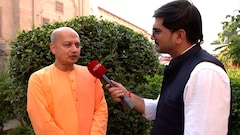 'Every 5 Years, You'll See A New India': Swami Sarvapriyananda Ahead Of NDTV World Summit
-
 AI Can Think, But Can It Be Conscious? Swami Sarvapriyananda Weighs In
-
 Alain Ebobisse, Africa50 CEO, To Attend NDTV World Summit 2026. All About Him
-
 Kriti Sanon At NDTV World Summit: A Look At Her Career And Business Ventures
-
 Ex-CIA Director To Decode 'War In Times Of AI' At NDTV World Summit
-
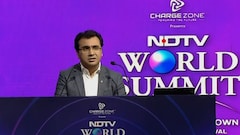 Who Is Vikram Rai, CEO, South Asia GE Aerospace, Set To Attend The NDTV World Summit 2026
-
 Rahul Kanwal: The World Is Changing. What Comes Next? | NDTV World Summit 2026
Big Risks To Watch
Economists have warned about several risks to the global economy.
- Stock prices, especially in top US AI tech companies called the “magnificent seven,” are very high, making the market vulnerable.
- Gold has become popular as a safe investment, while cryptocurrencies have mostly fallen. Problems in US stocks or the US dollar could affect the whole world, but drops in gold, European, or Chinese stocks would have smaller effects.
- Debt is also a big concern. Global public debt reached $102 trillion in 2024 and is expected to equal nearly 100 per cent of the world's economy by 2029. Developing countries are borrowing faster than rich ones, which could lead to debt problems. Governments are likely to use higher inflation, taxes, and economic growth to manage these debts.
Government Spending Priorities
Faced with high debt and global uncertainty, governments are likely to focus spending on strategic areas:
- Defence: Nearly all advanced economies plan to increase defence spending, reflecting ongoing geopolitical tensions.
- Digital infrastructure and energy: Growth in AI and technology adoption will require more investment in data centres and energy systems.
- Health and social security: Advanced economies will face rising costs due to ageing populations, while emerging markets may see less change.
- Other sectors: Spending on education, transport, research, and environmental protection is expected to remain flat or decline in many regions.
Trade, Investment, Geo-economic Shifts
The US and China have reached a partial trade truce, but tariffs and technology restrictions remain high. Economists expect:
- Bilateral and regional trade agreements are increasing.
- US and China trade to remain constrained, with China redirecting exports to other markets.
- Global foreign direct investment (FDI) flows are expected to remain largely unchanged, though FDI into the US is expected to grow, while FDI into China may decline.
Inflation And Monetary Policy
- US: Inflation moderate to high but falling. Interest rates are expected to be lower.
- China: Low inflation, but improving slowly.
- Europe: Low inflation; monetary policy likely stable.
- South and East Asia: Mostly moderate inflation, policies staying the same.
Track Latest News Live on NDTV.com and get news updates from India and around the world


