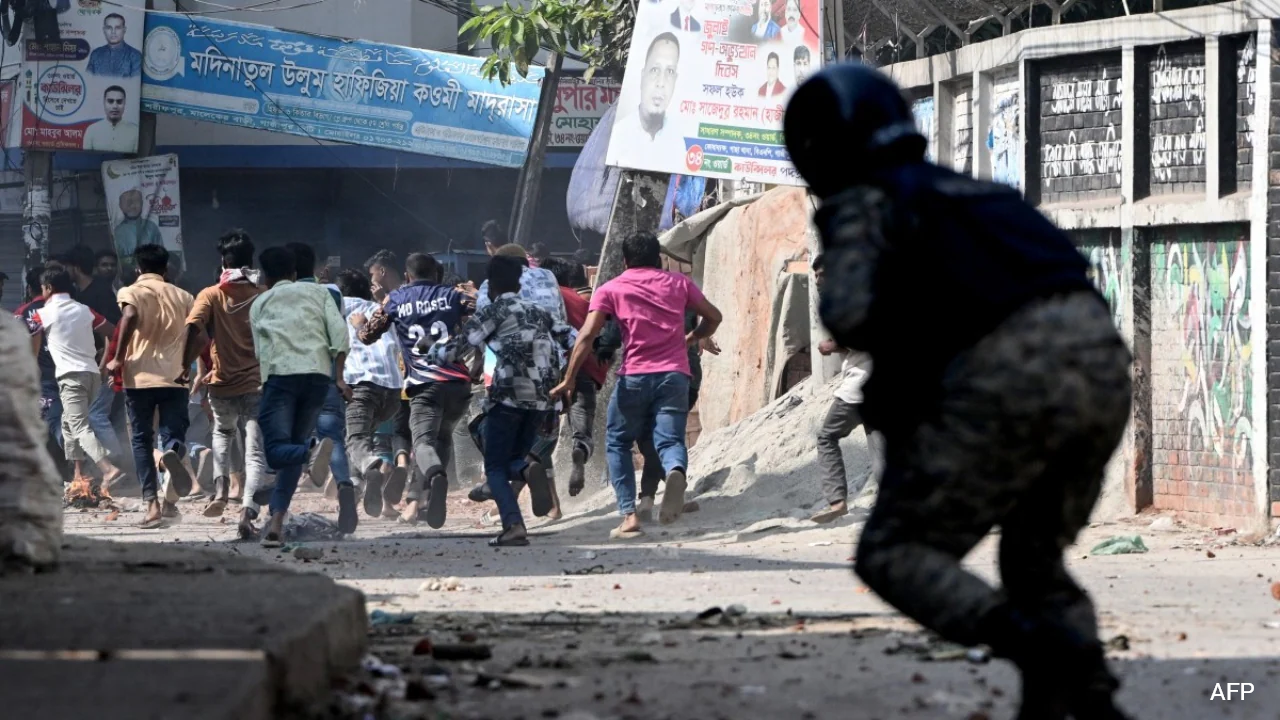
In Gazipur industrial district, just outside Bangladesh's capital Dhaka, thousands of garment workers walked off their daily-wage jobs to protest, demanding a hike in the minimum wage. The workers at ready-made garment (RMG) factories gathered on the streets of Gazipur to express their dissatisfaction with the decision to set their minimum wage at Tk 17,000. They have been demanding a minimum monthly wage of Tk 30,000.
To press home the demands, workers blocked highways in several areas, forcing at least 50 factories to declare holidays amid the unrest, according to Bangladeshi media reports.
The blockades had brought traffic to a standstill on several sections of the Dhaka-Tangail and Dhaka-Mymensingh highways. Passengers and commuters using both highways were left facing severe disruption.
Authorities at 16 factories have announced a closure till Thursday, while several others have announced shutdowns for security reasons after reports of vandalism, the Dhaka Tribune reported.
Several garment factories were allegedly attacked and vandalised in the unrest that gained momentum earlier this week, with groups of people allegedly pushing against factory gates.
The people vandalised factories, damaged furniture and other property. Police claimed the attacks were conducted by outsiders posing as workers to create panic among factory owners and employees, leaving as many as 11 law enforcement personnel injured.
The current minimum wage for garment workers in Bangladesh is Tk 12,500. Following lengthy discussions on Tuesday night, the Minimum Wage Board set a new minimum wage of Tk 17,000, however, the workers demanded more, according to Prothom Alo.
The wage hike comes after months of demonstrations across Bangladesh's garment manufacturing hubs, where workers have repeatedly protested over low pay and rising living costs. The unrest has disrupted production at several factories in the world's second-largest garment-exporting country after China.
The Underbelly Of Sweatshops
Dozens of sweatshop operations, synonymous with the garment industry, have sprouted across Dhaka over the past decades, profiting from the fast fashion boom. These sweatshops have long been scrutinised by critics of the fast-fashion excesses of capitalism for subjecting workers to low wages, poor working conditions, and occupational hazards.
The Bangladeshi government has long claimed it wants to improve conditions for these workers but worries about the knock-on consequences for the millions who now depend on the industry for jobs.
Track Latest News Live on NDTV.com and get news updates from India and around the world


