





Cerebras IPO drew attention with a near $100 billion market valuation debut last week.
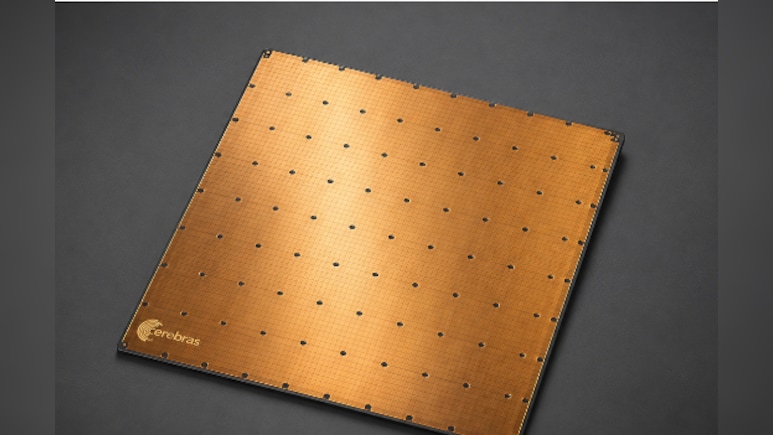
The company's WSE-3 chip is emerging as a challenger to Nvidia's GPUs.
Cerebras also offers cloud computing services which places it in closer competition with Nvidia's ecosystem partners.
The AI chip battle is no longer just Nvidia's to dominate. Cerebras Systems' Wall Street debut this week made it clear. The company made a strong entry on Thursday as it closed with a market cap just below $100 billion, a level that instantly placed it in the same conversation as some of the world's biggest tech giants.
But the momentum didn't fully hold. By Friday, its first full trading session, the stock slipped about 10 per cent that shows early volatility after a high-profile listing.
Nevertheless, the listing ensured Cerebras stayed firmly in the spotlight with the company now being directly compared with Nvidia in the fast-moving AI chip race.
For years, Nvidia has been the default winner of the AI boom with its graphics processing units (GPUs) powering the training of large language models across the industry. Its GPUs became the backbone of the AI revolution which are designed for general-purpose parallel computing at massive scale.
But Cerebras is attacking the problem from a different direction.
“We build the biggest chips in the semiconductor industry. Big chips process more information in less time and deliver results more quickly,” CEO and co-founder Andrew Feldman told CNBC.
Instead of GPUs, Cerebras builds enormous chips roughly the size of a “dinner plate.”
The company says its WSE-3 chip is 57 times larger than the biggest GPU and packs about 50 times more transistors which aims to process AI workloads in a fundamentally different way.
The Nvidia dominance is now being tested by a shift inside AI itself. The industry is gradually moving from training models to inference where AI systems respond, decide and act in real time. That transition opens space for alternative chip architectures built for speed and task-specific performance.
Cerebras fits into this category with its WSE-3 chip, a custom ASIC (application-specific integrated circuit) built not for general-purpose computing like GPU but for highly specialised AI workloads.
While Nvidia continues to get its most advanced AI chips manufactured using TSMC's most cutting-edge production nodes, Cerebras continues to rely on its “less advanced” 5-nanometre manufacturing process.
Founded in Silicon Valley in 2016, Cerebras had once attempted a public listing in 2024 but pulled it back amid concerns over its heavy reliance on a single customer, Microsoft-backed AI firm G42 in the United Arab Emirates. Since then, the company has repositioned itself beyond just being a chipmaker. It now runs its own chips inside data centres and offers computing power as a cloud service.
This puts Cerebras in closer competition with Nvidia's ecosystem partners like Microsoft, Google and Oracle even as those firms continue to rely heavily on Nvidia hardware.

