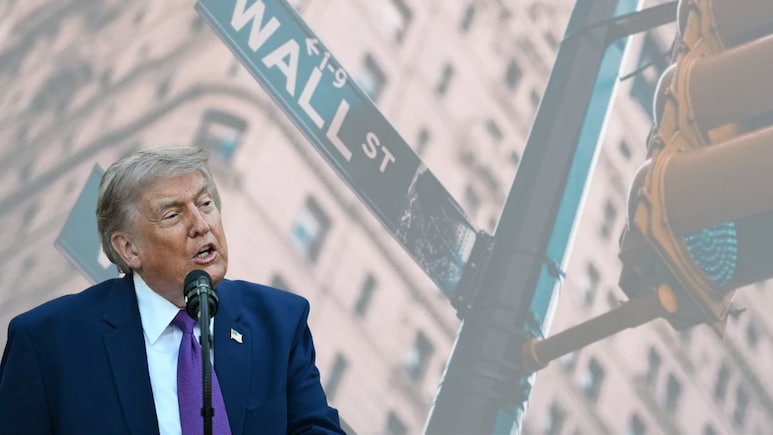
In the first three months of 2026, disclosures from the US Office of Government Ethics revealed something that many Wall Street veterans say they have never seen before.
A sitting US president averaging 40-60 trades a day. The trading account is in the name of Donald Trump.
- Total volume: between $220 million and $750 million.
- Total number of transactions: 3,642 to 3,700, depending on how filings are counted.
That is hedge-fund pace. Not presidential pace, say Wall Street observers. However, the White House says there is no conflict. And The Trump Organization says the trades are executed by third-party institutions using automated systems. The US President and his family, they say, do not direct individual buys and sells.
But the filings show something else. A pattern. The biggest positions cluster around America's most policy-sensitive companies:
- Nvidia
- Microsoft
- Amazon
- Meta Platforms
- Boeing
- Palantir Technologies
These are not random stocks. They sit at the crossroads of AI policy, chip export controls, antitrust scrutiny, defence contracts, cloud infrastructure, and geopolitics. Follow Markets Live Updates
Trump's filings show:
- Million-dollar purchases in AI chipmakers and enterprise software firms during a software selloff.
- Large sales of Microsoft, Amazon, and Meta on February 10 - the single biggest trading day in the quarter.
- Repeated buys in Nvidia before key US approvals for chip exports to China.
- Accumulation of Palantir shares weeks before Trump publicly praised the company and its ticker on social media.
Individually, each trade can be explained. Collectively, they raise eyebrows.
February 10: The Day That Stands Out
On February 10, 2026, the trading account in the name of Donald Trump:
- Sold $5-25 million each of Microsoft, Amazon, and Meta.
- Bought into software names hit by a viral essay predicting a "SaaS collapse".
- Added positions in Nvidia, Broadcom, Dell, Synopsys -- the "picks and shovels" of AI.
- That same morning, reports said the administration planned a tariff carve-out protecting hyperscalers from chip-related costs. Weeks later, Trump stood beside these very CEOs at the White House discussing data centres.
Markets hit records that day. The trades look, to market veterans, like a portfolio repositioning around policy direction. The White House says the timing is coincidental. The systems are automated.
Trading Around War Signals
The pattern repeats during the Iran conflict period too.
- As tensions rose, the account moved into gold, Treasuries, and energy ETFs.
- When Trump signaled de-escalation on social media, oil fell sharply.
- That same day, the account bought energy majors and defence stocks.
- Days later, it rotated into emerging markets and international exposure as war rhetoric cooled.
- Ethics experts say this is precisely why past presidents avoided active trading.
Because a president does not just receive market-moving information. A president creates it.
Trades Before The President Named The Stock
In multiple cases, the account built positions before Trump publicly mentioned companies.
- Dell shares were accumulated in February and March. In May, Trump told people to "go buy Dell". The stock surged.
- Intel saw steady buying before public praise.
- Palantir was bought repeatedly before Trump lauded its battlefield capabilities online.
None of this proves direction of trades. But it shows a brokerage account moving in sync with presidential speech.
Why Is This Different From Past US Presidents
Since the 1960s, US presidents have used blind trusts or broad index holdings to avoid even the appearance of conflict. They did not trade individual equities. This filing is believed to be the first modern look at an actively traded portfolio in a sitting president's name.
Even if no law is broken, the question becomes about optics, precedent, and perception. As one former White House ethics counsel noted in reports: "It misses the point. The president controls the events that move markets."
Another Layer: The Kushner Connection
Scrutiny also extends to Jared Kushner, Trump's son-in-law and Middle East envoy. His firm, Affinity Partners, reportedly manages billions from Gulf sovereign funds while he remains close to sensitive regional diplomacy.
There is no allegation of wrongdoing. But ethics watchdogs argue that finance, diplomacy, and proximity to power are sitting unusually close together in this administration.
The consistent line from Trump's camp:
- Assets are in a trust.
- Trades are automated.
- Third-party institutions have sole discretion.
- The president and family have no role in individual decisions.
- There are no conflicts of interest.
- Some transactions are marked "unsolicited."
- Several filings were submitted late, with minor penalties.
Legally, presidents can own and trade stocks. The debate is not about legality. It is about whether this should be happening at all. Veterans echo that they have never seen this level of activity from a sitting president. Because the portfolio sits at the exact intersection of:
- AI boom
- Chip export controls to China
- Antitrust scrutiny of Big Tech
- Defence spending
- Energy shocks from war
- Public statements that move markets in minutes
In such a volatile market environment, the timing of the trade becomes the story.
Trump And Prediction Markets
In March, several reports claimed insider trading ahead of US President Donald Trump's social media post on Iran. About 15 minutes before Trump posted about "productive" talks with Iran on social media, traders made large bets in crude oil futures. Soon after Trump's Truth Social post, oil prices fell sharply, making those positions profitable, according to a report in The Financial Times.
Traders have flagged similar "well-timed" bets ahead of US policy moves. Prediction platforms have also seen accurate wagers before geopolitical events. Trump Jr., meanwhile, is an investor in Polymarket.
"Prediction markets were meant to be a means of crowdsourcing predictions: lots of small bets from lots of people, producing a real-time signal on what will happen, but they're starting to look more like a means of monetising private information. On Polymarket, several highly unlikely outcomes have paid out suspiciously on time, because new or seldom-used accounts have placed large bets on specific events - military strikes, major political moves, and so on -- just before they occured, and earned handsome profits," said Akshay Chinchalkar, Managing Partner and Head of Strategy, The Wealth Company.
He added, "In some cases, prosecutors are even willing to say out loud the thing that everyone who's paying attention suspects: that insiders with access to confidential or classified information are the ones placing those bets... This part is critical. Once that's possible, the market price is no longer reflecting the wisdom of the crowd, but the wisdom of those who know secrets, and the publicly traded data can even magnify the problem, because people who want to follow strange trades into the market will try to copy them."
The platforms will claim that strange patterns don't have to be illegal, however, repeated long-shot wins around sensitive government actions are exactly what raise eyebrows.
Track Latest News Live on NDTV.com and get news updates from India and around the world


