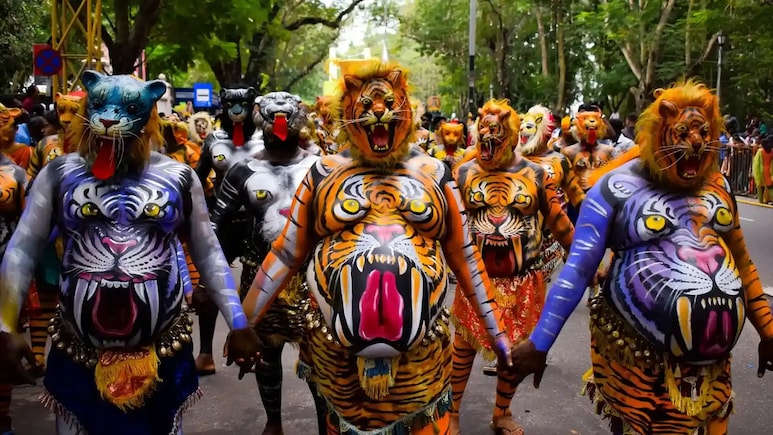
For one day during Onam, the streets of Thrissur seem to belong to the tigers. Drumbeats echo through the city, crowds line the roads, and vividly painted performers emerge in striking shades of yellow, black and red, prowling, leaping and dancing through the festivities. This is Pulikali, Kerala's iconic tiger dance, a tradition that transforms an ordinary urban landscape into a thrilling spectacle of colour, rhythm and folklore.
More than 200 years old, the celebration is one of Onam's most anticipated events, drawing thousands of spectators eager to witness a unique blend of artistry, athleticism and cultural heritage.
If Kerala is on your travel list for Onam 2026 (August 16-26), Pulikali deserves a place at the top of your itinerary.
What Is Pulikali?
Pulikali, which literally translates to "tiger play", is one of Kerala's most distinctive folk art forms. Celebrated on the fourth day of Onam, the festival features performers whose bodies are painted in vivid shades of yellow, red, white and black to resemble tigers.
Accompanied by the rhythmic sounds of traditional percussion instruments, dancers recreate the movements of tigers through playful chases, dramatic gestures and energetic performances.
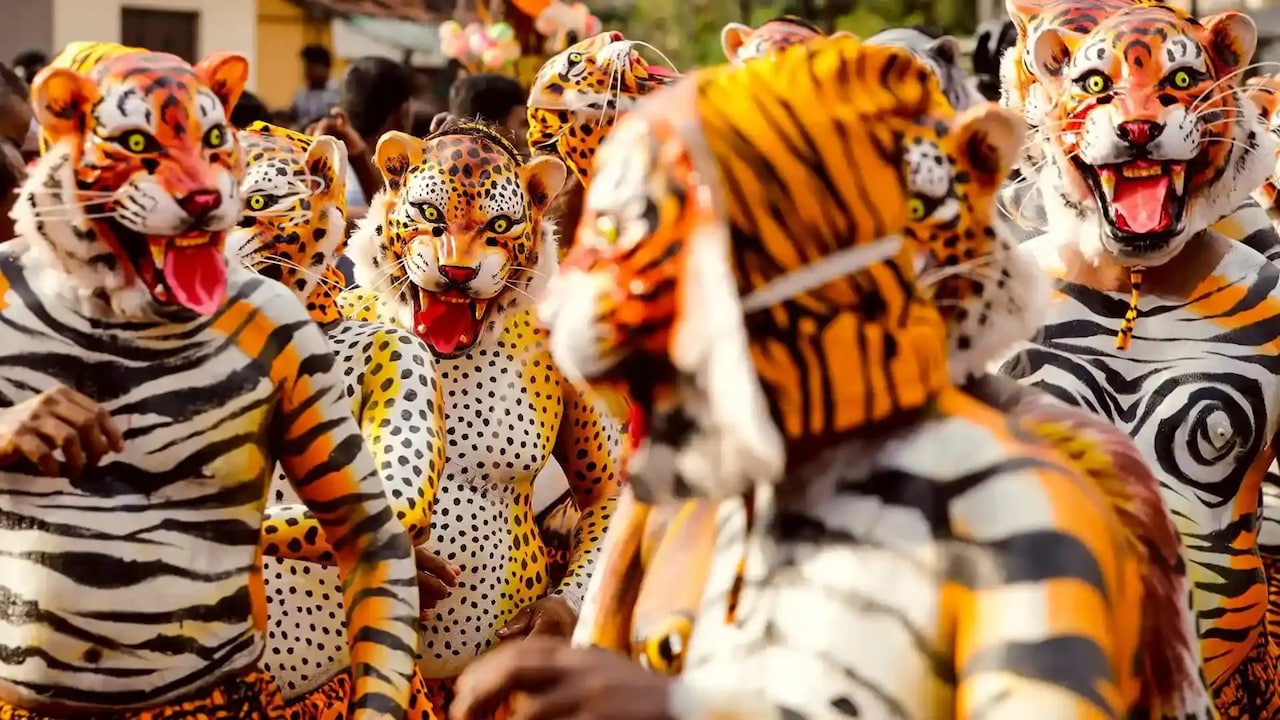
Photo Credit: keralatourism
The 200-Year-Old History Of Pulikali
Pulikali's origins can be traced back more than two centuries to the reign of Maharaja Rama Varma Sakthan Thampuran of Cochin, the ruler also credited with establishing the renowned Thrissur Pooram festival.
Historians believe the tradition evolved from local ceremonial processions and rituals, including the Pancha-taking ceremony associated with the Pattani Muslim community of Thrissur.
Under royal patronage, these performances gradually developed into a structured folk art form and became an integral part of Onam celebrations.
The Extraordinary Preparation Behind The Performance
While the lively street spectacle lasts only a day, the preparation begins weeks in advance.
Several traditional troupes, including Pulimada, Melakot and Viyyur groups, reportedly observe 41 days of fasting from the beginning of Karkidakam until the fourth day of Onam. The discipline is intended to help performers prepare physically for the demanding dance routines.
The process of transforming into a tiger starts the night before the event. Artists spend hours painting intricate tiger patterns by hand across their bodies. On the day of Pulikali, many performers first offer coconuts to Lord Ganesha at the Vadakkumnathan Temple before making their way to the performance grounds.
Why Thrissur Is The Best Place To Watch Pulikali
Although versions of Pulikali can be seen elsewhere in Kerala, Thrissur is widely regarded as the home of the most authentic and elaborate celebrations.
The action centres around Swaraj Round, where performers assemble and dance before huge crowds. Adding to the atmosphere is Pulimelam, the distinctive musical accompaniment associated with the festival. This rhythmic performance tradition, composed by Thottungal Ramankutty Asan, has been a part of Pulikali celebrations for more than seven decades.
The combination of music, athleticism, body art and community participation creates a festive environment unlike any other during the Onam season.
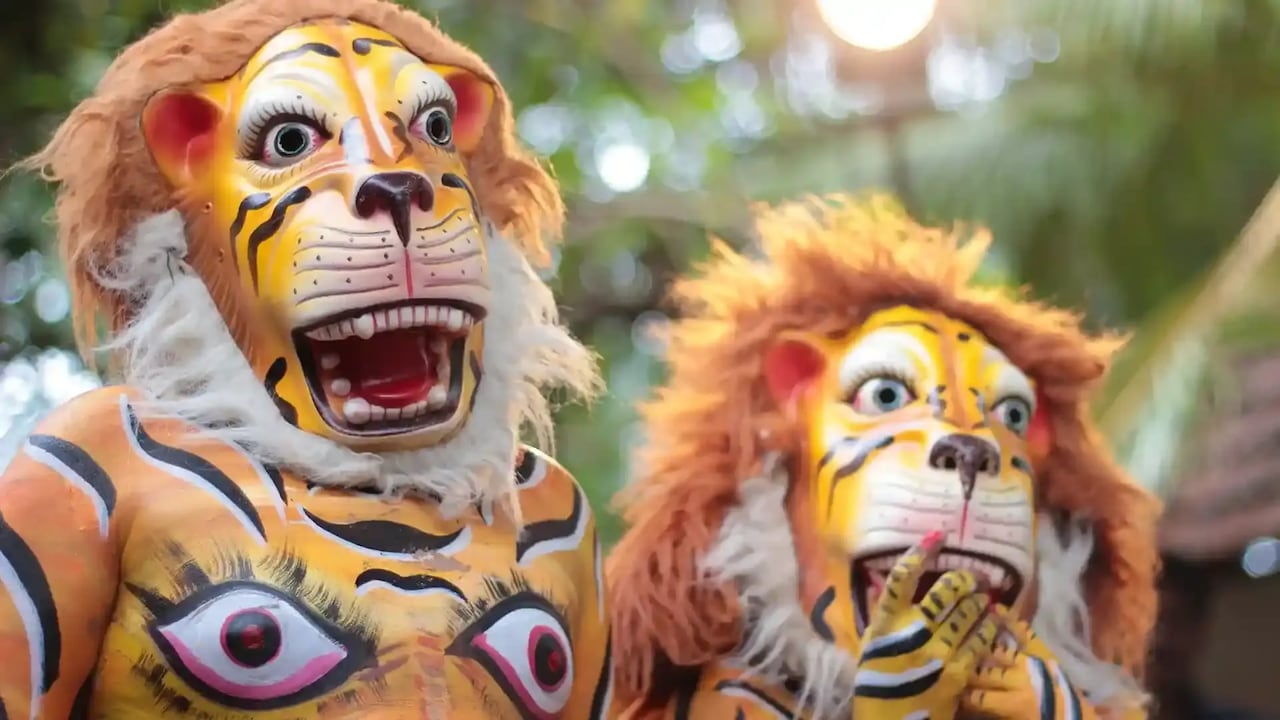
Photo Credit: keralatourism
Pulikali 2026: Date, Venue And Timings
- Date: August 29, 2026
- Venue: Swaraj Round, Thrissur, Kerala
- Timings: Performances generally begin by late morning or early afternoon and continue for several hours. Although Pulikali is a single-day event, preparations and related activities often begin the previous day, adding to the festive atmosphere across the city.
Is There An Entry Fee?
No. Pulikali is a public street festival and does not require tickets. Visitors can watch the performances free of charge. However, arriving early is recommended, particularly if you want an unobstructed view of the dancers and processions.
What To Expect In 2026
Organisers and tourism authorities have indicated plans to enhance the visitor experience through initiatives such as digital livestreams, dedicated viewing spaces for tourists and interactive experiences that may include augmented reality installations.
How To Reach Thrissur
- By Air: The nearest airport is Cochin International Airport, which is well connected to major Indian and international cities.
- By Train: Thrissur Railway Station is one of Kerala's major rail hubs and offers convenient connectivity across the state and beyond.
- By Road: Thrissur is easily accessible via National Highway 544 and is well served by state-run and private bus services. During the Onam season, additional transport services may also be introduced to handle the surge in visitors.


