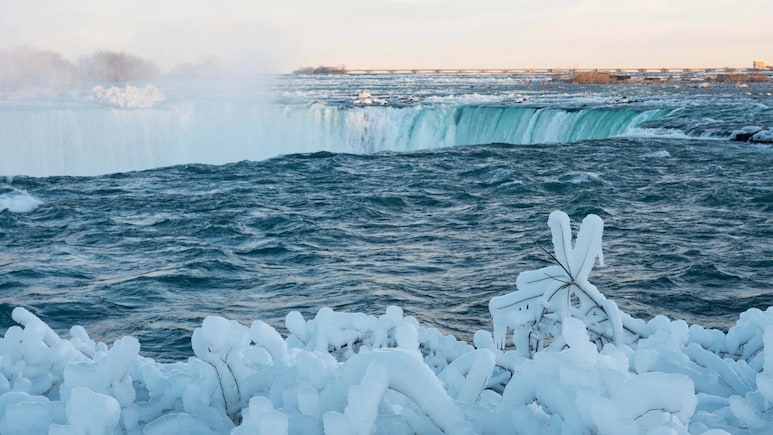
Social media platforms like X and Instagram are full of breathtaking footage of what appears to be the frozen Niagara Falls. When the temperature falls, mist crystallises into floating ice shards, railings turn white, and the gorge takes on a muffled quiet. While the Falls do not freeze solid, extreme cold paired with Arctic winds creates spectacular ice formations that transform the landscape into a winter fairy tale. During powerful polar vortexes, temperatures can dip below minus 20°C, allowing ice to form on cliffs, trees and walkways while huge volumes of water continue to thunder beneath. The result is a mesmerising cold-season sight that draws travellers and photographers from around the world.
❄️| Extreme cold freezes the iconic Niagara Falls.
— Earth (@earthcurated) January 26, 2026
pic.twitter.com/oyCw7mlTCe
Do The Niagara Falls Actually Freeze?
The Falls do not freeze completely. Even at the coldest points of winter, the immense power and volume of water prevent a solid freeze. What appears frozen is actually a thick coat of ice formed by super-cooled mist landing on surfaces and solidifying instantly. This creates dramatic ice crusts and domes that make it look like the waterfall has stopped.
Historically, the only time the falls nearly halted was in March 1848, when wind-driven ice from Lake Erie jammed the river's source, reducing flow for about 30 hours. Today, modern infrastructure prevents such large-scale ice jams.
In winter, much of the river is diverted for hydropower, but millions of litres per minute still flow over the brink, preserving the Falls' movement beneath the ice.
When Is Peak Winter and How Cold Does It Get?
January and February are the coldest months at Niagara Falls. Daytime temperatures hover around minus 1°C to 0°C, dropping to about minus 6°C or lower at night. Wind chill near the gorge can make it feel significantly colder.
Expect snow, icy paths and reduced daylight. Visitors should pack thermal layers, water-resistant boots with good grip, gloves, scarves and a windproof coat.
Best Winter Viewpoints At Niagara Falls
Prospect Point and the Observation Tower (US side)
These offer sweeping views of all three waterfalls and the icy gorge. On some winter days, the gorge lift provides access to lower viewing decks for closer photographs.
Terrapin Point, Goat Island (US side)
This viewpoint sits closest to Horseshoe Falls on the American side. It's especially atmospheric in peak cold, when mist freezes into thick, glittering layers on the surrounding railings and trees.
Table Rock and Queen Victoria Park (Canada side)
This is the best spot for standing right at the brink of Horseshoe Falls. Winter winds coat the nearby parkland in ice, making the experience particularly dramatic.
Things To Do in Winter In Niagara Falls
Journey Behind the Falls Attraction (Canada)
This wonderful experience is open year-round. Visitors descend through tunnels to viewing portals behind Horseshoe Falls. In winter, the lower deck often closes for safety, but the upper platforms stay open. Winter tickets are usually cheaper.
Niagara SkyWheel (Canada)
Heated gondolas lift travellers high above Clifton Hill for panoramic winter vistas. The SkyWheel runs all year, and nighttime rides offer beautiful views of snowy streets and illuminated falls.
Nightly Illumination
The Falls light up every evening in rich LED colours. In winter, illumination begins early due to early sunsets, making it ideal for a dusk stroll.
Fireworks & Winter Festival of Lights (Canada)
From mid-November to early January, Niagara celebrates the Winter Festival of Lights - Canada's largest free light festival. Expect millions of lights, themed installations and scheduled fireworks shows, especially around Christmas and New Year's.
A Sample One-Day Winter Itinerary In Niagara Falls
Morning
Start at Prospect Point to capture the frosted vistas. If conditions allow, head up the Observation Tower for sweeping winter panoramas.
Afternoon
Cross to the Canadian side. Visit Table Rock and take the Journey Behind the Falls experience for dramatic ice-framed views.
Late Afternoon
Ride the Niagara SkyWheel at golden hour for cosy, elevated sightseeing.
Evening
Head to Queen Victoria Park for the nightly illumination. During the Winter Festival of Lights, stay for the fireworks that often take place shortly after dusk.
Practical Winter Guide For Tourists Visiting Niagara Falls
Park Hours and Parking
Niagara Falls State Park (US) remains open 24/7 year-round. Winter parking fees vary by lot and are typically lower than summer rates. On the Canadian side, most attractions operate with reduced winter hours. Always check before visiting.
Border Crossing
The Rainbow Bridge is open around the clock for cars and pedestrians. US citizens require a passport, passport card or approved ID for land entry into Canada. Travellers of other nationalities must check visa or eTA requirements.
Safety Tips
Wear sturdy boots with traction, as pathways can be icy. Mist freezes on clothing and equipment, so protect cameras and phones. Carry spare warm batteries. Always check weather advisories, as conditions can change quickly.
Track Latest News Live on NDTV.com and get news updates from India and around the world


