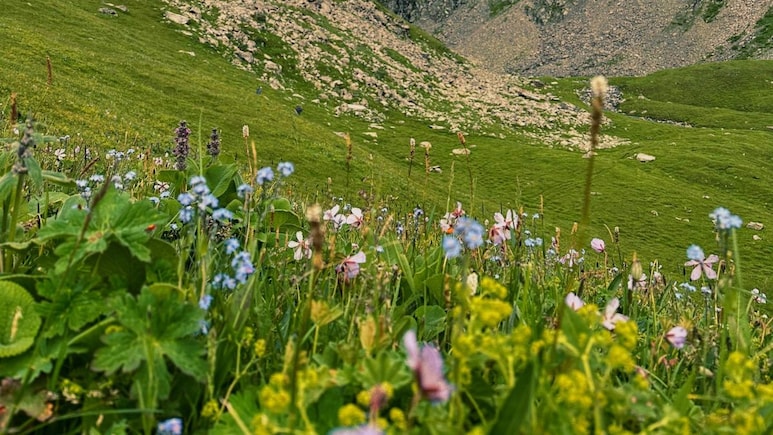
If there's one trek in India that feels straight out of a fairytale, it's the Valley of Flowers National Park in Uttarakhand. The endless green meadows here are covered with over 400 species of blooming Himalayan flowers, with snow-capped peaks standing tall in the background. This magical landscape actually exists, and monsoon is when it comes alive in its full glory.
Valley Of Flowers Is India's Most Magical Monsoon Trek
A UNESCO World Heritage Site, this breathtaking valley is one of India's most spectacular seasonal wonders. Hidden in the Chamoli district of Uttarakhand at an altitude of around 3,600 metres, it turns into a botanical wonderland between July and September, making it one of the most unforgettable monsoon treks in the country.
Spread across 87 square kilometres, the valley is covered with beautiful alpine blooms in shades of pink, yellow, purple, red, and white. The valley was famously "rediscovered" in 1931 when British mountaineer Frank S Smythe and his team accidentally stumbled upon it after losing their way while returning from an expedition. Captivated by its beauty, they named it exactly what it looked like: The Valley of Flowers.
The park is home to 500+ species of higher plants, with nearly 500 flowering varieties recorded here. During peak bloom, the valley explodes into colours with flowers like poppies, orchids, marigolds, primulas, daisies, lilies, geraniums, and a lot more. You'll also find rare medicinal plants like Aconitum heterophyllum, Arnebia benthamii, and Taxus wallichiana, species valued for their ecological and medicinal significance.
Wildlife Thrives Here Too
The valley is part of the larger Nanda Devi Biosphere Reserve, which means it's also rich in wildlife. If luck is on your side, you might spot Himalayan musk deer, red foxes, langurs, Himalayan goral, flying squirrels, exotic butterflies, and more. And yes, though extremely rare to sight, this ecosystem is also home to the elusive snow leopard.
What The Trek Looks Like
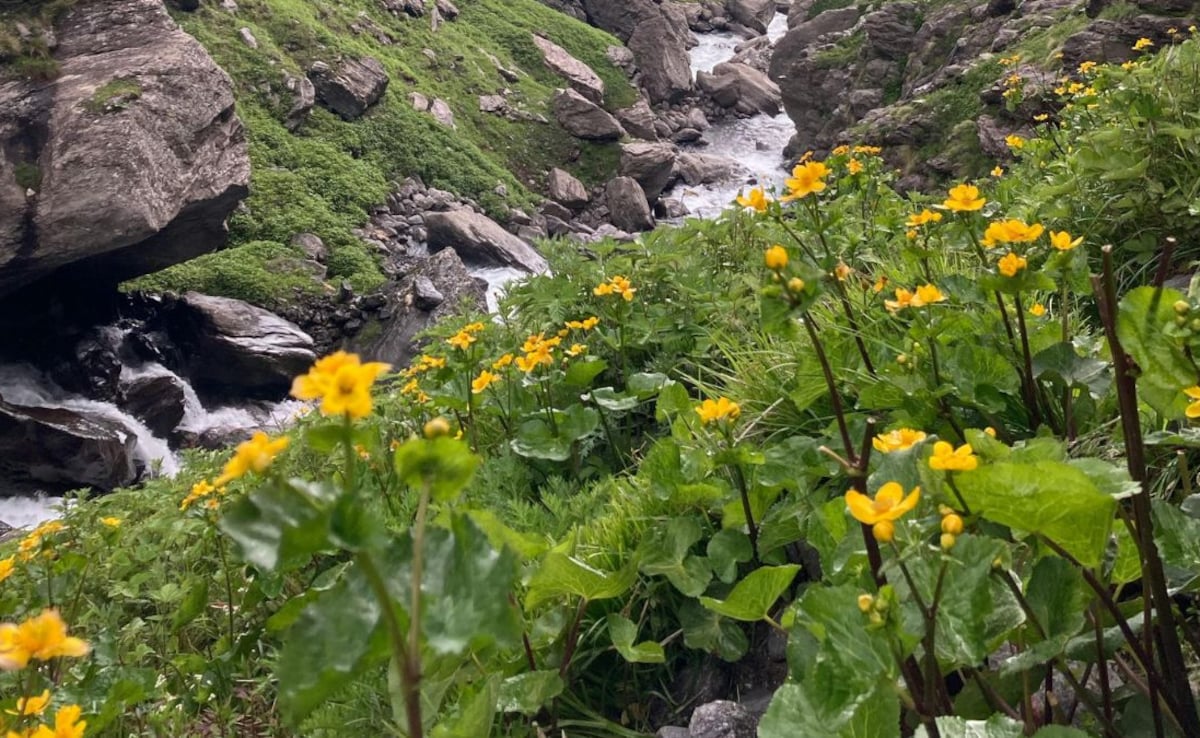
Photo: Pexels
The journey begins at Govindghat, with Ghangaria serving as the base camp. The trek is considered moderate, making it ideal for fit beginners and experienced trekkers alike. You can fly, drive, or take a train to Dehradun, rest overnight, and prepare for the mountain drive ahead.
Next comes a long but stunning 10-11 hour drive to Govindghat that takes you through scenic Himalayan roads. From here, the 15-km trail to Ghangaria takes you through forests, bridges, streams, and everything else nature has to offer. As night falls, you can stay at a guesthouse or choose to camp. Tiny, peaceful, and incredibly charming, Ghangaria is the final inhabited village before the valley. Here, you can walk around, meet locals, and soak in the rustic Himalayan simplicity.
The next morning, a 4-km trek from Ghangaria leads to the valley itself. Suddenly, you will find yourself in a massive and colourful open meadow stretching endlessly. It's one of those rare travel moments that stays with you forever.
This Should Be Your Monsoon Adventure This Year
Most people avoid trekking in the monsoon, but that's exactly when this trek is best experienced. The rains turn the valley into a carpet of fresh flowers. The sweet spot is mid-July to early September, when the valley reaches peak bloom. This is what nature looks like at its absolute wildest and most beautiful.
If you've been waiting for a sign to plan a monsoon trek this year, this is it.
Track Latest News Live on NDTV.com and get news updates from India and around the world


