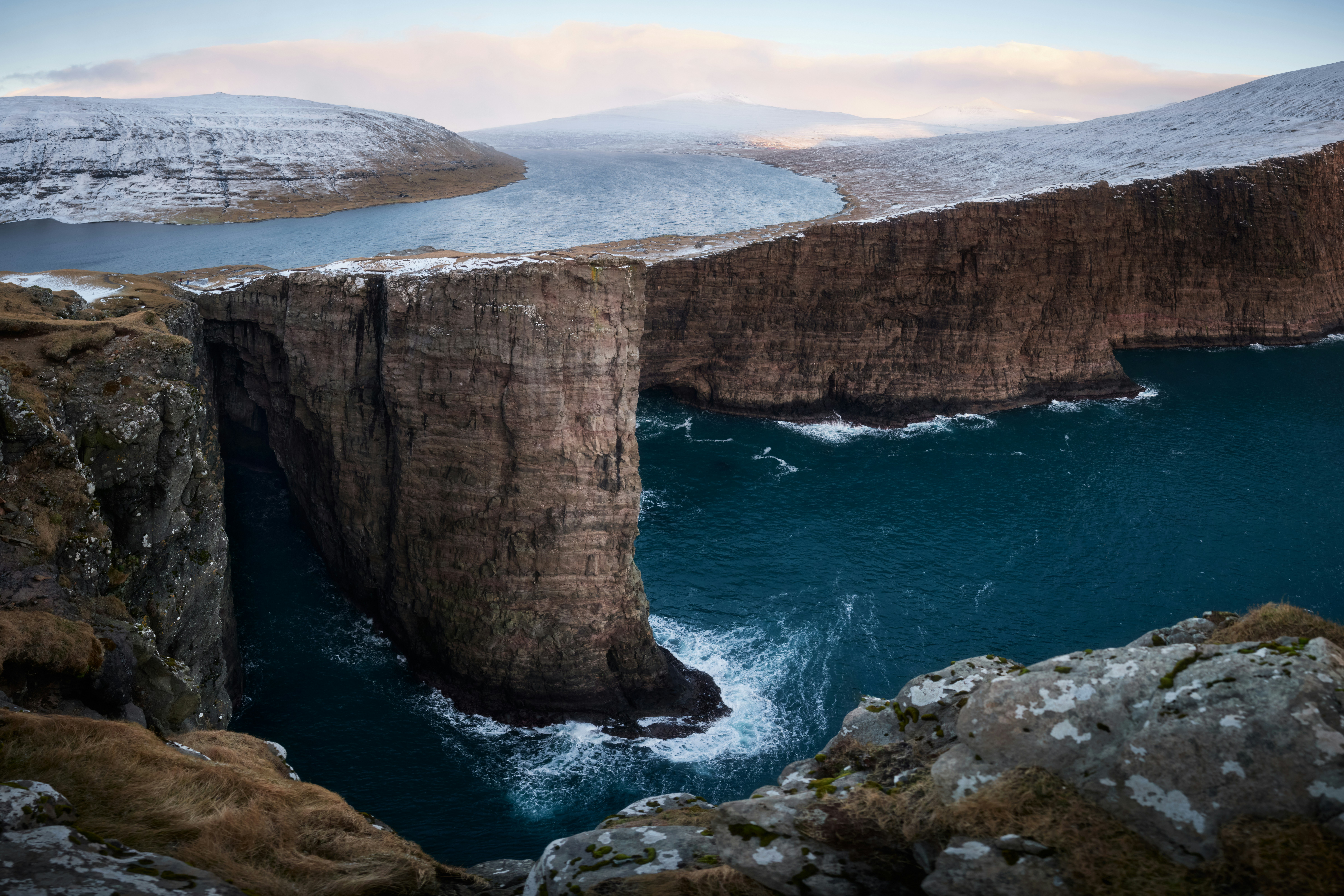
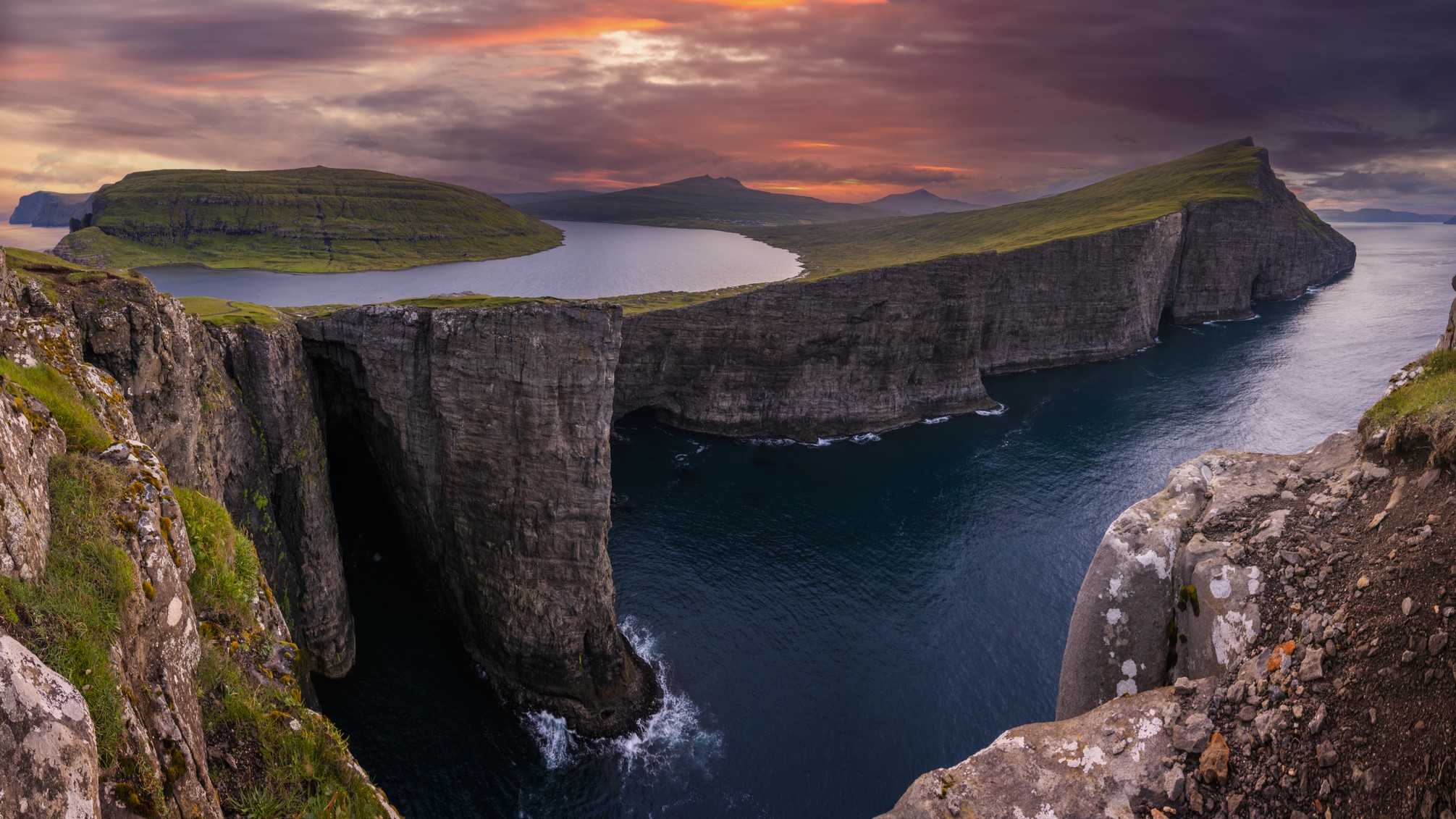
There are places in the world that photographs simply cannot prepare you for, and Sørvágsvatn in the Faroe Islands is firmly at the top of that list. It is the largest lake on the archipelago, spread across 3.4 square kilometres of the island of Vágar, and from the right viewpoint, it does something that your eyes will refuse to believe: it appears to hover in mid-air above the Atlantic Ocean, as though someone has suspended an entire body of freshwater at a height that makes no physical sense. It is not a digital edit, not a trick of post-processing, and not a drone photograph taken at an unusual angle. It is simply nature, doing something extraordinary with perspective, cliff faces, and light.
Also Read: The World's Largest Lake Is Called A Sea And Touches Five Countries, Here Is Why You Should Visit
The Lake That Has Two Names
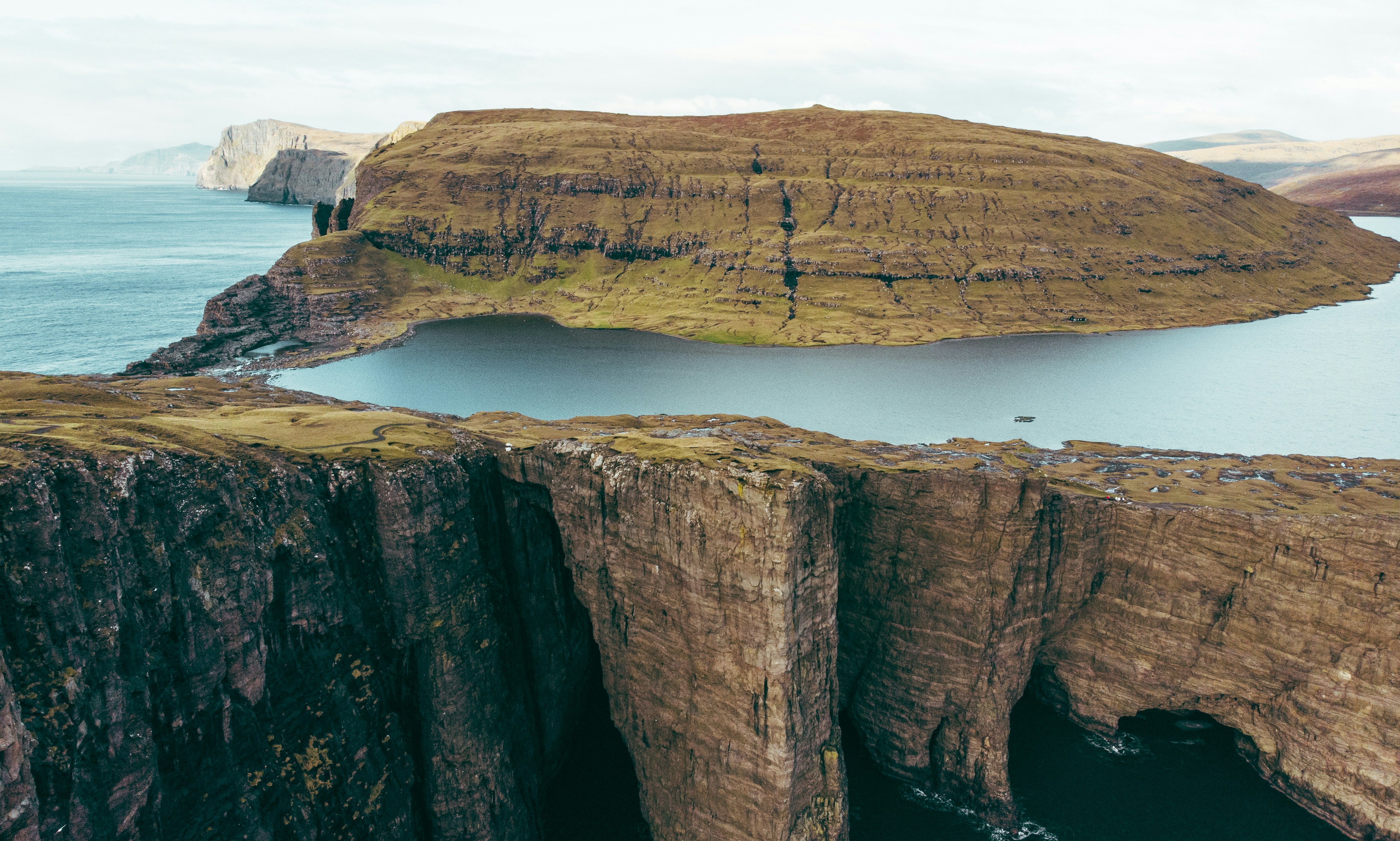
Before anything else, a quick clarification on the name. Sørvágsvatn (pronounced roughly as sur-vogs-vatn) is also called Leitisvatn, and this dual identity is a matter of genuinely contested local pride. The people of Sørvágur, a village to the west of the lake, call it Sørvágsvatn, meaning "the lake by Sørvágur." The people of Miðvágur and Sandavágur to the east call it Leitisvatn, meaning "the lake by Leiti." The locals themselves mostly just call it Vatnið, which simply means "the lake," which is a very practical solution to an argument that has apparently been going on for some time. For the purposes of this article, Sørvágsvatn it is.
The lake sits on Vágar, the westernmost island in the Faroe archipelago, which is also the island where the only airport in the entire archipelago is located. Vágar Airport is a mere 15 minutes by car from the lake, which makes Sørvágsvatn one of the most conveniently situated natural wonders on earth relative to an airport.
The Science Behind The Illusion
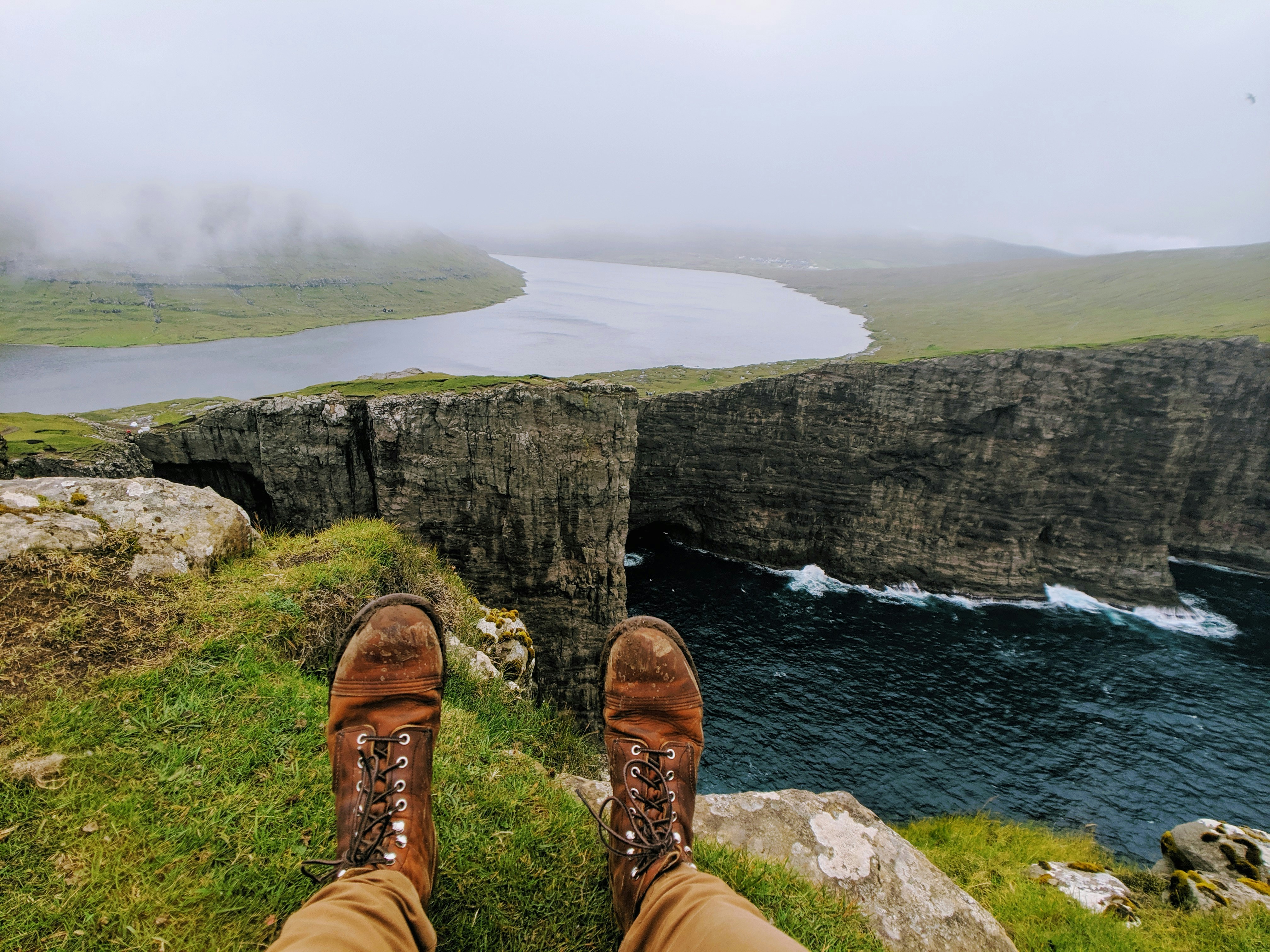
The floating lake effect is a genuine optical illusion, and understanding the science behind it makes it, if anything, more impressive rather than less.
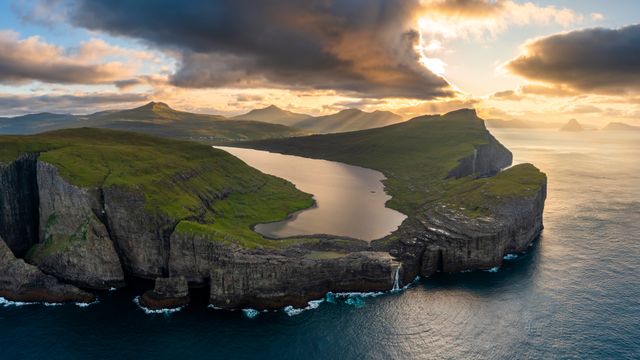
The optical illusion is visible from a limited number of angles along the lake's southern tip. The trick functions because the lake sits 105 feet (32 metres) above sea level at the top of a cliff that slopes slightly inland toward the lake. Therefore, from a point a few hundred feet out, it looks like the lakeshore reaches all the way to the edge of the cliff, creating the illusion that the water extends over the sea.
To put it more simply: the lake sits on a plateau, and the cliff face between the lake and the ocean is not visible from the specific viewpoint on the Trælanípa cliff. What you see, from that particular angle, is the surface of the lake appearing to end at the cliff edge, which is itself out of view, making it look as though the water is simply suspended above the open ocean. The higher cliffs on either side of the Bøsdalafossur waterfall (the lake's outlet) compound the illusion by appearing to place the lake at an even greater height above the sea than it actually occupies.
Sørvágsvatn empties into the Atlantic Ocean through a waterfall called Bøsdalafossur. This 30-metre waterfall, which falls directly into the sea, is itself one of the most dramatic sights on the entire hike and is worth the journey on its own terms. The combination of a freshwater lake draining into the ocean via a cliff waterfall, with the visual trick of perspective layered on top, makes Sørvágsvatn unlike any other lake experience in the world.
The best angle for the famous photograph is from the Trælanípa cliff, which sits to the south of the lake. Trælanípa Cliff is a mere 13-minute walk, just over half a mile, from Bøsdalafossur Waterfall. From partway up the cliff, looking back across the lake with the ocean beyond, the illusion clicks into place. The viewpoint itself requires care, the drop is serious and the paths near the edge are uneven, but it is accessible to any reasonably fit walker.
The Hike: What To Expect
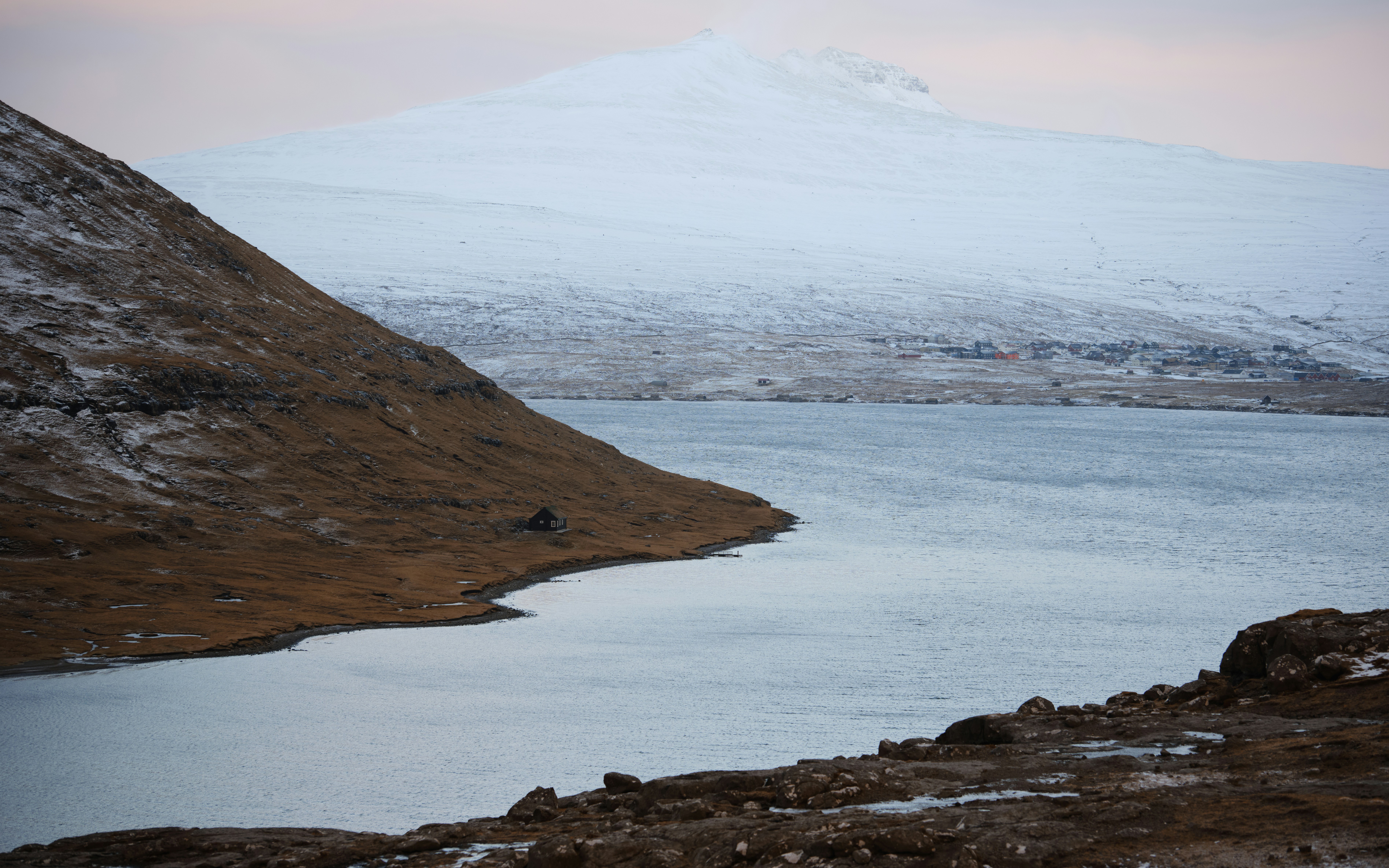
The trail to Sørvágsvatn, Trælanípa, and Bøsdalafossur is one of the most popular hikes in the Faroe Islands and one of its most rewarding. The good news for those who are not seasoned trekkers is that the hike to Sørvágsvatn is relatively easy. There are no significant elevation changes. Depending on the route you choose, it will take about 2.5 hours and 7.2 km for a roundtrip starting from the nearest village Miðvágur to the end of the lake and the waterfall Bøsdalafossur.
The trail begins near the church in Miðvágur village. All visitors must go through the main gate and check in at the landowners' reception at the beginning of the trail. There is a hiking fee charged at the trailhead, which goes to the landowners who maintain the trail and access. The fee is approximately USD 10 to 15 per person (around Rs 850 to 1,300). This is standard practice across many popular hikes in the Faroe Islands, so factor it in when planning.
The trail itself is mostly flat and unpaved. It follows the lake's southern shore and then climbs gently to the Trælanípa viewpoint before continuing down to Bøsdalafossur. Along the way, you pass through open moorland with dramatic views of the lake on one side and the ocean on the other. The walk is genuinely beautiful even before you reach the famous viewpoint, and while walking, you will enjoy beautiful views and encounter a large population of oystercatchers and curlews.
Also Read: Why The World's Fourth Largest Island Is Called The Red Island
A note on footwear and weather: The Faroe Islands are famously unpredictable in terms of weather. It can be sunny, then foggy, then raining, then sunny again within the space of an hour, and this is not an exaggeration. Proper walking shoes with grip are essential (the trail can be slippery after rain), and a waterproof jacket is not optional, it is required kit. The Faroe Islands have a saying that you can experience all four seasons in a single day, and Sørvágsvatn is exposed enough to make this feel very true.
What Else To Do On Vágar Island
Sørvágsvatn is the headline attraction on Vágar, but the island has more to offer than a single lake and a viewpoint.
Bøsdalafossur Waterfall is built into the Sørvágsvatn hike and is unmissable. The sight of a substantial waterfall dropping directly from a cliff into the open ocean, with no beach or shoreline to interrupt the fall, is genuinely spectacular. It is one of those images that stays with you.
Múlafossur Waterfall at Gásadalur is about twenty minutes by car from Miðvágur and is probably the second most photographed spot in the Faroe Islands. The waterfall plunges off a cliff into the sea against the backdrop of the village of Gásadalur, with the ocean and distant islands beyond. This waterfall is the epitome of the Faroe Islands: mountains, cliffs, a quaint village, and a waterfall plunging into the ocean.
Drangarnir Sea Stacks are also reachable from Vágar and offer some of the most dramatic coastal scenery in the entire archipelago. Two enormous sea stacks rise from the water at the western edge of the island, and the hike to view them involves some of the most exposed and spectacular walking in the Faroe Islands.
Kayaking on Sørvágsvatn is available for those who want to experience the lake from its surface. Kayaking on Lake Leitisvatn is one of the most popular things to do on the island. Seeing the cliff and the ocean from the water level gives the whole experience a completely different scale.
Birdwatching is serious business on Vágar and throughout the Faroe Islands. The islands are on important migratory routes and support large colonies of puffins, gannets, razorbills, and fulmars, among many other species. The cliffs around Sørvágsvatn are particularly good for seabirds.
Getting There: A Guide For Indian Travellers
The Faroe Islands are an autonomous territory of the Kingdom of Denmark, located in the North Atlantic between Iceland and Scotland. They are not a mainstream Indian travel destination yet, but they are increasingly on the radar for serious travellers looking for genuinely off-beaten-path experiences.
Flights: There are no direct flights from India to the Faroe Islands. The most practical routes connect through Copenhagen (Scandinavian Airlines or Atlantic Airways), London Heathrow, or Reykjavik. From India, most travellers fly to London or Copenhagen first and then take a connecting flight to Vágar Airport (airport code FAE), which is the only airport in the entire Faroe Islands. Atlantic Airways is the national carrier and operates flights from Copenhagen, London, Edinburgh, and several other European cities. Total journey time from India is typically around fourteen to eighteen hours with connections.
Visa: Indian citizens require a Schengen visa to visit the Faroe Islands, even though the Faroes are not technically part of the European Union or the Schengen Area. However, a valid Schengen visa issued by any Schengen country is accepted for entry into the Faroe Islands. Apply through the Danish Embassy or Consulate in India.
Best time to visit: June to August offers the longest days (the Faroe Islands experience near-midnight sun in midsummer), the best hiking conditions, and the highest chance of clear weather. That said, the Faroe Islands are beautiful year-round, and the dramatic, moody skies of autumn and winter have their own appeal. For the iconic Sørvágsvatn photograph, good light and a degree of visibility are helpful, so summer visits give you the best odds.
Getting around: If you're staying in the capital of Tórshavn, it's a 45-minute drive to the lake. The Faroe Islands are well-connected internally by an impressive network of tunnels, bridges, and ferries. Renting a car is by far the most practical way to explore, and most major car rental companies operate at Vágar Airport.
Currency: The Danish krone (DKK) is used in the Faroe Islands. Credit cards are widely accepted.
Accommodation: The capital, Tórshavn, has a range of hotels and guesthouses. For proximity to Sørvágsvatn, staying in or near Miðvágur is most convenient. Guesthouses and self-catering cottages are available on Vágar itself.
Also Read: Why This Hillside Village In South Korea Is Painted In Pastel Colours
The Floating Lake
Sørvágsvatn is not a destination that announces itself loudly. The Faroe Islands do not have the marketing machine of more famous destinations, and the lake is not the kind of place you stumble upon by accident. You have to go specifically, you have to plan, and you have to accept that the weather may or may not cooperate on the day. But for Indian travellers who have made the journey, the lake delivers something that very few natural wonders actually do: a moment when your eyes tell you something impossible is happening, and you cannot figure out how. In a world where we have seen almost everything that geography and photography can offer, that is a genuinely rare experience. The floating lake of the Faroe Islands is worth every hour of the journey to reach it.
Track Latest News Live on NDTV.com and get news updates from India and around the world


