





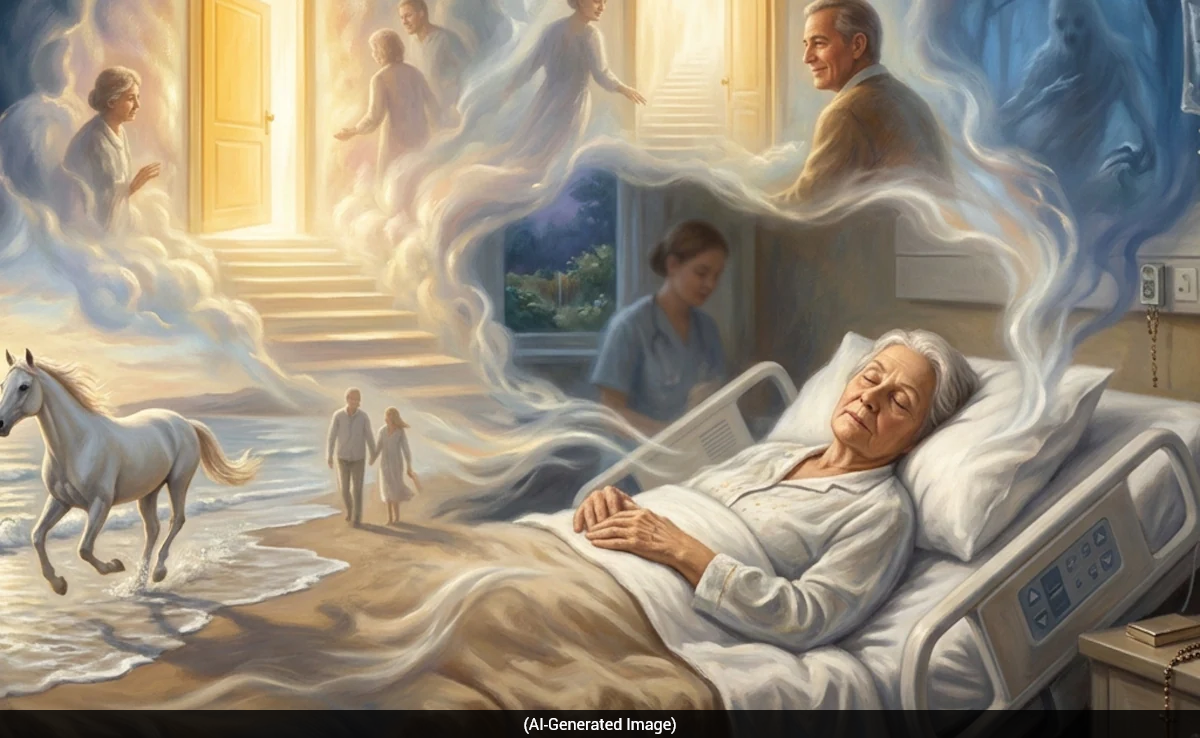
New research suggests that people in the final days of their lives tend to experience remarkably similar dreams and visions, offering comfort, and occasionally distress, as death approaches.
Scientists from the Azienda USL-IRCCS di Reggio Emilia in Italy questioned 239 palliative care workers, including nurses, hospice volunteers and psychologists, about the dreams their dying patients had described to them. Their findings, published in the journal Death Studies, point to a clear pattern of recurring images and themes in the final stage of life.
Many patients reported vivid dreams of being reunited with loved ones who had already passed away. Others described visions linked to the idea of crossing over - bright lights, staircases and open doorways. One patient recalled dreaming of her late husband telling her he was waiting for her. Another described climbing barefoot towards a glowing open door. A third recounted seeing a white horse galloping along a shoreline.
Not every vision was peaceful, however. Some patients reported deeply troubling dreams, including one who saw a monster bearing their mother's face pulling them downwards. Researchers believe such nightmarish visions may reflect unresolved fears about death or an unwillingness to let go.
The study's authors say these end-of-life dreams and visions, known as ELDVs, may serve as a psychological and even spiritual comfort, helping patients to come to terms with dying in a way that ordinary conversation sometimes cannot.
Lead researcher Elisa Rabitti noted that many patients are reluctant to speak about their visions, fearing they will be dismissed or thought confused. She called for greater clinical and cultural understanding of the phenomenon.
Notably, this is the first study of its kind to focus specifically on the sleep visions of the terminally ill, rather than those who have survived near-death experiences - though the imagery reported by both groups appears strikingly similar.
Track Latest News Live on NDTV.com and get news updates from India and around the world

