





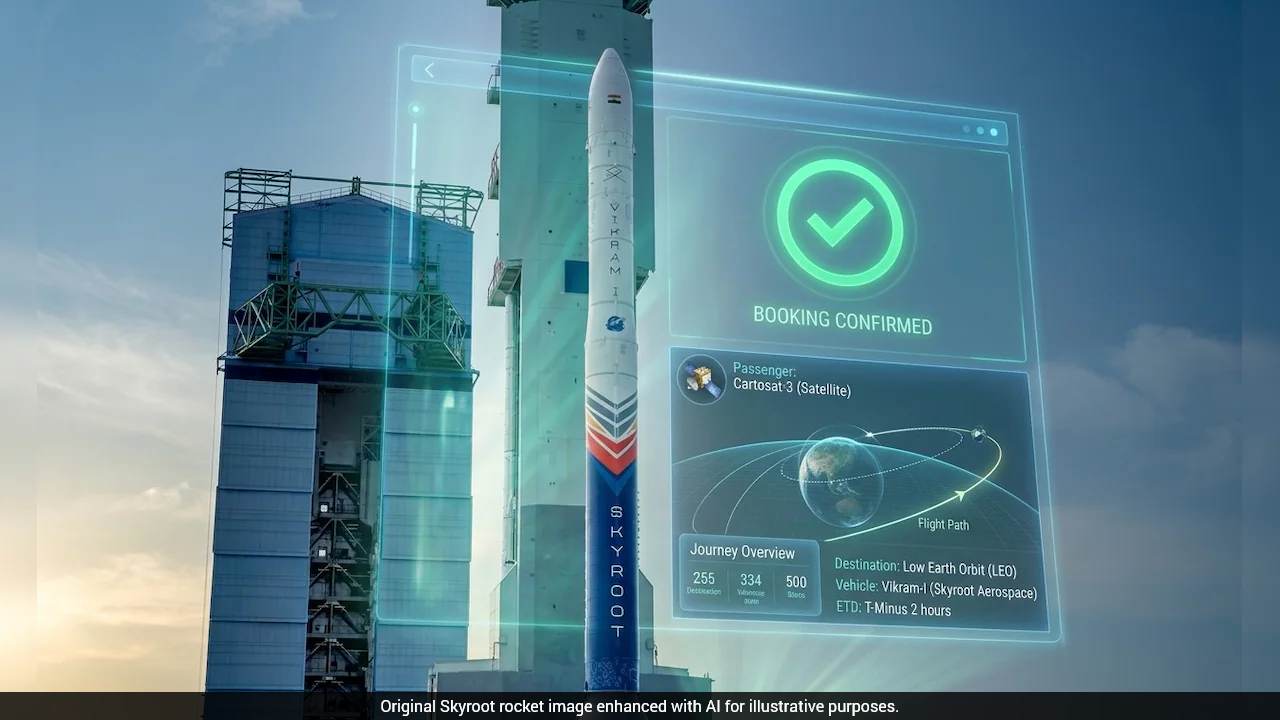
In a historic milestone for India's private space sector, Hyderabad-based startup Skyroot Aerospace is preparing for the maiden orbital flight of its indigenous rocket, Vikram-1. According to a BBC report, the upcoming Mission Aagaman marks the first time a completely privately developed orbital-class launch vehicle will attempt to fly from Indian soil. Space experts are increasingly tracking this mission, calling the advanced vehicle the ultimate 'cab to orbit' for the global satellite industry.
'Cab to Orbit': A Ride-Hailing Model for Space
The rocket is named after Vikram Sarabhai, who is widely regarded as the father of India's space programme. It is explicitly designed to be small and efficient, with the capacity to carry payloads of up to 350 kilograms into low Earth orbit. Skyroot co-founder and chief executive Pawan Kumar Chandana told the BBC that current access to space remains a major bottleneck, with satellite operators often waiting for months or even years for a launch opportunity.
To solve this problem, Skyroot aims to cut long wait times by offering dedicated missions tailored specifically for small payloads. Instead of sharing space on massive conventional rockets that operate like public buses or trains on rigid schedules, customers can book a launch tailored to their precise timeline and required orbit. Mr Chandana explained to the BBC that if you want to go to a friend's house, you do not need a train, you simply book a cab or an Uber. The company is offering that exact cab service to space, allowing operators to ride to a unique location in orbit to place a satellite.
Also Read | Skyroot's Vikram-1 Launch: Check Where To Catch The Historic Liftoff Live
Advanced Tech Built by Veteran Minds
The technical architecture of the vehicle supports this rapid-deployment philosophy. As noted by the BBC, India is aggressively modernising its space framework to significantly increase its share of the global launch market. To meet this demand, Vikram-1 features a lightweight, all-carbon composite structure and runs on in-house propulsion systems, including state-of-the-art 3D-printed liquid engines and high-thrust solid-fuel boosters. These material innovations are specifically engineered to make satellite launches far more cost-effective and efficient. Founded by former scientists from the Indian Space Research Organisation, Skyroot has mobilised a network of over 400 domestic suppliers to realise the vehicle.
Also Read | 10 Big Firsts Of Vikram-1 And Mission Aagaman By Skyroot
A New Era of On-Demand Launch
On its debut flight from the Satish Dhawan Space Centre, Vikram-1 will target a 450-kilometre orbit. While the mission will test critical guidance, navigation, and stage separation systems, its true commercial value lies in proving that space access can be decentralised. If successful, this nimble rocket will validate a new era of point-to-point orbital delivery, operating exactly like an on-demand taxi service for international tech firms.
Track Latest News Live on NDTV.com and get news updates from India and around the world

