




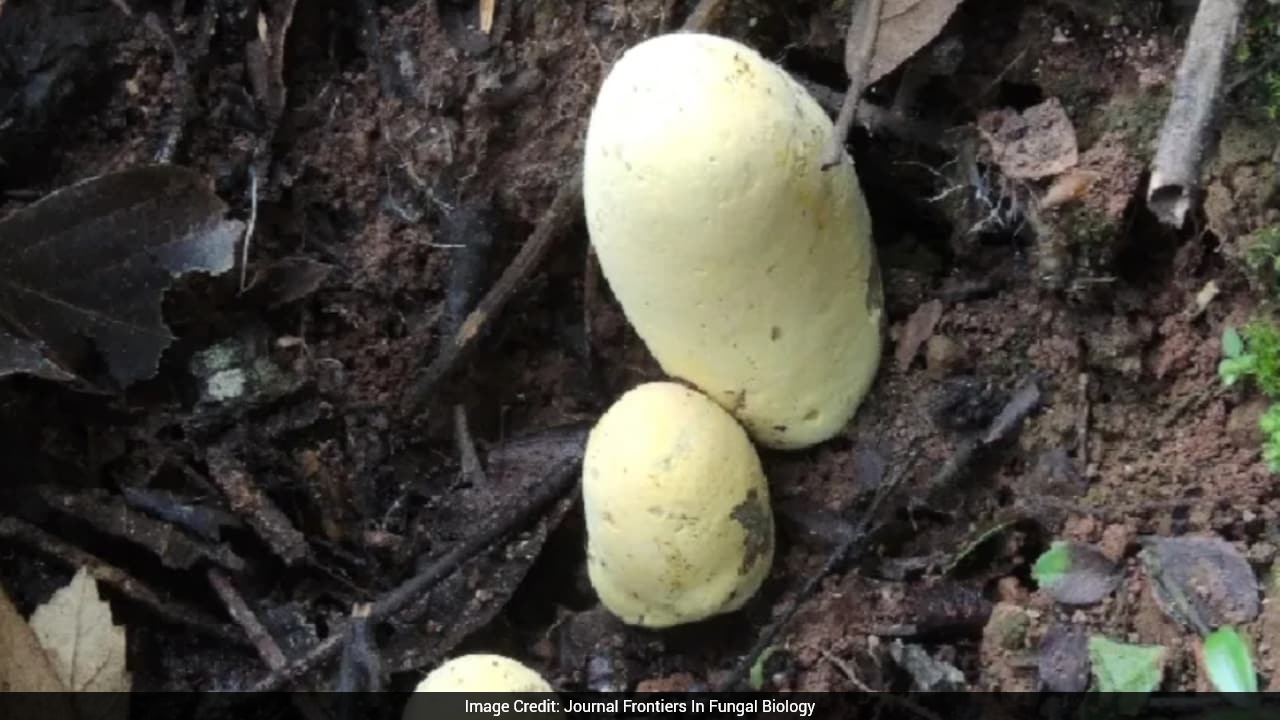
Scientists have discovered a giant fungus named Dianjunus rex in the forests of Yunnan province in China. The fungus can grow up to 20 inches tall and weigh nearly 2.2 kilograms. Its name shares part of its name with Tyrannosaurus rex, the famous dinosaur known as the king, according to CNN.
The discovery was made during fungal diversity surveys in 2024 and 2025. The findings were reported on September 28 in the journal Frontiers in Fungal Biology.
-

-
 Is AI Bubble Waiting To Burst? Nikhil Kamath Warns Of Tougher Months Ahead
-
 "We Don't Have 5 Years": Celebrated American General Sounds Alarm On War
-
 "There Will Be Issues Between Big Countries": S Jaishankar On India-China
-
 Neha Goyal Makes Stunning Asian Games Gold Revelation At NDTV World Summit 2026
-
 Big NDTV Summit Impact: RBI Governor's Tata Sons Listing Remark Makes Top Newspaper Headlines
-
 "Certainty Is A Problem": Nikhil Kamath On Marriage, Children And Future
-
 "High Inflation Is Like Tax On Everyone": RBI Governor At NDTV World Summit
-
 RBI Governor Sanjay Malhotra's Big Hint On Tata Sons Listing Row At NDTV World Summit
-
 The Mystery Of A Bare Nail In Ashwini Vaishnaw's Office
-
 To PM Modi's "Failed Product" Jab At Rahul Gandhi, A Shashi Tharoor Counter
Dianjunus rex has pale yellow, finger-like structures called stromata, which are the reproductive parts of the fungus. These structures can grow up to 50 centimetres tall, about the height of an aeroplane carry-on suitcase.
The fungus belongs to the group Ascomycota, which is the most diverse group of fungi and includes around 65,000 species, such as morels, truffles and yeasts.
Scientists say D. rex is the largest known fungus in this group. Before its discovery, the largest known member was Engleromyces goetzei, a brown fungus found in Kenya. It can reach nearly 30 centimetres in diameter and weigh around 3.2 kilograms.
Scientists have not tested the giant fungus for toxins. The discovery gained attention after a local person sent photographs of the unusual fungus to researchers.
Study co-author Indunil Senanayake, an associate professor at the Kunming Institute of Botany in China, said that people had seen the fungus but had not recognised its importance.
Researchers found that D. rex belongs to a previously unknown family of fungi called Dianjunaceae. Genetic analysis and comparisons with other fungi suggested that this family emerged around one million years after the asteroid impact that ended the Cretaceous Period.
The mass extinction occurred about 66 million years ago and wiped out all non-avian dinosaurs, along with roughly 75% of plant and animal life on Earth.
According to the researchers, the extinction may have created conditions that helped the fungus's family develop and thrive.
Indunil Senanayake explained that photosynthesis was reduced during the extinction event, while large amounts of dead leaves, wood, roots and animal remains accumulated.
Fungi that feed on dead organic matter could use this material as a source of food when many other forms of life were struggling to survive.
The discovery highlights how much scientists still have to learn about fungal diversity and the different forms of life found on Earth.
Track Latest News Live on NDTV.com and get news updates from India and around the world

