





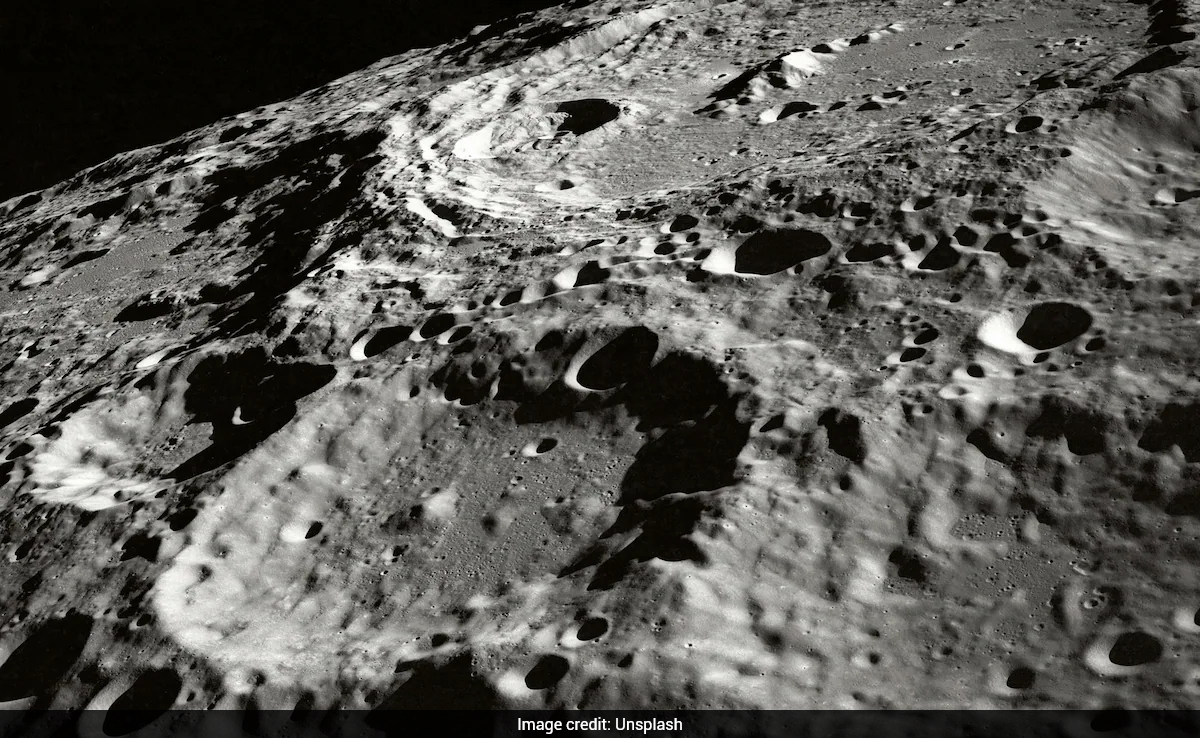
Scientists are planning to make colonies in space. To achieve that ultimate goal, the scientists have made a groundbreaking discovery that could pave the way for sustainable food production on the barren surface of Mars and the Moon. In a study published in ACS Earth and Space Chemistry, researchers analysed whether regolith can become nutrient-rich enough to support plant growth later.
"In lunar and Martian outposts, organic wastes will be key to generating healthy, productive soils," explained Harrison Coker of TAMU's Department of Soil and Crop Sciences, who is also the first author on the study. "By weathering simulant soils from the moon and Mars with organic waste streams, it was revealed that many essential plant nutrients can be harvested from surface minerals."
Also read | What Is PNG? How To Get Its Connection As US-Iran War Affects LPG Supply, Causes Shortage
Coker, along with his team and colleagues at NASA, is trying to determine how recycled sewage interacts with simulated lunar and Martian regolith. The scientists are leading the development of the Bioregenerative Life Support System (BLiSS), which is a technology developed by NASA's Kennedy Space Center that converts human waste into a nutrient-dense solution. This solution is then mixed with simulated Martian or lunar regolith, creating a fertile medium for plant growth.
For the experiment, the scientists combined the BLiSS-created nutrient-rich liquid and then mixed it with regolith simulants, which are artificial mixtures designed to mimic the properties of Martian and lunar soil. The mixture is agitated for 24 hours, allowing the nutrients to interact with the regolith.
Also read | Vlogger Confronts Man For Littering Near Delhi Metro, Bollywood Actress Reacts To Video
The scientists found that the weathered simulants supplied large amounts of essential plant nutrients, including sulfur, calcium, and magnesium. Microscopic analysis showed that the process physically "weathered" the sharp, abrasive regolith particles, creating a smoother, more soil-like structure.
This breakthrough has significant implications for future human missions to Mars and the Moon. By using recycled human waste, astronauts can create a sustainable food source, reducing reliance on Earth-based supplies.
The results are promising, but it is still quite an early stage as the experiment used simulated soil and simulated sewage, not real space conditions. The study only demonstrated early-stage chemical weathering and nutrient release, not actual crop cultivation.
Track Latest News Live on NDTV.com and get news updates from India and around the world

