





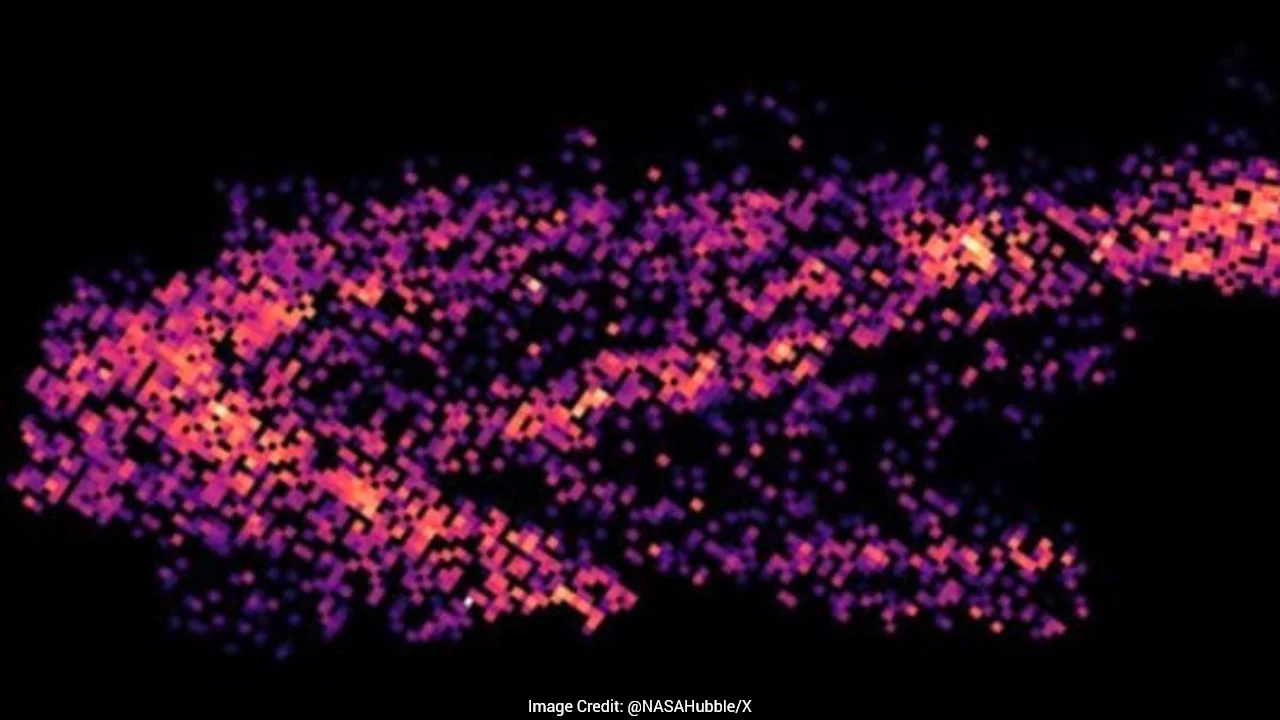
A new study using data from NASA's Hubble Space Telescope has found that the nearby Andromeda galaxy has been forming fewer new stars over the past 500 million years. Researchers also discovered that the decline has become much steeper during the last 40 million years, offering fresh insights into the life cycle of galaxies similar to the Milky Way, reported NASA.
The findings were published in The Astrophysical Journal. To reach the conclusion, researchers combined data from two Hubble surveys, the Panchromatic Hubble Andromeda Treasury and the Panchromatic Hubble Andromeda Southern Treasury. Together, the surveys mapped about two-thirds of Andromeda's disk in high detail. The team studied around 200 million individual stars to build a detailed picture of the galaxy's history.
Ben Williams, an astronomer at the University of Washington and co-author of the study, said researchers need to measure individual stars because they are the fossil record of a galaxy's formation. He added that Hubble is the only telescope that provides enough spatial resolution across a large area to make such observations in Andromeda.
The researchers divided the galaxy into thousands of sections, each covering about 300 light-years, to trace the history of star formation.
Watch Video Here:
What's going on next door?
— Hubble (@NASAHubble) July 27, 2026
A new study using Hubble data shows that Andromeda, our nearest major galaxy neighbor, has undergone a 500-million-year decline in star formation – with an even steeper drop in the last 40 million years: https://t.co/gsIj6OFLgg pic.twitter.com/oYQIbIF6uz
They found that Andromeda experienced a major burst of star formation about 2 billion years ago, likely after interacting or merging with another galaxy. Since then, star formation has steadily declined.
The study found that around 500 million years ago, Andromeda formed stars at a rate of about one solar mass per year. By 40 million years ago, that rate had dropped to about half, and it has now fallen to about one-fifth the mass of the Sun per year.
The team also discovered that much of the recent star formation has been concentrated in a ring located about 32,000 light-years from the galaxy's centre.
They found that the overall decline is mainly driven by reduced activity within this ring rather than a lack of gas and dust needed to create new stars.
Lead author Tobin Wainer of the University of Washington said the galaxy is likely going through a natural slowdown rather than running out of material. He compared it to taking a breather after running a marathon.
The researchers also examined whether the nearby satellite galaxy M32 could be linked to the decline. They found that the region of Andromeda closest to M32 showed signs of reduced star formation beginning roughly 60 million years ago.
Track Latest News Live on NDTV.com and get news updates from India and around the world

