





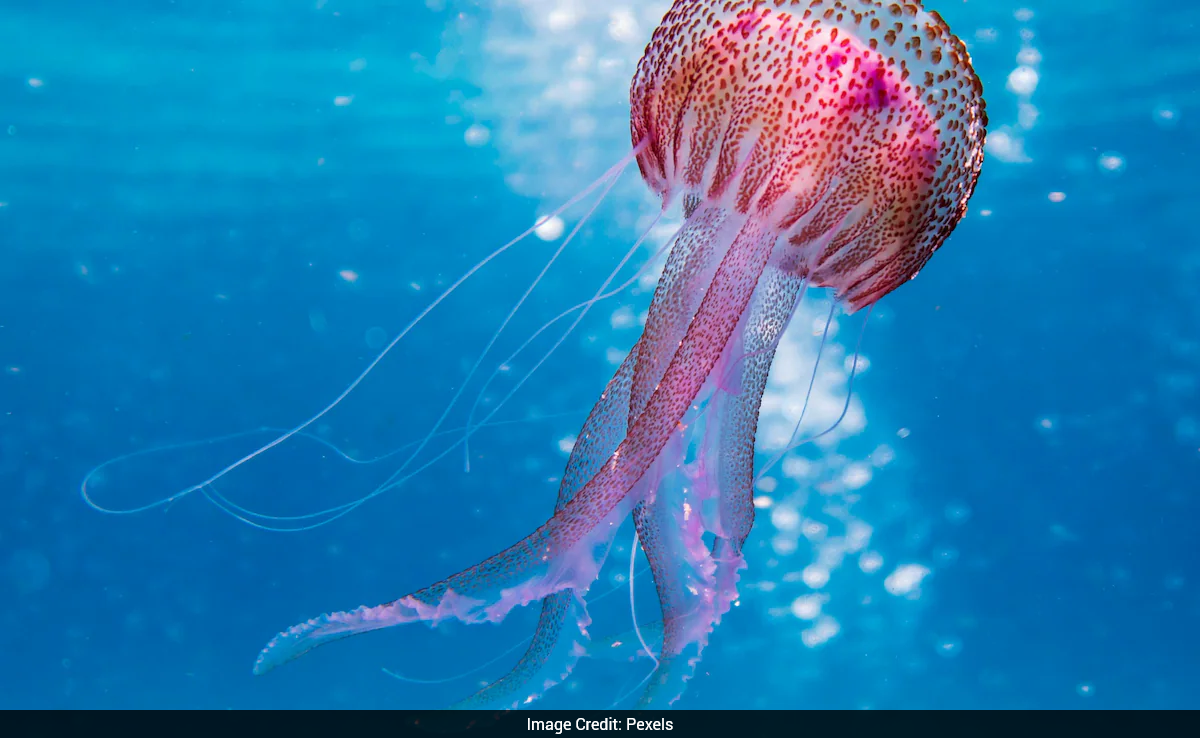
An unusual jellyfish found in tropical oceans has amazed scientists because it can reverse its own life cycle and avoid death. This rare ability allows the creature to return to an earlier stage of life instead of dying, making it one of the most fascinating animals in the ocean, reported the Newsweek.
Jellyfish That Can Restart Life
The jellyfish is called Turritopsis dohrnii. It was first discovered in 1883, but scientists learned about its special power nearly 100 years later. Researchers found that this jellyfish can rejuvenate itself and survive environmental and physical stress.
Michael Layden, a professor of biological sciences at Lehigh University, says this jellyfish's ability to rejuvenate itself could provide important clues to understanding long and healthy human life. He explained that studying these jellyfish in the lab is inexpensive, making them potentially beneficial for biomedical research. He believes that research on this species at a low cost could significantly benefit medical science.
Layden also explained that this jellyfish is a clear example of an organism's ability to heal itself. He said that such research won't make humans immortal, but it could help scientists discover new ways to treat damaged tissues and organs.
Turritopsis dohrnii, also known as T. dohrnii, belongs to the hydrozoan family. Hydrozoans are part of the large group of aquatic invertebrates called cnidarians and are considered to be closely related to true jellyfish. Although they resemble jellyfish, their structure is different. The famous Portuguese Man o' War also belongs to this hydrozoan family.
This jellyfish is very small in size. Its height and width are about 4.5 millimeters, which is less than the size of a little fingernail. When faced with stress, such as starvation or poor environmental conditions, instead of dying, it begins to renew itself.
According to Christine Schnitzler, a biology professor at the University of Florida, the cells of this jellyfish have the ability to transform into new types of cells. These cells transform the stressed adult jellyfish into a ball of tissue, from which a new polyp develops and the life cycle begins again.
Track Latest News Live on NDTV.com and get news updates from India and around the world

