





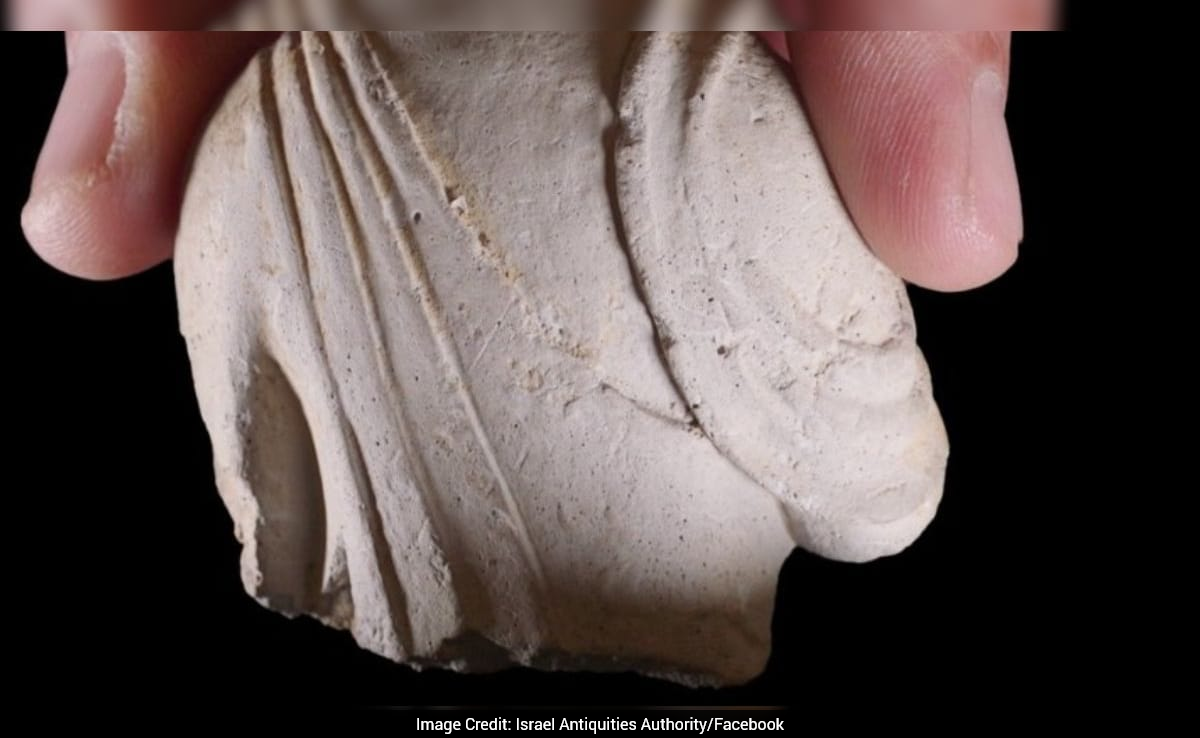
- An 8-year-old boy found a rare 1,700-year-old Roman statuette fragment in southern Israel
- The discovery occurred during a family trip to the Ramon Crater in the Negev Desert
- The artifact shows a human figure wearing a detailed heavy mantle called a himation
An ordinary family trip in southern Israel turned into an unexpected archaeological discovery after an 8-year-old boy found a rare Roman-era artifact while searching for items to show in class, reported Fox News.
Dor Wolynitz, an 8-year-old from Rehovot, discovered a 1,700-year-old Roman statuette fragment during a visit to the Ramon Crater in the Negev Desert, according to a May 11 statement released by the Israel Antiquities Authority.
The discovery took place during a family weekend retreat organised by a paratrooper reserve unit. The artifact is believed to date back to the fourth century AD.
Dor said he had been looking for interesting objects on the ground that he could later show in class. While walking in the area, he noticed a stone with unusual stripes lying on the ground and decided to pick it up.
He said the object appeared unusual to him, so he showed it to archaeologist Akiva Goldenhersh, who was travelling with the group and is also a friend of his father.
The fragment measures around six by six centimetres and shows part of a human figure with carefully sculpted folds of fabric.
Akiva Goldenhersh, a supervisor at the IAA's Antiquities Theft Prevention Unit, said he immediately noticed the detailed folds in the garment and became very excited after realising it was an ancient sculpted piece.
According to him, the statuette was made from a phosphorite-type mineral found naturally in the Negev region, suggesting that it was likely produced locally instead of being imported.
He explained that the figure appears to be wearing a heavy mantle known as a himation, without a visible undergarment or chiton. He also noted that the detailed carving and the use of such a delicate material reflected a very high level of artistic skill.
The Ramon Crater region was located along the ancient spice route, which served as an important trade connection during the Roman and Nabatean periods. The route was known as a meeting point where different cultures interacted and exchanged goods.
Track Latest News Live on NDTV.com and get news updates from India and around the world

