






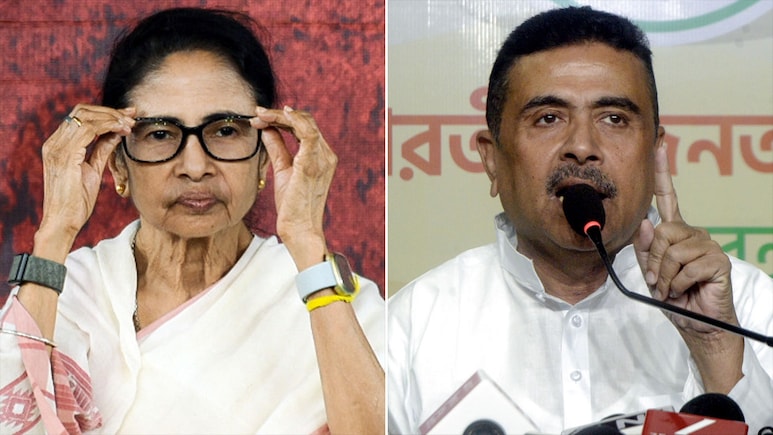
As elections draw nearer, West Bengal's political stage is becoming increasingly dramatic. In its history in the state, the BJP has never fielded a single candidate from two constituencies simultaneously. This time, however, an exception has been made: Leader of the Opposition Suvendu Adhikari is contesting not only from Nandigram but also against Mamata Banerjee in Bhabanipur.
In its first list of candidates, the BJP announced Adhikari's name for Bhabanipur. Even before the official declaration, he had said, "Wherever Mamata Banerjee goes, I will reach there." After defeating her in Nandigram by a margin of 1,956 votes, he now seeks to contest from Bhabanipur and build momentum for the BJP.
Why The BJP Took The Risk
Why did Adhikari take such a risk? When his candidacy was announced, Mamata Banerjee declined to comment, while TMC spokesperson Kunal Ghosh mocked the decision.
According to BJP sources, the central leadership pushed Adhikari to contest from Bhabanipur. The initial proposal was for him to contest only from Bhabanipur, but he resisted. A defeat there would have been politically damaging, while refusing to contest could have exposed him to criticism for failing to match his rhetoric. Contesting both seats, therefore, became a strategic compromise - raising the political temperature regardless of the eventual outcome.
Goal 1: Confine Mamata Banerjee to Bhabanipur
One aim is to confine Mamata Banerjee's campaign to Bhabanipur. The constituency has a sizeable non-Bengali, Hindi-speaking, Marwari, Gujarati, and Bihari voter base, where the BJP has performed relatively well in the past. Although Banerjee won comfortably in the previous election, Adhikari's candidature elevates the contest into a high-profile Mamata-versus-Suvendu battle.
Goal 2: Project a Principal Challenger
Adhikari is not officially the BJP's chief ministerial candidate, and the party seems to have internal disagreements on that question. The party doesn't have a single strong face against Mamata. By positioning Adhikari directly against Banerjee, the BJP signals that he is its principal challenger. With the backing of Amit Shah, this move strengthens his prominence within the party.
Goal 3: Creating Pre-Poll Momentum
The BJP leadership also believes the move will generate momentum ahead of the polls. Alongside developments such as the change of Governor, revisions in voter rolls, and large-scale administrative transfers by the Election Commission, the party is creating administrative pressure. The TMC has alleged coordination between the Centre, the Governor, and the Election Commission. BJP sources describe it as a "war of nerves"; whether or not it succeeds, for the moment, it has succeeded in somewhat limiting the aggressive war cry of the Trinamool Congress.
The decision to field Suvendu Adhikari from both Nandigram and Bhabanipur is thus more than an electoral gamble. By turning the contest into a direct confrontation with Mamata Banerjee, the BJP aims to sharpen the narrative, energise its base, and raise the stakes of the election battle. Whether this strategy yields electoral gains will be decided by voters, but it has already intensified the campaign and reshaped the political narrative.
(Jayanta Ghosal is Contributing Editor, NDTV)
Disclaimer: These are the personal opinions of the author

