






On June 6, 1966, India had devalued the Gulf rupee against the Indian rupee. The Gulf Rupee (the official currency used in several Persian Gulf states, including the present-day UAE, Qatar, etc) was issued by the Reserve Bank of India and pegged to the standard rupee. Refusing to absorb the massive drop in value, these Gulf states abandoned the Gulf Rupee and began issuing their own independent currencies.
Sixty years later, Indians remain the country's largest expatriate community, accounting for around 40% of the population. Indian schools, temples, mosques, and cultural associations are woven into Dubai's social fabric. Bollywood premieres fill cinemas and regional Indian restaurants flourish across the city.
During the recent Iran-Israel-US conflict, there is a greater bond between Dubai and India. Bilateral harmony remains robust, celebrated by major cultural festivals like "Emirates Loves India" and 'Everyone in UAE is Emirati' billboards catch attention of all visitors and residents alike. Last year, in Dubai's Zabeel Park, over one lakh tourists from India had celebrated "Ghar Jaisi Diwali".
Other than diplomatic and political efforts to strengthen Indo-UAE ties, many Indian residents have made immense contributions to develop Dubai as a 'home away from home'.
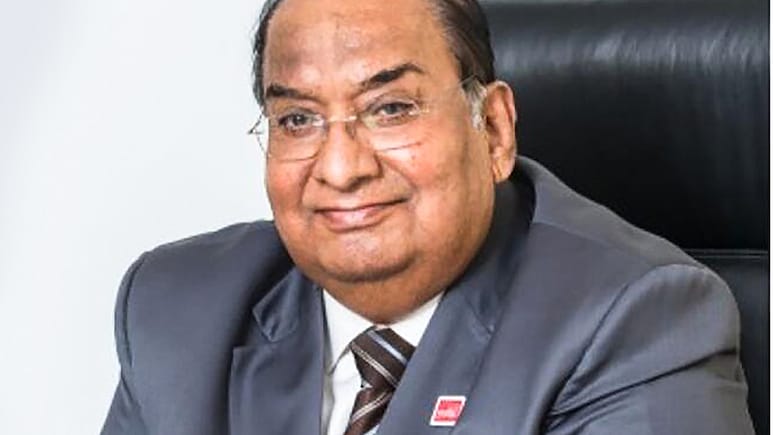
Recently, when Vasu Shroff died at the age of 85 on April 26, Dubai did not simply lose a businessman. It lost one of the early figures who had helped give the Indian community in the city a sense of permanence. The tributes that followed his passing remembered not only the chairman of Regal Group, but "Dada" - the elder who advised, connected, reassured, and opened doors.
Shroff's own beginning had the simplicity of a migrant legend. In 1960, at 19, he left Mumbai for Sharjah by boat, travelling deck class on a ticket he said cost one dollar and fifty cents, bought barely 10 minutes before departure. The Dubai and Sharjah he entered were not yet symbols of scale and speed. Sharjah was still part of the Trucial States; Dubai was a modest trading post where petromax lamps lit homes.
Regal had been founded in 1952, before Shroff arrived, but his role was to see a different future for the family textile business. After joining his brothers in 1960, he pushed beyond wholesale into retail, a bold shift when domestic consumption in Dubai was still small. The Regal department store succeeded, and its growth would run almost in parallel with Dubai's own transformation, from trading settlement to global marketplace.
Business As The First Act Of Belonging
The point of Shroff's story is not only that he built wealth. It is that he widened the meaning of success early. "Dubai is about hard work, knowing you want to become something," he once said, a line that captured his plain-spoken creed: ambition without forgetting hardship.
In 1961, only a year after arriving in the Gulf, Shroff became one of the early figures associated with The Indian High School in Dubai, teaching Hindi and physical education to its first nine students in a small apartment in Bur Dubai. The school later grew into one of the UAE's most important Indian educational institutions.
He was also associated with the Indian Association, founded in 1960 to help people with passport and visa matters, and with the India Club, which opened in Bastakiya in 1964 and became a social anchor for Indians in Dubai. His giving extended to hospitals, homes for the elderly, a school for the speech and hearing impaired, cremation grounds, and welfare initiatives in the UAE and India.
This is where Shroff's legacy becomes larger than commerce. He understood that migrant dignity is not secured by jobs alone. It also needs classrooms, clubs, prayer spaces, rites of passage, and places where grief can be observed properly. His support for Hindu places of worship, his role in the Jebel Ali temple, and his work in developing cremation facilities placed him among those rare entrepreneurs who built not only companies, but community infrastructure.
The template others carried forward
Shroff helped establish a template that later Indian entrepreneurs in Dubai and the wider UAE would recognise: arrive with little certainty, read the market closely, build through trust, and then return success to the community in visible, practical ways. Yusuff Ali M.A. of LuLu Group later credited Shroff as one of the early visionaries who helped shape Dubai's commercial landscape and inspired generations of Indian entrepreneurs who made the UAE their home.
That pattern can also be seen in Dr Surender Singh Kandhari's work. Kandhari came to Dubai in 1976 and founded Al Dobowi Group, which grew into a business with more than 2,000 employees and a presence across several regions. He received the Pravasi Bharatiya Samman in 2019, and his public life has been marked by the idea of sewa, or service.
Most visibly, Kandhari became the driving force behind Guru Nanak Darbar in Dubai, the UAE's first official Sikh gurudwara. Built in Jebel Ali after land was granted by Sheikh Mohammed bin Rashid Al Maktoum, it became not only a place of worship but also a humanitarian anchor, serving free meals to people regardless of faith or background.
Other Indian entrepreneurs followed similar arcs in different sectors. Yusuff Ali M.A. built LuLu into a major retail and hypermarket group with a large multinational workforce and a strong social profile. Sunny Varkey's GEMS Education traces its UAE roots to 1959 and today describes itself as one of the world's oldest and largest private K-12 education providers. Rizwan Sajan built Danube into a Dubai property and building-materials name, while Dr Azad Moopen's Aster journey began with a single clinic in Dubai in 1987 and grew into a healthcare network across several countries.
Their businesses are different, but the moral grammar is familiar: enterprise is not complete until it leaves behind institutions. In that sense, Shroff's life offered a model for Indian entrepreneurship in Dubai - not merely how to prosper, but how to make prosperity useful.
One more room for the community
Even in his final years, Shroff was still thinking in the language of shared spaces. He remained a signing authority for Hindu marriages conducted in the emirate and continued to meet people seeking advice on careers, debts, and legal troubles. That image - a businessman of enormous standing still receiving the worried and uncertain - may explain his stature better than any business ranking.
His biographer Priya Kumar, who wrote A Regal Man: The Life & Lessons of Vasu Shroff, remembered that even when she came to document his story, he made her feel seen. Others recalled that nobody who came to him left empty-handed, whether they needed advice, reassurance, or blessing.
In 2017, Shroff received the Pravasi Bharatiya Samman, India's highest honour for overseas Indians. But perhaps the more revealing measure of his life came in December 2025, when he spoke of what he called his "last dream": an Indian merchant community hall in Dubai, estimated at Dh70 million. After decades of building stores, schools, prayer spaces, clubs, and community confidence, he was still imagining one more room where people could gather.
That is why Vasu Shroff's legacy cannot be contained within the Regal name. He helped show Indian entrepreneurs in Dubai that business could be a bridge - between India and the UAE, between private success and public service, between the insecurity of migration and the confidence of belonging.
Dubai has many towers that announce ambition. Shroff helped build something quieter and more enduring: the feeling, for generations of Indians, that this city could also be home.
((Rasheed Kidwai is an author, columnist and conversation curator)
Disclaimer: These are the personal opinions of the author

