






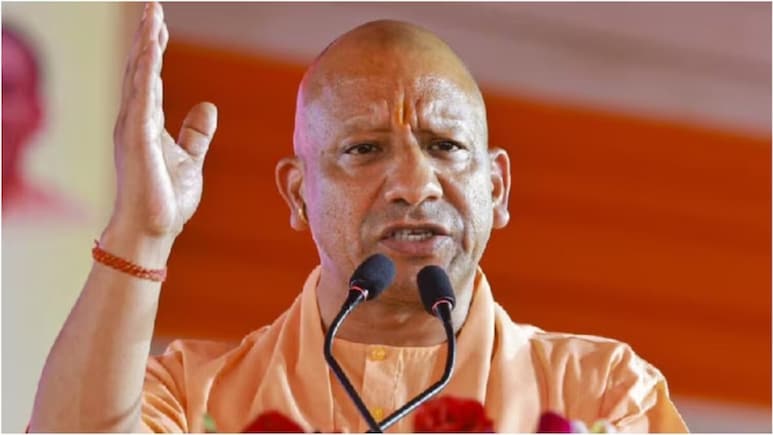
In Uttar Pradesh, politics doesn't so much change direction as it changes gear - and usually without signaling first.
The Yogi Adityanath government has done what cornered coalitions always do when the calendar tightens: it expanded the cabinet. Six new ministers. Two promotions. All of it packaged so neatly it could pass for routine administration - if you didn't know that in UP, "routine" is just the word politics uses after the steering wheel has already turned.
They're calling it Team 60, as if a state government were a sports franchise, as if Lucknow were a dressing room and the 2027 assembly elections a championship to be won through composition as much as charisma. Earlier, there were 54 ministers. Now, with barely nine months left before assembly polls in 2027, the expanded cabinet carries the unmistakable air of a backfoot drive - played not against the opposition's bat so much as against the story forming around Yogi's own rule.
Akhilesh Yadav's formidable PDA challenge
Akhilesh Yadav hasn't merely challenged Yogi's record. He's challenged the moral arithmetic of caste itself.
In the 2024 Lok Sabha elections, Akhilesh won 37 of UP's 80 seats by running on a single, magnetic idea: PDA - Pichhda, Dalit, Alpasankhyak (Backward, Dalit, Minority). Three letters that function less like a slogan than a mirror, inviting voters to see themselves reflected in a potential government. The BJP's tally in Uttar Pradesh nosedived from 62 seats in 2019 to 33 in 2024. The PDA pitch had drawn blood.
So Yogi's Team 60 arrives looking like a deliberate counter-move. If PDA is Akhilesh's Yorker - delivered low, tight, aimed at the body - then the BJP's cabinet reshuffle is an attempt to re-position the bat before the next delivery lands. The opposition asks: why now? The BJP answers by arranging faces. The new BJP cabinet with a OBC-Dalit tilt seems like Yogi plays a sixer of Akhilesh's Yorker.
The new Yogi Cabinet faces: OBC-Dalit tilt
And in Uttar Pradesh, faces are never incidental. They are punctuation.
The caste math of the new cabinet reads like an entry in a very deliberate ledger: two Scheduled Castes (including a woman), four OBCs, one Jat, one Brahmin. At first glance, demographic matching. In practice, something closer to a method.
Take Manoj Pandey - the Brahmin inductee, as cabinet minister, who crossed from the Samajwadi Party to BJP in February 2024, just as the PDA narrative was gathering momentum. He had served as a minister under Akhilesh between 2012 and 2017. His return to the BJP fold carries a familiar subtext: Brahmins in UP feel abandoned, and the saffron party is listening. It's almost theatrical - not just outreach, but correction. A public acknowledgement that something went wrong. Pandey's induction is also seen as BJP's attempt to mollify upper castes after the controversy over UGC reservation guidelines for OBC
students, which was later stayed by the Supreme Court. This had led to a backlash by Upper Caste students protesting in massive numbers.
The joke in UP circles is "Does Akhilesh's Combining PDA acronym begins with P for Pandit?"
Carefully combining Mandal with Kamandal
Then come Krishna Paswan and Surendra Diler, the two Scheduled Caste inductees. In this cabinet, SC representation isn't just a quota. It's a signal aimed precisely at voters who can be moved by dignity and cooled by neglect. That one of the two is a woman matters - it gives the gesture the look of social repair rather than bare arithmetic.
The OBC story is where the calculus gets most interesting. This is where Mandal politics - the historic mobilisation of backward castes - gets braided with Kamandal, the Hindutva-inflected nationalism that powers Yogi's base. Hansraj Vishwakarma (Carpenter caste), Kailash Rajput (Lodh Rajput), Soumendra Tomar (Gujjar, promoted), Ajit Pal (Pal caste, promoted) - each of these names carries a community behind it. Promotions are always framed as merit. They function equally as reassurance: you felt unrepresented; we were paying attention.
And completing the picture, Bhupendra Choudhary - a Jat - rises within the cabinet. Jat inclusion in UP politics is never background noise. It's how the centre is kept from tipping.
Akhilesh attacks Yogi as Courier Messenger
To BJP strategists, this is a chess move. To Akhilesh, it's a brochure printed late.
Akhilesh's criticism has been equal parts diagnosis and performance. "Nine years, nothing - what can you do in nine months?" An accusation of long neglect papered over by short-term optics. Then come the sharper metaphors: Yogi as "Courier Messenger," the CM as postal worker ferrying instructions from Delhi rather than governing from Lucknow. And finally, the tweet that tried to shrink a cabinet expansion into a single act of embarrassment - "Chitthi aa gayi kya?" Did the letter arrive?
This is how opposition politics speaks in UP: through mood as much as math. Akhilesh wants Team 60 to feel reactive rather than strategic, late rather than anticipatory - an envelope that arrived after the party had already started, not a plan that had been laid in advance.
The question the reshuffle poses isn't "who got added" so much as "what does the timing reveal?"
Nine months is an ambiguous stretch of political time. Short enough that a cabinet expansion looks like panic. Long enough to shift the flow of attention in dozens of districts, to open gates that had been closed to certain communities, to tell local leaders that the party's switchboard is accessible again.
But does nearness translate into votes?
BJP's rainbow coalition in Team 60
BJP leaders are claiming progress - 25 OBC ministers, 11 Dalits, 21 upper castes, one Muslim, one Sikh, one Punjabi Khatri, a rainbow coalition reflecting sabka saath, sabka vikas, sabka vishwas. These are the kinds of numbers parties reach for when they want social engineering to sound like social destiny. The "subaltern saffron formula" is a gamble that Hindutva can absorb backward-caste and Dalit demands
without losing the moral pitch that defines Yogi's brand. That saffron can stretch to accommodate Mandal without becoming something else.
In Akhilesh's telling, this is an attempt to steal the PDA story while leaving the governing posture unchanged. In the BJP's telling, it is honest course correction - an acknowledgement that caste coalitions cannot be parked until election season and pulled out on demand.
Cabinet reshuffle To symbolically re-encode a government's image
A cabinet reshuffle cannot rewrite years of policy. It cannot reverse economic shocks or thaw lived grievance. But it can do something quieter and therefore potent: it can re-encode a government's image of itself. When the state changes its mix of faces, it changes - even fractionally - who feels that the system has looked at them.
In a state where symbols travel faster than legislation, Team 60 may ultimately be less about governance than about signal-processing: the BJP trying to read Akhilesh's PDA as data and respond not with a single policy shift but with a reshuffled social map.
Subaltern Saffron formula
Whether the shot lands - whether this subaltern saffron formula travels over the boundary or straight back to the bowler - will be answered the way cricket always answers uncertainty: not in the press conference, not in the tweet, not in the tally sheet of castes.
But in the noise of polling booths, where symbolism meets hunger, where pride rubs against policy, and where identity eventually, inescapably, meets arithmetic.
Team 60 is assembled. The ball is still in the air.
(The author is Editor, Research, NDTV)
Disclaimer: These are the personal opinions of the author

