






Who would have imagined that with just over a week to go for the final of the men's T20 World Cup, we would have witnessed the three main Asian teams running into serious rough weather in subcontinental conditions and the main title favourite having to make room for another serious contender, who really means business?
But then that's T20 cricket for you. It will never be loyal and always be fickle. Just ask the Indian team who went into this World Cup, not just as the number one ranked T20i team in the world, not just because they were on a 17-match unbeaten streak in ICC tournaments, not just because they had a 26-3 win-loss ratio in T20is between the 2024 T20 World Cup final and the beginning of this one, but also as the absolutely overwhelming pre-tournament favourites in their own home conditions. And yet, as things stood before their Super Eights contest vs Zimbabwe, their road to the semi-finals had become quite the minefield. In fact, even after a big win in that game, which repaired their severely dented Net Run Rate, they are still not guaranteed a place in the final four. Their last match of this group, against a mercurial West Indies team, is a virtual quarter-final. The winner goes through to the last four. The loser will be eliminated. No second chances on offer here. And let's not forget that the fact that India are still in with a good chance to qualify is thanks largely to South Africa beating the West Indies. If that result went the other way, India could still have been knocked out even if they beat the Windies, on NRR.
India Can Still Be Knocked Out
And that begs the question - did you expect the biggest title favourites and defending champions, playing largely in their own home conditions to still be waiting to see whether they qualify for the semis, at a time when England and South Africa have already booked their spots? There's no doubt that the Super Eights format is not a perfect one by any stretch of the imagination, but the fact of the matter is that India find themselves in a position where they could still be knocked out because of one very big loss and their inability to find a settled playing eleven with clearly defined player-roles, both before and after the group stage. And while the men in blue were searching for the clinical brand of T20i cricket that they had become synonymous with, the Proteas quietly, but very emphatically, established themselves as title favourites too. The way they dismantled the West Indies, chasing down a tricky 177-run target with nine wickets in hand, was honestly scary to watch.
Make no mistake about it, this World Cup is now not India's to lose.
Just ask the incredibly talented and amazingly effective Arshdeep Singh, who recently became India's most successful bowler ever at the men's T20 World Cup (35* wickets), going past Jasprit Bumrah (33* wickets). The left-arm pacer openly thanked the South Africans and accepted the fact that the Proteas are favourites to take up one of the two spots in the final on March 8, saying, "Thanks to them (SA) for giving us the chance to decide our own fate...It was fun to watch their game. They played really well, and we'll try to beat them in the final."
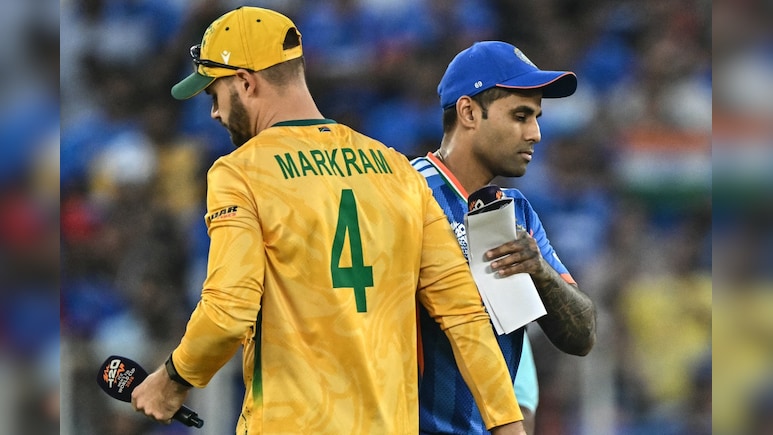
India were the team to beat before the World Cup began. That crown now seems to have shifted to the heads of Aiden Markram and co.
The Big Lesson Here
Whether India make the final four or not, whether they become the first team to successfully defend the T20 World Cup crown or not, when the inevitable post-tournament postmortem is conducted, the biggest lesson that will be staring them in the face is that there can always be a world of a difference between bilateral series and a World Cup. The pitches will be different, the opposition will be prepared differently and the format might or might not work in your favour. It might sound like a list of no-brainers to you, but trust me, when a team is on a real high, firing on all cylinders, something like this might never be discussed.
There's no doubt that there is a huge gulf between the Indian team and everyone else when it comes to T20i quality. This Indian team boasts of more individual match-winners than anyone else. On paper, the current Indian team is nigh invincible - and they have proved that in series after series - right from the time they became T20 world champions two years ago. And yet, things didn't really click for them the way they would have really liked in the group stage or against South Africa in the Super Eights, which, let's face it, was the first time India faced high-quality T20 opposition in this World Cup. Their inability to completely dominate opposition teams, like they have been doing almost for fun over the last two years in bilateral series, severely dented their aura of invincibility. And after a near-complete collapse against South Africa, the message that has gone out is that this Indian team can be beaten. And once that happens, the road ahead for a champion team becomes that much more treacherous.
The one thing Team India will be really grateful for is that Zimbabwe were in their group and not Australia. Though the Aussies looked like they were here just to make up the numbers, showing the world yet again just how non-serious their attitude can be towards T20i cricket, India would have taken Zimbabwe as opponents over Australia any day. The conditions at the Chepauk stadium on Thursday night couldn't have been more tailor-made for the Indian batters, who were short on both runs and momentum. It was so good to see the likes of Abhishek Sharma and Tilak Verma, in particular, playing free-flowing shots. The call to bring in Sanju Samson (something I had been asking for from before the match vs South Africa) worked. Sanju might have once again thrown his wicket away, but the momentum he provided up top allowed Abhishek to settle in and not go hammer and tongs from the word go - and ultimately notch up his maiden T20 World Cup fifty. The captain, Suryakumar Yadav, had a smile on his face in the dugout and was his free-flowing self again, with the bat. The call to open with Abhishek and Sanju and bat Ishan at number three also seems to be the right one because that makes it a left-right hand combination of openers and doesn't allow opposition teams to attack with an off-spinner up top - something teams like Pakistan, the Netherlands and South Africa have done with great early success against India in this World Cup.
A 'Perfect' Opponent?
Most cricket analysts, including myself, had predicted that the Super Eights match against South Africa would be hands-down India's biggest test of the tournament. And it also turned out to be the match that established the fact that just like in 2024, if India are to win this World Cup, they will have to find a way to beat South Africa. The Proteas seem to have every base covered, something India can't yet boast of perhaps, because they haven't had the "perfect" game against a top-quality opposition (I am not counting Pakistan here). And that remains both the biggest difference between the two teams and the biggest threat to Team India.
Aiden Markram and his team were more than prepared for their contest against India and had done their homework to the last detail. Maybe Team India hadn't. The trouble with a group-style format, as opposed to a round-robin format (that was used in the 2023 ICC ODI World Cup), especially when there are groups of just four teams, is that one early loss can potentially push a team to the brink of elimination. And that is where Team India found themselves after the humbling loss against the Proteas. Thank God for the Zimbabwe fixture. True that nine times out of ten this is going to be a one-sided contest (India have never lost a T20i against an opposition ranked outside the Top 10), but the 72-run win in Chennai will give Team India the momentum they sorely needed, especially considering the next game is a virtual knockout match. And momentum, in T20i cricket in particular, is worth its weight in gold.
The Focus On T20i Cricket
Over the last couple of years, it has become increasingly clear that the main focus in Indian cricket is largely on T20 cricket. While that could be a double-edged sword in the long run, what it has done is transform Team India into a scary T20i unit. Their batting became capable of pummelling any opposition into complete submission, while their bowling has become more wicket-taking in orientation than a holding one. In 2024, India played 26 T20is and won 24 of them. In 2025, the team played 21 T20is and won 16, with two matches ending in no-results. That's a combined win percentage of over 85. Scoring 200-plus totals and chasing down big targets with plenty of deliveries to spare became par for the course for this bunch of men in blue shirts.
In other words, they became really intimidating for all other teams, including South Africa, who India beat by a margin of 3-1, with one match being abandoned, just a couple of months back. Interestingly, their largest score batting first in that 5-match series was registered in Ahmedabad (231/5) - the same venue where they were beaten comprehensively in the ongoing World Cup by the same team.
But someone forgot to tell the Indian batters that their approach to T20i batting, which is simply to try to score the maximum runs off every single delivery, can't work in a World Cup. And yet, we have seen batter after batter go out and mostly swing their bats at everything that comes their way in more than one match. That will not work. So far, Indian batters have registered 11 ducks in this tournament - the most across all teams. From what we saw against Zimbabwe, the initial approach to batting in the early overs is something that is being worked on and the trickle-down effect helped everyone in the line-up who came out to bat on Thursday.
Recalibrate Where Needed
Arshdeep was quoted as saying, "Our game plan over the last year or two has been to score big and then try to defend it." Against quality opposition and on pitches that are not flat-tracks, a recalibration is required. The Super Eights match vs Zimbabwe at Chepauk on Thursday was played on probably the flattest pitch that we have seen so far in the tournament. And the Indian batting made merry, notching up their highest T20 World Cup score and the highest of this edition so far (256/4) and the second-highest in the history of the tournament. It was fantastic to see key Indian batters play their signature high-scoring shots and build the innings.
But let's not forget that Zimbabwe managed to reach 184 too, with opener Brian Bennett making an unbeaten 97 off 59 balls. Now, as they move to Kolkata for the do-or-die clash against the Windies, they will have to reassess, recalibrate. Player-roles, if needed, have to change, along with the batting order after the top four. The pitch that will be used at the Eden Gardens might also be a high-scoring one, helping stroke-play, but I doubt it will be as flat as the one in Chennai and the bowlers, especially the spinners, are likely to come into the picture much more than they did on Thursday night. Remember, even the usually unplayable and extremely economical Jasprit Bumrah was hit for sixes and Varun Chakravarthy and Axar Patel had economy rates of almost 9 against Zimbabwe.
Pitch-ed Battles
Have the pitches on offer at home venues at this World Cup foxed Team India a bit? I would think so. In hindsight though, it's strange to think that the team management wasn't prepared for the fact that the pitches in an ICC tournament will almost always be different than those that they have been playing on while ruling the roost in T20i bilaterals. Those pitches were mostly all-flat home tracks, most suitable for go-hell-for-leather batting and gets better to bat on as the match progresses and dew sets in. The ICC takes control of all venues at least two-three weeks before a tournament and pitches are prepared, while liaising with independent pitch consultants, such that they ensure "competitive balance". Home ground advantage could very well be something that is just on paper. I was quite tickled when I saw and heard the figure of 300 being bandied about as a run-barrier that might be broken in this World Cup. There's no doubt that T20 cricket overall has become more high-scoring, and yes England did breach the 300-barrier in a T20i vs South Africa in September last year in Manchester, but there's no comparison between team scores that one sees in bilateral series and T20 franchise league vis-à-vis those in a T20 World Cup. And Team India should have taken that into account.
And yet one got the distinct impression that they went into this tournament trying to bat in the exact same top gear that they had been flying at in the bilaterals prior to the World Cup. In 2025 there were at least 15 instances of 200-plus team totals in men's T20is. The 2025 IPL season had a mind-boggling 52 team scores of 200 plus (a new record for the IPL). So far in this World Cup, being played in subcontinental conditions (as opposed to the 2024 edition which was played on extremely slow, low-scoring tracks in the USA and the Caribbean), there have been just two 200-plus total in a match that featured two full-member sides.
A New Favourite Emerges
It was good to see a somewhat tempered approach to batting in the match against Zimbabwe. The intent towards intelligent hitting overshadowed instinctive across-the-line hitting. And that's what is required going ahead - considering South Africa have a well-oiled fast bowling attack that is hunting their prey very successfully - as well as a sorted batting order that is mostly firing on all cylinders. Remember, they have a perfect, unbeaten record so far in this tournament.
When India take on the West Indies on Sunday (March 1), the biggest goal will be to play the perfect game - not just to stay alive in the tournament, but also to start peaking at a time when they are technically three wins away from defending their crown. They know full well that a new title favourite has staked their claim and once again emerged as the defending champions' biggest hurdle.
(The author is a former sports editor and primetime sports news anchor. He is currently a columnist, features writer and stage actor.)
Disclaimer: These are the personal opinions of the author

