






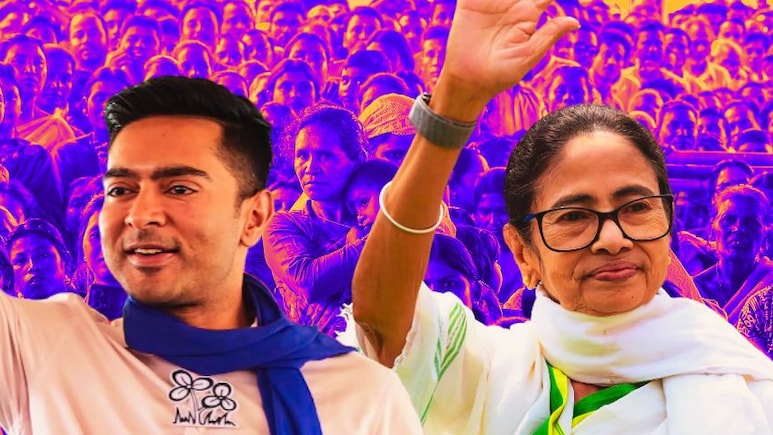
Just over a month after the 2026 West Bengal Assembly election results on May 4 delivered a stunning defeat to the All India Trinamool Congress (TMC), the political landscape in the state has transformed dramatically. The Bharatiya Janata Party (BJP) secured a landslide win with 208 seats, ending the Trinamool's 15-year rule and reducing Mamata Banerjee's party to around 80 seats. What followed was not post-poll reflection but a rapid, multi-level exodus from the party. Rebel groups emerged swiftly, with around 60 of the 80 MLAs aligning under figures like Ritabrata Banerjee. Roughly 20 of the 28 Lok Sabha MPs, led by Kakoli Ghosh Dastidar, moved to support the ruling National Democratic Alliance (NDA). Over 100 councillors have also resigned or switched sides.
This is no ordinary wave of opportunism. It reflects the deep-seated political culture of West Bengal, where power has historically concentrated in one party. Successive regimes -- Congress post-Independence, the Left front (led by CPI(M)) for 34 years until 2011, and then the Trinamool -- have relied on total control, patronage and grassroots absorption rather than ideological loyalty. A defeat triggers not a gradual decline but systemic collapse, as cadres, local bodies, and leaders realign for survival. The current exodus, spanning from national to village levels, signals this culture entering a new phase under the BJP's consolidation. It underscores how Bengal's politics rewards winners with wholesale loyalty while punishing losers with dissolution, a pattern etched since Independence.
Bengal's All-or-Nothing Politics
After Independence, the Indian National Congress held sway under leaders like Bidhan Chandra Roy, but was fragmented by the late 1970s amid economic challenges and anti-incumbency. The Left Front, anchored by the CPI(M), then ruled uninterrupted from 1977 to 2011, forging deep grassroots networks through land reforms, patronage distribution, and local muscle. This created a system where alignment with the ruling party determined access to resources, jobs, and protection. Congress withered, with its vote share today hovering below 3 per cent in many areas.
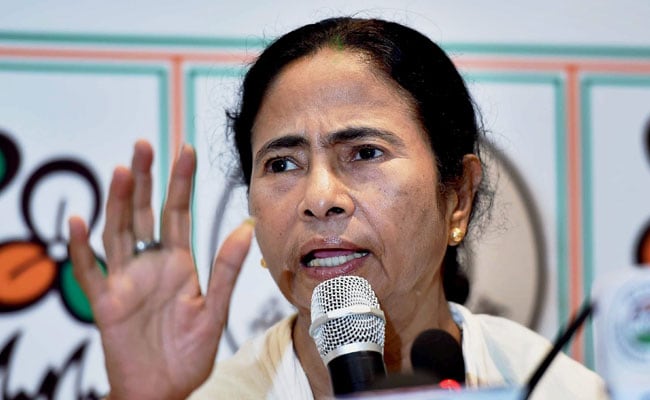
The Trinamool's rise in 2011 mirrored this pattern but accelerated it. Banerjee's party, lacking a robust independent organisation, absorbed vast swathes of Left cadres, panchayat structures, and local influencers en masse. By 2016, it had built booth-level dominance not through organic growth alone but by inheriting and repurposing the Left's machinery. Entire local bodies shifted allegiance once they captured districts and state power. This top-down absorption ensured control over police, administration, civic bodies, and welfare schemes. Bengal became a state with chronic unemployment. Trade unions, auto unions and even daily survival hinged on the ruling party's approval. Panchayats received funds or development projects only if aligned; dissent invited harassment, isolation, or exclusion from benefits.
Mamata Banerjee's refusal to resign immediately after the 2026 defeat, blaming the Election Commission and BJP instead, contrasted sharply with leaders in other states who accepted verdicts gracefully. This desperation highlights the stakes: in Bengal, losing power means near-total erasure of influence. Unlike multi-party ecosystems elsewhere, here one party's dominance links institutions vertically.
A defeated dispensation cannot protect its base, leading to swift desertions. The Trinamool's defeat exposed governance issues like alleged corruption and violence, fueling public backlash that accelerated the flight. Leaders and workers face not just political irrelevance but practical threats, investigations, local anger, and loss of patronage networks. Survival, not ideology, drives the realignment.
Trinamool's Inherited Machine and Fragile Loyalty
The Trinamool Congress never built a fully independent ideological edifice. Formed in 1998 as a Congress breakaway, it capitalised on anti-Left sentiment, particularly after movements like Singur and Nandigram. Victory in 2011 saw it dismantle the Left's 34-year hold by absorbing its organisational remnants. Former CPI(M) local leaders, once accused of suppressing Trinamool workers, switched sides for protection and power. Examples abound: figures involved in past violence against opponents joined the party's ranks, bringing with them booth-level networks and muscle. This created a party sustained by power's gravitational pull rather than conviction.
Today, arrests of Trinamool councillors, panchayat members, and MLAs on charges of corruption and misuse of power are being projected as a spontaneous cry for justice by the people. Yet political memory in West Bengal remains notoriously short. One only needs to look back to 2011, when Mamata Banerjee's party stormed to power and immediately unleashed a wave of arrests targeting local-level CPI(M) leaders. A prominent case was that of Lakshman Seth, the former CPI(M) MP widely regarded as the strongman of East Midnapore district, which includes Nandigram - the very battleground where current Chief Minister Suvendu Adhikari rose to prominence during the anti-land acquisition movement. After the party's victory, Seth was tracked down by the CID in a Mumbai guesthouse and arrested in March 2012; he spent over 100 days in custody. His was not an isolated case; scores of Left Front local leaders faced similar pursuits as the new regime dismantled the previous power structure.
The pattern runs deeper. During the Left's long rule, many who had allegedly tortured TMC workers, suppressed opposition, or even been linked to violence against common citizens later seamlessly joined the party once power shifted. A stark example is the 1982 Bijon Setu massacre in Kolkata, where 17 members of the Ananda Marga sect, 16 monks and one nun, were brutally beaten, doused with petrol, and burnt alive in broad daylight. Among those accused in the aftermath was Swapan Chakraborty, who, after the CPI(M)'s defeat in 2011, switched to the Trinamool and even contested elections on its ticket. Such wholesale absorption of former adversaries, complete with their local networks and muscle, formed the backbone of the party's rapid organisational expansion. What appears today as principled accountability is, in Bengal's culture, often the familiar ritual of victors settling scores and losers scattering for survival. This cyclical retribution explains why loyalty evaporates so quickly once the machinery of state protection is lost.
The 2021 victory saw a reverse flow. Leaders who joined the BJP after its 2019 Lok Sabha gains returned to the Trinamool Congress. Such fluidity reveals loyalty as transactional. Grassroots workers shifted for protection; without state power, the Trinamool Congress's machine crumbled. Today's arrests of its councillors and leaders on corruption charges echo the 2011 purges, but with roles reversed. Public memory is short, yet history shows these cycles: victors inherit and purge, losers dissolve.
The exodus is thus rooted in structural vulnerability. With Trinamool out of power, remaining with it offers no path to re-election or safety. History teaches that defeated parties in Bengal face disintegration. MLAs and MPs calculate zero chance of winning under a collapsing TMC banner until the next cycle. BJP's organisational push and state machinery now provide the winning dispensation they seek.

New Blueprint: BJP's Top-Down Consolidation
The 2026 verdict marks a reversal in the playbook. Earlier shifts flowed grassroots-upward; today, the BJP leverages victory for top-down realignment. Suvendu Adhikari's government, sworn in May 2026, drives consolidation across levels. Rebel Trinamool MLAs and MPs cite governance failures and public outrage as reasons for distancing. Over 100 resignations at the panchayat level signal village-level shifts mirroring past Trinamool absorptions.
This is not a sporadic wave of defections but a systematic realignment driven by the state's entrenched hegemonic culture, where victory grants total institutional control and defeat invites swift dissolution.
At the top, the shift is dramatic. Nearly 60 of the 80 TMC MLAs have rallied behind rebel leader Ritabrata Banerjee, while around 20 of the party's 28 Lok Sabha MPs, led by Kakoli Ghosh Dastidar, have extended support to the NDA. Over 100 municipal councillors have resigned in the weeks following the May 4 results. This parliamentary and urban-level rebellion is now cascading downward. Panchayat after panchayat and civic body after civic body - power is tilting towards the new ruling dispensation. Entire zilla parishads and gram panchayats that once announced mass shifts to the Trinamool are now witnessing similar wholesale realignments. The mayor of Kolkata, Firhad Hakim, also resigned.
This marks a significant shift in how political dominance changes hands in Bengal. Earlier transitions of power, from the Congress to the Left and later from the Left to the Trinamool Congress, largely emerged from the ground up. Local leaders, grassroots workers, and organisational networks moved first, gradually enabling the new political force to take control of higher institutions.
Today, under Chief Minister Suvendu Adhikari's BJP-led government, the process appears to be unfolding in the opposite direction. Power at the top is being used to hasten political consolidation at every level. In many ways, this reflects the BJP's successful strategy in several other states, while also drawing upon Bengal's own long history of loyalty shifting towards those who wield power.
The pattern itself is not new, but the speed and scale are striking. In 2018, during the Trinamool Congress's dominance, around 34 per cent of panchayat seats were won uncontested amid widespread allegations that opposition candidates had been prevented from filing nominations. Entire zilla parishads seemed to fall in line with the ruling party almost overnight. The script was repeated after the BJP's impressive performance in the 2019 Lok Sabha elections, when a number of Trinamool leaders publicly crossed over to the saffron camp.
These repeated shifts reveal an uncomfortable reality about Bengal's political culture. Allegiance is often shaped less by ideology or governance and more by the instinct for survival. In a state where unemployment remains high, and access to welfare and opportunities is frequently mediated through political networks, power means far more than electoral success. It determines access to resources, protection, and influence. For many political actors, remaining close to power is not simply advantageous. It is essential.
Today's Trinamool cadres and leaders understand this reality deeply. Remaining with a defeated party offers no pathway to re-election or safety. With the BJP now wielding administrative and police machinery, the incentives for realignment are overwhelming. Grassroots workers who once shifted en masse from Left and Congress structures to TMC are repeating the migration. Prominent faces who built their careers through repeated party-hopping from Congress or CPI(M) to TMC are once again recalibrating. The persuasion is not purely coercive; it reflects Bengal's unforgiving political Darwinism, where losers face isolation, probes, and loss of patronage, while winners inherit the entire ecosystem.
Whether the BJP can sustain this new phase of dominance or eventually succumb to the same cycle of overreach and eventual collapse remains the defining question. Early moves suggest a determined effort to recalibrate institutions and deliver on anti-incumbency promises that felled the Trinamool. Yet Bengal's history warns that hegemonic machines, once built, carry the seeds of their own future unravelling. The current top-down consolidation is rewriting the old blueprint - but the underlying culture of total dominance endures.
(Sayantan Ghosh is the author of two books, Battleground Bengal and The Aam Aadmi Party)
Disclaimer: These are the personal opinions of the author

