






The politics of dour men is often workmanlike, yet effective when they acquire power. Take PV Narasimha Rao, for instance. Until he became Prime Minister, he was barely acknowledged as a charismatic leader, but finished his political innings as arguably one of the most wily and consequential politicians independent India had seen. So was his political protege, Manmohan Singh.
At one of the lowest points in his career as a politician and the last press conference as Prime Minister, Singh famously quipped: "History will be kinder to me than the contemporary media or, for that matter, the Opposition in the Parliament." Those were prescient words by a man content to remain in others' shadow most of his political life but managed to irrevocably change India's destiny.
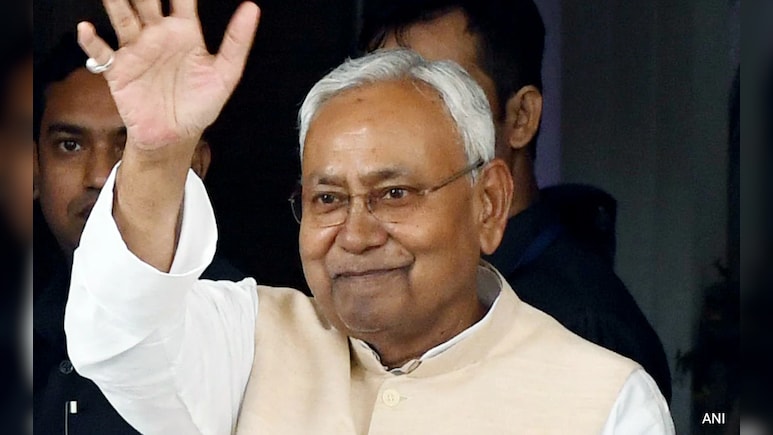
Bihar Chief Minister Nitish Kumar could be clubbed with such men in the way he played the game of politics, but falls well short in his achievements. Kumar has indicated he is hanging up his more than 20-year-old chief ministerial boots and has filed to contest the Rajya Sabha elections. Victory is almost certain as the numbers are on his side. Unlike Rao and Singh, however, Nitish will not be remembered for his impact but the promise he wasted.
Ace Of The Pack
Nitish was easily eclipsed by charismatic socialist colleagues such as Laloo Prasad Yadav and Ram Vilas Paswan in the early years. By the time he won his first election in 1985, Yadav and Paswan were veterans of legislative affairs. Belonging to the numerically weak Kurmi caste, he did not have the backing of a large community vote bank such as the Yadavs' for Laloo and Paswans' for Ram Vilas. Nor was he a rousing speaker. His relevance was always tied to the mercy of a larger, stronger political ally than his own stature. Alliance and compromise kept him in power even as he created maneuvering space in coalitions by holding on to a bare minimum set of values rooted in socialism and secularism. When he partnered with the Bharatiya Janata Party (BJP), he didn't let the party's Hindutva politics permeate deeply in Bihar. As a Rashtriya Janata Dal (RJD) ally, he kept the Yadavs, accustomed to getting their way, on a tight leash.
But over the years, his political formula evolved into an unabashed pursuit of power combined with undiluted populism. It gained him the nickname 'Paltu Ram', or flip-flopper, but helped him emerge as a leader with a loyal vote base. Over time, Nitish engineered a grassroots coalition of non-Yadav backward communities, Pasmanda Muslims, Bhumihars, and women cutting across caste and religion, which made him a winner in his own right. If he could not rule Bihar on his own, nobody else could either.
Bicycle Man
Soon after becoming Bihar's Chief Minister in 2005, Nitish's initiatives to gift bicycles to high school girl students to keep them in school is now part of political lore and a global case study in development economics emulated as far as Africa. The success of the scheme and the political dividends it paid Nitish were keenly watched by rivals and paved the way for women's empowerment, becoming central to every future election strategy and development plan.
In that first term (technically the second because he was CM for a week in 2000), Kumar focused on improving law and order in the state, earning him his other nickname, Sushasan Babu (the good governor). He set up fast-track courts, which convicted over 50,000 criminals between 2006 and 2010. A state known for rampant kidnappings and murders was suddenly safe for women to walk even at night. In 2006, Bihar became the first state to reserve half the seats in local governance bodies for women. It was also one of the early-bird states to have a separate gender budget, from 2008-09. Yet, Nitish's party, Janata Dal (United), fielded only 13 women in the 101 seats it contested in the 2025 assembly elections.
Between 2005 and 2010, Nitish picked the low-hanging fruits of governance and administrative presence in a state lounging at the bottom of the national rankings for socio-economic development. The bicycle scheme saw girls' enrolment and attendance improving, while better policing made streets relatively safer for them. A state notorious for a lack of roads saw rapidly improving connectivity, although much of it was through a centre-funded rural roads project. Nitish's cynicism was on display when he gave a party ticket to strongman Anant Singh even as his police locked up sundry criminals.
To improve its finances, the state adopted a liberal liquor policy, licensing 5,467 vends by 2012-13, up from 3,436 in 2006-07. Liquor shops in rural areas tripled from 779 to 2,360 during those five years, according to Bihar government data. Excise revenue rose more than five times in that period to Rs 2,765 crore in 2012-13. True to his nickname, 'Paltu Ram', in the run-up to the 2015 assembly elections, not only broke his alliance with the BJP and joined hands with bitter rival Laloo but also promised to prohibit alcohol in the state if he returned to power. The man who promoted liquor for revenue began virtue-signalling to woo women voters fed up with alcoholic men.
Still, A Lost Opportunity
Nitish Kumar, thus, had the chance to transform Bihar. He had built enough political equity and developed administrative chops to bring about real change. Yet, he did not. One in four working-age Bihari men is estimated to have migrated in search of jobs, and their families depend on their meagre remittances, which are said to range anywhere between 10% and 18% as a share of GSDP. Bihar's nominal per capita income rose nearly 10 times from Rs 7,914 to Rs 76,490 in the 20 years, mostly headed by Nitish as Chief Minister. In comparison, national per capita income grew from Rs 24,143 in 2005 to Rs 1,92,774 in 2025. According to the Bihar Economic Survey, 2025-26, farming and allied sectors accounted for 19.6% of gross value added (GVA) in 2019-20 and employed 49.2% of the workforce. By 2023-24, the sectors employed 54.2% of the workforce but contributed only 19.1% of GVA.
The tertiary sector, largely services, which dominates the state's economy, contributed 60.9% of GVA in 2019-20 but fell to 54.7% in 2023-24. Its share of employment dropped faster, from 27% to 22% in the same period.
When Nitish Kumar steps away after ruling Bihar for two decades, he leaves it in much the same way he found it when he got the top job in 2005 - a state largely dependent on central largesse, remittances and farming for subsistence.
(Dinesh Narayanan is a Delhi-based journalist and author of 'The RSS And The Making Of The Deep Nation'.)
Disclaimer: These are the personal opinions of the author

