






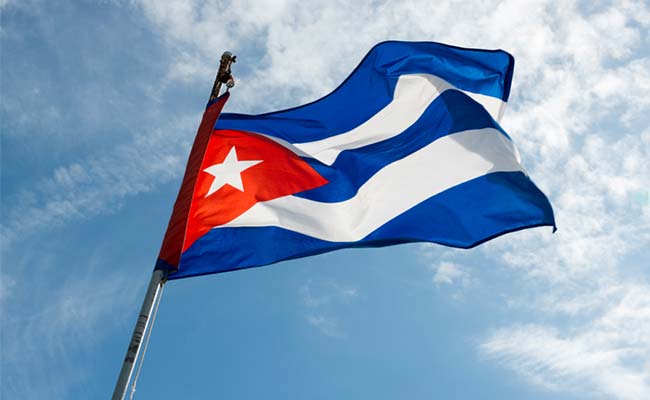
Cuba's deepening crisis represents more than the failure of an economic model-it signals a turning point in Global South politics. While attention remains fixed on the Middle East, consequential shifts are unfolding across Latin America, shaped in significant part by a more assertive U.S. policy posture that has intensified long-standing pressures on the region.
The island is facing a severe economic and energy crisis, driven by structural weaknesses and the cumulative weight of external constraints. Decades of U.S. economic embargoes-tightened in recent years-have pushed an already fragile system toward breaking point. Fuel shortages, power outages, and rising social strain reveal a system under acute stress, reflecting a wider shift in hemispheric dynamics. Cuba, long seen as an emblem of resistance to Western dominance, now confronts the practical limits of that posture.
For decades, countries such as Cuba, Venezuela, and Bolivia were romanticized across the Global South as symbols of sovereignty and defiance. Figures like Fidel Castro, Che Guevara, and Hugo Chávez occupied an outsized place in this imagination. Yet ideology and symbolism often obscured more complex realities. Cuba became a Soviet outpost during the Cold War, culminating in the Cuban Missile Crisis-the closest the world came to nuclear confrontation in that era. Economically, Cuba and Venezuela might have achieved more sustained development had they pursued more pragmatic engagement with the United States, as many in the region did.
Today, that question is no longer theoretical. The collapse of Venezuelan support, particularly in the energy sector, combined with sustained U.S. pressure, has left Cuba increasingly isolated. Early signs suggest Havana may now explore limited accommodation with Washington. Even tentative steps would mark a profound departure from decades of entrenched positioning.
If this trajectory continues, it may signal the decline of an older form of Global South politics-once anchored in ideological defiance, now yielding to the imperatives of realism. The Non-Aligned Movement and the Group of 77, once central to the moral and rhetorical architecture of the post-colonial world, are likely to see their influence further diluted in this evolving environment. An earlier era of ideological posturing is giving way to more pragmatic navigation of power and opportunity.
Yet realism does not eliminate the need for dignity. States must recognize their limitations, but major powers must also understand that humiliation can seed future instability. The experiences of Iraq, Afghanistan, and Libya illustrate how coercive or poorly managed transitions often create new crises. Similarly, the post-Cold War order-widely perceived in Moscow as dismissive of its security and status-helped shape grievances that continue to influence global geopolitics.
An instructive counterpoint is the evolution of relations between the United States and Vietnam. Despite a deeply traumatic war, the two countries today engage as pragmatic partners. This transformation underscores that even the most adversarial histories can give way to stable and mutually beneficial relationships-provided transitions are managed with foresight and respect.
How transitions are managed can be as important as the transitions themselves.
Amid this evolving landscape, India has a distinct opportunity. It is one of the few countries with credibility across the Global South and sustained engagement with the United States. This positions it to act as a bridge-engaging countries like Cuba while supporting gradual, dignified economic and political adjustment.
India's own experience-balancing strategic autonomy with pragmatic partnerships-offers a relevant template. Platforms such as the Non-Aligned Movement and BRICS will need to adapt, or be complemented by more flexible coalitions aligned with contemporary realities.
Diasporas also shape outcomes. In the United States, Cuban, Venezuelan, and Iranian communities influence domestic debates and, at times, foreign policy. India, too, must navigate the growing influence of its diaspora in key Western capitals-an asset if managed carefully, but a potential complication if not.
The manner of transition remains critical. Cuba and Venezuela must adapt with legitimacy intact. An emerging order perceived as purely coercive or dismissive will generate resistance, undermining both regional stability and broader strategic objectives. Successful transitions require early, careful engagement, guided by respect and strategic foresight.
The stakes are significant. Cuba, Venezuela, and others remain symbols of a historical narrative, but the world is moving toward a multipolar order shaped by realism, strategy, and negotiated respect. India has both the credibility and the opportunity to help guide this transition-toward a Global South that is pragmatic, resilient, and capable of asserting itself without confrontation.
The Global South is not disappearing; it is being redefined. The question is whether India and its partners will move early enough to shape that process-ensuring the emerging order reflects inclusion, pragmatism, and respect, rather than humiliation.
(Milinda Moragoda is a former cabinet minister and diplomat and Founder of the Pathfinder Foundation, a strategic affairs think tank.)
Disclaimer: These are the personal opinions of the author

