Blog | Yahya Khan To Munir, The Curious Pak Factor In Every US-China Thaw
History suggests that whenever Washington looks toward Beijing during moments of global upheaval, Islamabad finds a way back into the game.
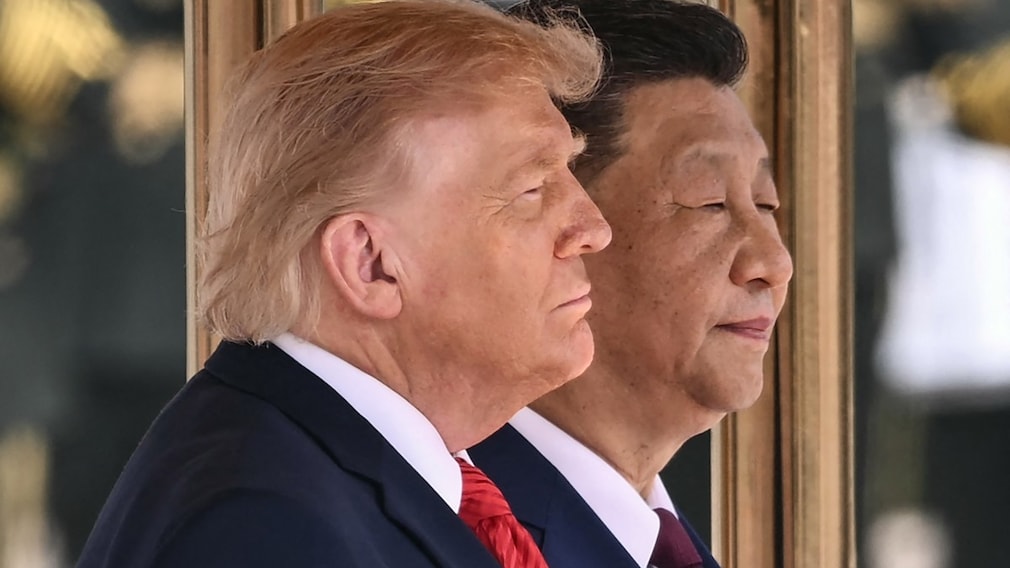
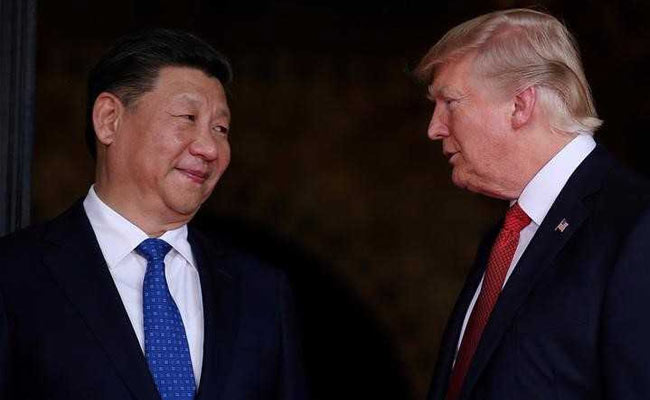
After nine years, US President Donald Trump was in China for a state visit to meet President Xi Jinping, whom he called a "great leader", marking a dramatic shift in the choice of words he generally uses for China and its President. The shift may be driven by several factors: the conflict in the Gulf, the concurrent ascent of India and decline of Europe, a widespread energy crisis, the ongoing Russian war in Ukraine, and the presence of an unpredictable American President.
The outreach, however, has also brought to mind an old geopolitical pattern: whenever Washington seeks strategic space with Beijing, Pakistan suddenly regains relevance.
The events leading to Trump's visit to China and the growing Pakistan-US ties call for comparisons with 1970. Surely, in 56 years, the global political landscape has flipped 180 degrees.
The Cold War
The Sino-Soviet split in 1961 marked a turning point in US-China relations, and US President Richard Nixon and his Secretary of State Henry Kissinger were quick to grab the opportunity; however, the problem was how to start talks. In the fall of 1970, Pakistan's military dictator General Yahya Khan agreed to act as a secret mediator between China and the US, helping Kissinger arrange a secret trip to Beijing in July 1971 in return for military aid and turning a blind eye to the genocide in East Pakistan by the army. According to an unclassified report from the US State Department and Department of Defence, the US made an exception in October 1970 to an arms embargo placed on India and Pakistan after 1965. The US "offered to sell armoured personnel carriers, and some aircraft in response to long-standing requests from Pakistan".
The US exemption for Pakistan happened around the time when Yahya Khan was secretly negotiating talks with China to bring Washington and Beijing (formerly Peking) together. In a memorandum from the US President's Assistant for National Security Affairs (Kissinger) to President Nixon on 'Arms Supply Policy for South Asia', a recommendation was made to approve Secretary of State William Rogers' advice to make a one-time exception for Pakistan and approve the sale of tanks and B-57 Canberra tactical bombers. The recommendation was approved in October 1970, when Yahya Khan visited the Oval Office. He thanked President Nixon for the sale of B-57s and a $100 million loan aid to Pakistan while it was negotiating a $125 million standby agreement with the IMF, subject to changes in its foreign exchange system.
After the 1970 elections in Pakistan, in which Mujibur Rehman's Awami League gained a majority, a civil strife began in the country, followed by a genocide. Archer Blood and American diplomat posted in the consulate in Dhaka (earlier Dacca), wrote a telegram to Nixon and Kissinger, asking them to act. Though the US imposed an embargo on the sale of lethal weapons to Pakistan, it did not ban the sale or exports to Pakistan on licenses issued on or before March 25, 1971, the day when Operation Searchlight began, resulting in the export of munitions worth $3.8 million between March and September 1971 and contracts worth $10 million.
It is a recurring phenomenon in US-Pakistan relations, which was once again observed in the aftermath of Operation Sindoor in 2025. On May 9, a day before the ceasefire, the IMF agreed to disburse a $1 billion relief package for Pakistan. Islamabad is too important to fail for the US and the rest of the world, primarily because of nuclear weapons and the presence of Islamist radicals in the country, a conundrum beautifully exploited by Islamabad. A polarised and politically fractured Pakistan threatens global stability, and, therefore, it needs to be secured.
2026 To 1970
Before heading to China, Donald Trump reaffirmed his support for Pakistan to serve as a mediator between Iran and the US after Senator Lindsey Graham, an ally of Trump, discredited Islamabad's ability to act as a mediator over news reports on how Pakistan parked Iranian jets at the Nur Khan air base. But Trump said, "Pakistanis have been great, and I think the field marshal and prime minister have been absolutely great." Last month, a US intelligence assessment said that Field Marshal Asim Munir is a red flag for the US and a liability because of his close ties with Iran's military and the IRGC.
It appears strange, but in the US-Iran conflict, Pakistan emerged as the only party that maintains close ties with both countries. The context of Trump's China visit is certainly not similar to 1970 because trade war and US sale of weapons to Taiwan are on the agenda of the 2026 meet; however, the presence of Pakistan is common.
Maleeha Lodhi, Pakistan's former Ambassador to the US and UK, summarises Islamabad and Rawalpindi's relationship with Washington. She says the "recent warmth shows that a hopeful beginning has been made for a reset in Pak-US ties, but one should avoid hastily concluding ties are on a sustainable upswing". She adds that Asim Munir and Shahbaz Sharif's approach is led by sycophany, business deals and getting in line with Trump's West Asia policy.
A thaw in US-Pakistan ties has coincided with renewed US engagement with China. Islamabad and Beijing are strong partners, and recently, both countries celebrated 75 years of diplomatic relations. Despite differences between Washington and Islamabad over the latter's support for Islamist extremists, the US has avoided labelling Pakistan a state-sponsor of terrorism, due to historical ties that go back to the 1950s. Pakistan was a key security partner of the US to counter Soviet presence in Central Asia and West Asia through defence alliances like CENTO, and later in the US's war on terror in Afghanistan.
Unlike 1970, when Washington sought rapprochement with Beijing against Moscow, today the US seeks limited engagement with China while simultaneously managing rivalry with it. Pakistan sees an opportunity in this ambiguity. The US also benefits from close ties with Pakistan because it allows Washington to balance China, even though Islamabad and Beijing continue to remain close. Secondly, it makes Pakistan a logistical asset to counter Iran in West Asia by strengthening Islamabad as a security provider to the Gulf countries.
As Lodhi pointed out, the hybrid government's approach is driven by sycophany, mineral and crypto deals with the US, joining the Board of Peace and Shehbaz Sharif sharing the stage with Donald Trump or acting as mediator in the Gulf war. Earlier this month, the US Air Force awarded a $488 million contract to Northrop Grumman to upgrade F-16s, including Pakistan's. It is the second such deal in six months. Last week, the IMF's executive board approved the review of Pakistan's reform programme, paving the way for the release of $1.32 billion in financing. However, threats to internal security, especially in mineral-rich Balochistan and a protracted conflict with Afghanistan, continue to hinder Pakistan's growth and the future of such deals.
Nonetheless, one element remains similar to 1970. Pakistan's geography has always allowed it to survive crises by making itself useful to larger powers. During the Nixon era, Pakistan's geographical position made it relevant for the US to counter the Soviets in Central Asia. In the 21st century, Pakistan has again positioned itself as a strategic intermediary, useful to Washington's China calculations while remaining Beijing's closest regional partner.
It is quite impossible for the US to counter China in Pakistan, but it can give Islamabad an option to weigh in. Whether this produces a lasting strategic reset or merely another temporary transaction remains uncertain. But history suggests that whenever Washington looks toward Beijing during moments of global upheaval, Islamabad finds a way back into the game.
(Divyam Sharma was a journalist at NDTV. He is currently studying Terrorism, Security and Society at King's College London, with a specialisation in wargaming and OSINT)
Disclaimer: These are the personal opinions of the author
-
Opinion | PM Modi Lands In UAE Amidst A Saudi 'Complication'

The UAE is getting disenchanted with Pakistan. And its rivalry with Saudi Arabia has only brought these fissures to India's doorstep.
-
Oil Companies Losing Rs 1,600 Crore Daily. Will Rs 3 Petrol Hike Be Enough?
OMCs' production costs have "gone through the roof in the past month", Petroleum Minister Hardeep Singh Puri said last month after the governemnt cut central excise taxes to ease burdens.
-
NDTV Exclusive: A Catastrophe Captured By Satellites, Ignored By The World
In Darfur, the violence that once mobilised international outrage in the early years of the civil war, has returned in a form many here insist never truly disappeared.
-
Opinion | One Person In Gandhi Family Is Smiling Over Satheesan's Kerala Win - Despite Rahul
Rahul Gandhi was seen as leaning towards Venugopal. Priyanka Gandhi favoured Satheesan, while Sonia Gandhi was more sympathetic to Chennithala. In that triangular power play, Priyanka's reading prevailed.
-
Opinion | Congress's Old Problem Is Back: Over-Confidence Without Numbers
Rahul Gandhi's recent assertion at a rally in Gurugram, that the Congress alone can defeat the BJP, is puzzling. When has arrogance ever worked for the party?
-
VD Satheesan: The Man Who Saved Congress - And Yet Almost Got Ignored For It
Satheesan's biggest achievement is not simply winning an election. It was rebuilding trust inside a broken organisation through the idea of "Team UDF".
-
Iran's Missiles Still Flying, So Is Hormuz Threat. US May Be Running Out
Reports the Iranian military is far from the spent force the Trump administration wants everyone to believe it is have been followed by news that attacks may resume.
-
Opinion | The Man Who Split AIADMK: Edappadi Palaniswami And His Politics Of Self-Sabotage
The fact that 25 AIADMK MLAs voted for Vijay and only 22 voted against the TVK government shows that Palaniswami no longer has the control of the legislature party. The writing is on the wall.
-
Opinion | The Great Gulf Divorce: The UAE Has Broken From The Arab Order - But For What, Really?
For half a century, the UAE survived by balancing Arabia, America and Iran. Now, it seems to have chosen a side.