






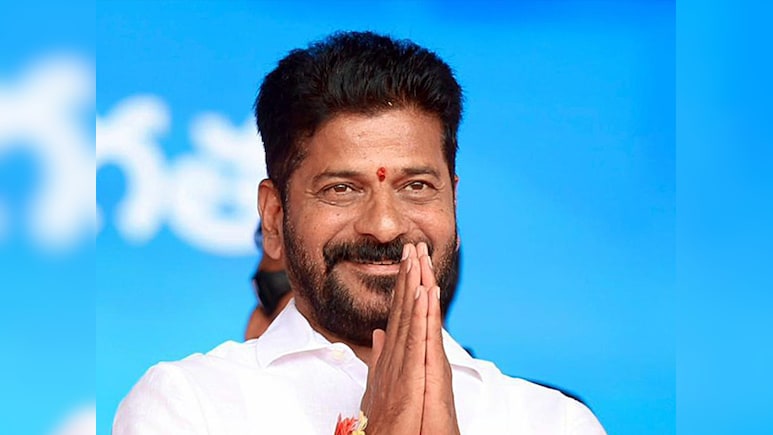
The light-hearted exchange between Prime Minister Narendra Modi and Telangana chief minister A Revanth Reddy in Hyderabad on May 10 was more than just a political banter. It reflected something Indian democracy urgently needs today - mature cooperation between the Centre and states despite ideological differences. During the event, Revanth Reddy openly acknowledged how Gujarat grew during Modi's tenure as chief minister and sought similar support for Telangana. PM Modi responded jokingly that Telangana would progress faster if Revanth "allied" with him, drawing laughter from the audience.
Behind the humour was an important message: development works best when governments stop treating governance as permanent warfare. It was also a pragmatic and positive example of functional federalism, where interpersonal relationships between a prime minister and a chief minister can overcome party divides for development of the state and its people. Other opposition-ruled states can learn from this distinction between politics and governance.
Contextualising the interaction
India's federal structure is strongest when the Centre and states work pragmatically rather than politically. Opposition-ruled states such as Punjab, Karnataka, Tamil Nadu and Kerala, often accuse the Union government of financial discrimination or political hostility. The Centre, meanwhile, frequently accuses these states of confrontation for electoral gain. While disagreements are natural in a democracy, constant confrontation hurts ordinary citizens far more than political parties.
Punjab's situation is even more sensitive. Border security, agricultural reforms, narcotics control and industrial revival require continuous Centre-state cooperation. Unfortunately, political tensions between the Union government and the AAP-led state administration have often overshadowed governance priorities. Punjab cannot afford administrative paralysis because its economic and demographic challenges are too serious. Whether it is MSP procurement, diversification beyond wheat and paddy, or reviving manufacturing in Ludhiana and Jalandhar, progress requires partnership rather than perpetual confrontation.
Karnataka too offers a lesson in disagreement. Bengaluru remains India's technology capital and contributes massively to national tax revenues. Yet repeated political disputes between the state and Centre over devolution, infrastructure funding and language issues often create uncertainty. Investors and industries value policy stability above political rhetoric. Cooperative federalism can strengthen Karnataka's position as a global innovation hub while ensuring that large-scale infrastructure projects move faster.
Meanwhile, Telangana under Revanth Reddy has attempted a relatively balanced approach. Even while criticising the BJP politically, the state government has consistently engaged with Union ministers regarding metro expansion, industrial corridors, infrastructure approvals and investment proposals.
PM Modi's Hyderabad visit itself saw projects worth nearly Rs 9,400 crore being inaugurated or launched, covering highways, railways, industry and healthcare. This demonstrates that political rivalry need not prevent administrative coordination.
Governance over friction
For the newly elected opposition ruled governments of Tamil Nadu and Kerala, Revanth Reddy's federal cooperation can be a model to be improved upon.
Tamil Nadu has one of India's strongest manufacturing ecosystems, major ports, an advanced electronics sector and a globally respected automobile industry. However, relations between the earlier DMK-led government and the Centre were excessively combative over issues ranging from NEET to language policy, GST dues, Governor-CM clashes, fiscal devolution concerns etc.
For the newly-elect TVK coalition chief minister Vijay, managing centre-state relations will be his toughest real-world political examination. Unlike campaign speeches and cinematic symbolism, governance demands negotiation, compromise and administrative maturity.
Political disagreements are legitimate, but Tamil Nadu also requires extensive central cooperation for semiconductor investment, defence corridors, freight infrastructure and climate resilience projects. A more transactional and pragmatic engagement model could help the Vijay government secure faster clearances and larger investment flows without compromising its ideological identity.
Kerala presents another example. The state frequently highlights concerns regarding borrowing limits and fiscal restrictions imposed by the Centre. Yet Kerala simultaneously depends heavily on central support for railway modernisation, coastal protection, tourism infrastructure and disaster relief. During repeated floods and landslides over recent years, coordination between state and central agencies became essential. Instead of turning every financial disagreement into a political spectacle, the new UDF chief minister needs a sustained institutional engagement mechanism to help Kerala secure long-term economic support while maintaining its political independence.
States have every democratic right to challenge the Centre on policies they disagree with. But governance should not become collateral damage in political competition.
India has historical examples proving this balance is possible. Former Prime Minister Manmohan Singh worked with BJP chief ministers including Narendra Modi during the UPA era on industrial and infrastructure expansion. Similarly, several regional leaders across decades maintained strong administrative relationships with the Centre despite electoral rivalry. India's economic rise after 1991 succeeded largely because states competed for development while still engaging with New Delhi constructively.
Today, such maturity is even more necessary because India is pursuing ambitious goals - becoming a manufacturing hub, building high-speed logistics networks, expanding renewable energy and attracting global supply chains. These objectives cannot succeed if states and the Centre operate like hostile camps.
Citizens also increasingly reward governance over rhetoric. Voters may enjoy political theatre during elections, but they ultimately judge governments on roads, jobs, investments, healthcare, transport and law and order. A chief minister who secures metro projects, industrial corridors or AI investments through cooperation with the Centre is likely to gain more public approval than one constantly engaged in symbolic conflict.
The Modi-Revanth Reddy exchange therefore mattered because it briefly normalised civility in Indian politics. In an era where political discourse often descends into personal attacks and institutional confrontation, even small gestures of mutual respect send a powerful message.
India's democracy does not require political uniformity. It requires functional federalism. Opposition-ruled states can fiercely oppose the BJP electorally while still working constructively with the Union government for development. Likewise, the Centre must ensure that national resources and approvals are not perceived as politically selective.
After all, citizens do not elect governments to fight endlessly. They elect them to govern.
(The author is Contributing Editor, NDTV)
Disclaimer: These are the personal opinions of the author

