




At 35 days old, my daughter wasn't supposed to be fighting for her life. She was supposed to be sleeping in her mother's arms, waking up for feeds, and filling our home with the cute sounds that make parenthood beautiful. Instead, she lay on an oxygen cylinder in an ambulance racing from Bandipora to Srinagar, struggling for every breath.
The doctors, on November 10, had diagnosed her with acute bronchiolitis. Her breathing was dangerously fast. At times, she appeared to choke while gasping for air. Inside the ambulance, my wife held on to hope. Behind it, I followed in my car with our 4-year-old son, watching the flashing lights cut through the highway and wondering if we would make it in time.
With every kilometre crossed, anxiety tightened its grip.
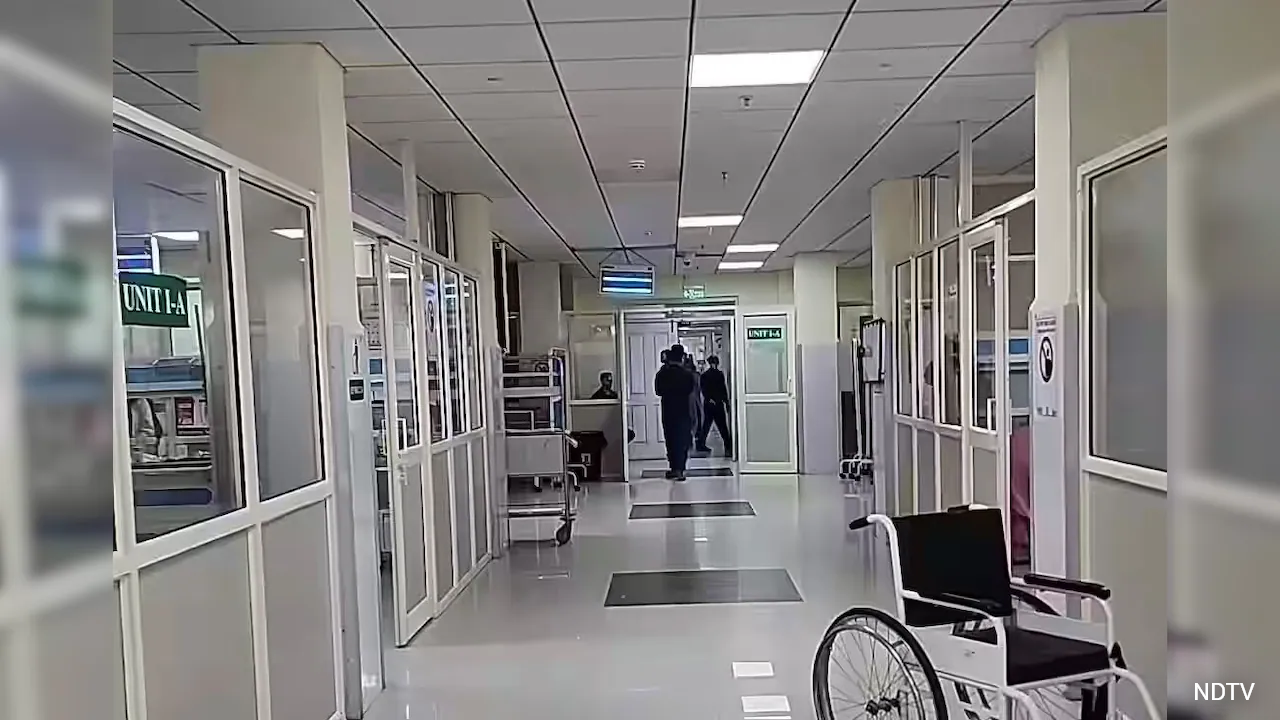
What followed were four days that would alter our understanding of fear, faith, loss and humanity forever. After reaching Srinagar, she was admitted to the casualty ward where doctors rushed into action. Oxygen support continued. Nurses moved swiftly between beds. Doctors monitored her every hour.
We waited. And waited. But her condition showed little improvement. As night deepened and the hospital corridors grew quieter, the atmosphere around us became heavier. Around midnight, doctors delivered the news every parent dreads.
She would have to be shifted to the Paediatric Intensive Care Unit (PICU). She needed high-flow oxygen support and more advanced treatment. I looked at my wife. She looked back at me. Neither of us needed words to understand what the other was feeling.
One of the PICU sections housed six beds. Six tiny patients. Six families praying for miracles. We were assigned one of those beds, and suddenly we found ourselves surrounded by battles much bigger than ours. Every monitor beep carried urgency. Every anxious parent wore the same expression of fear. Every doctor moved with quiet purpose.
The child in the bed next to ours was just three months old. He suffered from a severe heart condition. Doctors told his family that vital veins in his heart had not properly developed at birth.
His parents watched him the same way we watched our daughter. With hope. With fear. With prayers. And then, on the morning of November 12, at around 8 am, he died. Silently. The monitors stopped arguing with fate. The prayers ended. And the battle was over. I still remember holding that little child in my arms after he breathed his last. I carried him out of the PICU and handed him over to his grieving family.
It was one of the hardest moments I have ever witnessed. Yet hospitals have a strange way of teaching perspective. When you see pain greater than your own, your worries momentarily step back. You realise suffering is shared. You realise courage wears many faces.
For two nights, I barely slept. I held my daughter in my lap while lying on the narrow hospital bed beside her. The oxygen tubes, the machines, the constant monitoring, the hourly medical checks became part of our world.
High-flow oxygen, intravenous fluids, antibiotics. Every treatment available was working to help her tiny lungs fight back. But medicine alone was not carrying us through. Prayer was. Every whispered prayer. Every phone call from relatives back home. Every message asking about her condition. Every folded hand raised in hope. All of it mattered. Inside, I was terrified.
But fathers are often expected to be pillars when they themselves are trembling. I could not allow my fear to show. My wife needed someone to lean on. And in those moments, I understood that strength is not the absence of fear. It is carrying fear silently while still choosing to stand.
On November 12, doctors finally brought us the news we had been desperately waiting to hear. Her condition had improved. Not dramatically. Not completely, but enough. Enough for her to be shifted back to the casualty ward. It felt like a mountain had been lifted from our shoulders. During her stay in the PICU, doctors had taken a swab sample. The test result arrived the same day and confirmed what they had already suspected and treated her for.
She was RSV (A/B) positive. The diagnosis explained the severity of her condition but also reassured us that the treatment path had been correct from the beginning.
Back in the casualty ward, oxygen support and medications continued. Recovery had begun.
Later, during one of the senior doctors' rounds, a consultant asked us about her date of birth. We told him. He paused and then smiled. "Keep two birthdays for her now."
It was a simple sentence. Yet it revealed the gravity of what she had survived. For doctors who witness life and death every day, such words are not spoken lightly.
That comment stayed with us. Perhaps because it captured the truth better than anything else. She had been given another chance.
By November 13, our daughter was shifted to the general observation ward on the third floor, the place where recovering patients await discharge.
For the first time in days, hope felt real. The oxygen requirement reduced. Her breathing became steadier. Her feeding improved. The fear that had haunted us since home slowly began to loosen its grip. And then came the words every parent longs to hear: "You can take her home."
We returned home with our daughter in our arms. But we also brought back something else.
A lesson. Throughout our stay, we encountered extraordinary kindness. The nurses who checked on patients through the night. The ward boys who comforted anxious families. The doctors who fought relentlessly for children they had never met before. The canteen staff who made sure exhausted attendants had a meal.
Even the families of other patients who offered words of encouragement despite carrying burdens of their own.
One evening, my wife said something that perfectly captured what the hospital had taught us.
"Here you learn the true worth of humans and humanity."
She was right. In a world obsessed with possessions, status and achievements, a hospital strips life down to its essentials.
A breath, a heartbeat, a helping hand, a kind word. You realise that nothing in this world is more precious than a human life. And no quality, no success, no virtue, no achievement is greater than being a good human being.
That, perhaps, was the most important lesson our daughter gave us at just 35 days old. She fought for her breath. And in doing so, she reminded us what truly matters.
(Ejaz Ul Haq Bhat is Sub Editor, NDTV)
Disclaimer: These are the personal opinions of the author

