






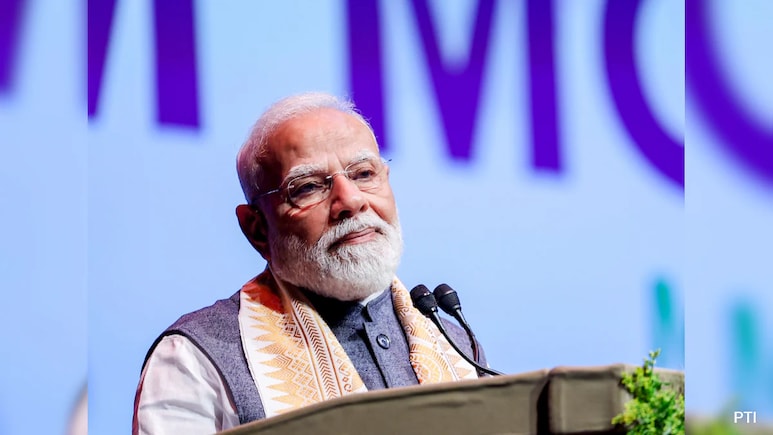
Healthcare accessibility is one of the most important investments a nation can make. A healthy population is not only essential for social well-being but also forms the foundation of economic growth, productivity, and national development. Over the past twelve years, under the leadership of Prime Minister Narendra Modi, India has undertaken one of the most ambitious healthcare transformations in its history. Guided by the vision of affordable, accessible, and quality healthcare for all, the country has strengthened its medical infrastructure, expanded healthcare coverage, advanced disease control programmes, accelerated indigenous innovation, and positioned itself as a global healthcare leader.
The story of India's healthcare transformation begins with strengthening the very foundation of the system, medical education and human resources. A robust healthcare ecosystem requires an adequate number of doctors, specialists, nurses, and healthcare professionals. Recognising this need, the Modi government embarked on an unprecedented expansion of medical education infrastructure across the country.
In 2014, India had 842 medical colleges. By 2026, that number had crossed 2,100, representing a 2.5-fold increase. This expansion has brought medical education closer to aspiring students, particularly in regions that previously lacked such institutions. The increase in opportunities has been equally remarkable. MBBS seats have risen from 51,348 in 2014 to 1.28 lakh in 2026, while postgraduate medical seats have increased from 31,185 to 85,822 during the same period. This dramatic expansion is creating a larger pool of trained medical professionals capable of serving India's growing healthcare needs and ensuring better access to quality care across urban and rural India.
Alongside building capacity, the government has focused on tackling some of India's most persistent public health challenges. Tuberculosis, which has historically imposed a heavy burden on millions of Indian families, has witnessed remarkable progress. Through a combination of early detection, widespread screening, improved treatment access, technological interventions, and community participation, India is accelerating its journey towards becoming TB-free.
The results have been striking. Missing TB cases have dropped by 93.33 percent, while TB incidence has fallen by 21 percent, twice the global pace of decline. Treatment coverage has increased dramatically from 53 percent in 2015 to 92 percent in 2024. More than 20 crore vulnerable individuals have been screened under TB control initiatives, and over 28 lakh patients have been diagnosed under the Pradhan Mantri Tuberculosis Mukt Bharat Abhiyaan. These achievements demonstrate how sustained public policy, backed by targeted interventions and grassroots outreach, can deliver measurable improvements in public health.
India's success extends beyond TB control. Diseases that once posed significant public health challenges are steadily being pushed towards elimination. In 2024, the World Health Organization declared India Trachoma-free, making it only the third country in South-East Asia to achieve this milestone. Malaria cases have declined by more than 80 percent, while malaria-related deaths have fallen by 78 percent. Building on these successes, India is now actively pursuing the elimination of tuberculosis, leprosy, lymphatic filariasis, measles, rubella, and kala-azar. These achievements reflect the strengthening of surveillance systems, public health infrastructure, preventive healthcare programmes, and last-mile healthcare delivery.
The COVID-19 pandemic presented perhaps the greatest public health challenge of modern times. Faced with protecting one of the world's largest populations, India responded with extraordinary speed, scale, and innovation. The country developed two indigenous COVID-19 vaccines in less than a year, demonstrating its growing scientific and manufacturing capabilities. More than 220 crore vaccine doses were administered nationwide, supported by one of the world's largest vaccination drives. India also achieved a remarkable record by administering more than 2.5 crore vaccine doses in a single day. The success of the vaccination campaign highlighted the power of combining scientific innovation, digital platforms, efficient logistics, and public participation.
A defining feature of India's healthcare transformation has been the rise of indigenous innovation. Increasingly, India's healthcare story is being written in its own laboratories, research institutions, and innovation centres. Significant breakthroughs have strengthened the country's ability to develop affordable and accessible healthcare solutions.
India introduced NexCAR19, the country's first indigenously developed CAR-T cell therapy for cancer, which is also among the world's most affordable CAR-T treatments. The development of India's first indigenous MRI machine promises to reduce diagnostic costs and improve access to advanced imaging technology. In 2024, Nafithromycin became India's first indigenous macrolide antibiotic developed to combat pneumonia. The Genome India Project successfully sequenced 10,000 genomes, creating a valuable foundation for precision medicine and genomic research. Furthermore, India resumed Penicillin G production after a gap of three decades, reinforcing pharmaceutical self-reliance and supply chain resilience.
Technology is also reshaping healthcare delivery. By integrating artificial intelligence into healthcare systems, India is creating new possibilities for diagnosis, research, disease surveillance, and patient care. The launch of the Strategy for Artificial Intelligence in Healthcare for India (SAHI) signalled a commitment to leveraging emerging technologies for better health outcomes. The National Federated Learning Platform is validating AI health models using data generated under the Ayushman Bharat Digital Mission. India is among the first countries in South-East Asia to adopt a national AI strategy for health. Complementing these efforts is BODH, the Benchmarking Open Data Platform for Health AI, developed by IIT Kanpur and the National Health Authority to test and benchmark AI-driven healthcare solutions. Together, these initiatives are laying the foundation for a smarter, more efficient, and data-driven healthcare ecosystem.
India's emergence as a global healthcare powerhouse is also reflected in its growing leadership in biotechnology and pharmaceuticals. Long recognised as the "Pharmacy of the World," India is now evolving into a global hub for biopharmaceutical and biotechnology innovation. Strategic investments, supportive policy frameworks, and a thriving startup ecosystem are driving this transformation.
The government has committed ₹10,000 crore towards Biopharma SHAKTI (Strengthening Healthcare and Knowledge-based Technology Innovation), aimed at accelerating research, innovation, and commercialisation in life sciences. India's bioeconomy, which stood at approximately $10 billion in 2014, has expanded to around $195 billion in 2025 and is projected to reach $300 billion by 2030. The country is now home to more than 11,800 biotech startups, making it one of the world's fastest-growing biotechnology ecosystems.
India's contribution to global healthcare remains unparalleled. The country supplies nearly 70 percent of the world's anti-retroviral medicines and between 55 and 60 percent of vaccines procured by UNICEF. Pharmaceutical exports have crossed $31 billion in FY26, reinforcing India's role as a trusted supplier of affordable medicines to countries around the world.
These achievements have been supported by sustained public investment. Recognising that healthcare infrastructure, medical education, technology adoption, and healthcare services require long-term commitment, the Modi government has steadily increased healthcare expenditure. The healthcare budget for 2026-27 stands at ₹1,06,530 crore, representing a 203 percent increase from ₹35,163 crore in 2014-15. This substantial increase reflects the government's commitment to strengthening healthcare infrastructure, expanding human resources, improving service delivery, and ensuring healthcare reaches every citizen.
At the heart of this transformation lies a growing emphasis on preventive healthcare. Rather than focusing solely on treatment, India is increasingly investing in preventing diseases before they occur. A notable example is the rollout of the HPV vaccination programme aimed at protecting young girls from cervical cancer. Under this initiative, 1.15 crore girls aged 14 years will receive free HPV vaccination through a 90-day nationwide campaign designed to achieve maximum coverage. By joining more than 160 countries that have implemented HPV vaccination programmes, India is taking a major step towards reducing the burden of cervical cancer and safeguarding the health of future generations.
Taken together, these achievements tell the story of a healthcare system undergoing fundamental transformation. Expanded medical education, stronger disease control programmes, world-leading vaccination efforts, indigenous innovation, artificial intelligence-driven healthcare, biotechnology leadership, greater public investment, and a renewed focus on preventive healthcare have collectively strengthened India's healthcare ecosystem.
The journey is far from complete, but the progress of the past twelve years demonstrates what is possible when policy, technology, innovation, and public participation work together towards a common goal. Under Prime Minister Narendra Modi's leadership, India is not merely expanding healthcare access; it is building a healthcare system that is more inclusive, resilient, future-ready, and capable of meeting the aspirations of 1.4 billion citizens. The foundation for a healthier India has been laid, and the transformation underway is shaping a future where quality healthcare is not a privilege for a few, but a right accessible to all.
Amit Malviya is the national head of BJP's Information & Technology Department and the Sah Prabhari of West Bengal
Disclaimer: These are the personal opinions of the author

