




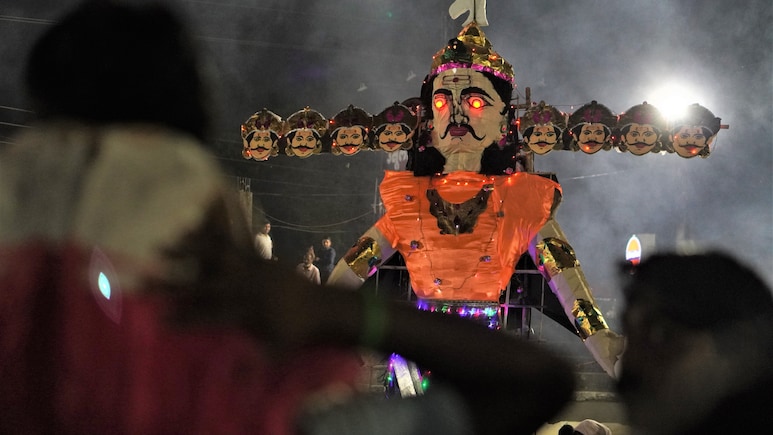
Ravan Dahan 2026: Dussehra, also known as Vijayadashami, is being celebrated across India today. The festival marks the victory of good over evil and is observed with prayers, traditional rituals and Ravan Dahan, the burning of effigies of Ravana, Meghnad and Kumbhkaran. According to Drik Panchang, the Dashami Tithi will begin at 12:50 pm on October 20 and end at 2:11 pm on October 21.
The auspicious Vijay Muhurat for New Delhi will be observed from 1:59 pm to 2:45 pm on October 20. Devotees traditionally perform Vijayadashami puja and other rituals during this period.
Ravan Dahan Timings
Ravan Dahan is a major highlight of Dussehra celebrations, with effigies burnt at Ramlila grounds and other public venues across the country. However, the timings vary by city and venue, depending on local organisers' schedules. People planning to attend the celebrations should check announcements from local Ramlila committees or event organisers for the confirmed timings and venue details.
Ravan Dahan 2026: City-Wise Vijay Muhurat
- New Delhi: 1:59 pm – 2:45 pm
- Noida: 1:59 pm – 2:44 pm
- Gurugram: 2:00 pm – 2:46 pm
- Chandigarh: 2:00 pm – 2:46 pm
- Jaipur: 2:06 pm – 2:51 pm
- Kolkata: 1:17 pm – 2:03 pm
- Mumbai: 2:19 pm – 3:06 pm
- Pune: 2:16 pm – 3:02 pm
- Ahmedabad: 2:20 pm – 3:06 pm
- Bengaluru: 2:02 pm – 2:49 pm
- Hyderabad: 1:57 pm – 2:44 pm
- Chennai: 1:52 pm – 2:39 pm
Significance Of Ravana Dahan
'Ravana Dahan' commemorates the day when Lord Ram defeated and killed the 10-headed demon king Ravana, who had abducted Sita. It marks the victory of Dharma over Adharma.'Vijay' refers to victory and 'Dashami' refers to tenth. The Hindu festival is celebrated after the end of 9-day festival Navratri. The word Dussehra is derived from the Sanskrit words "dasha" and "hara" which mean "ten" and "defeat" respectively. In Hindu mythology, it is said that the demon king Ravana had ten heads. His heads are said to represent 10 negative qualities:Kama (lust), Krodha (anger), Moha (attachment), Lobha (greed), Mada (pride), Matsarya (jealousy), Manas (mind), Buddhi (intellect), Chitta (will), Ahankara (ego). Burning them symbolizes burning these vices within us.
Spiritual Significance:
- Victory of Good over Evil: Good always wins, no matter how powerful evil seems.
- Triumph of Truth: Ram is Maryada Purushottam - truth and virtue.
- New Beginnings: It also marks the end of Navratri and the triumph of Goddess Durga over Mahishasura. It's considered auspicious to start new things.
Track Latest News Live on NDTV.com and get news updates from India and around the world

