





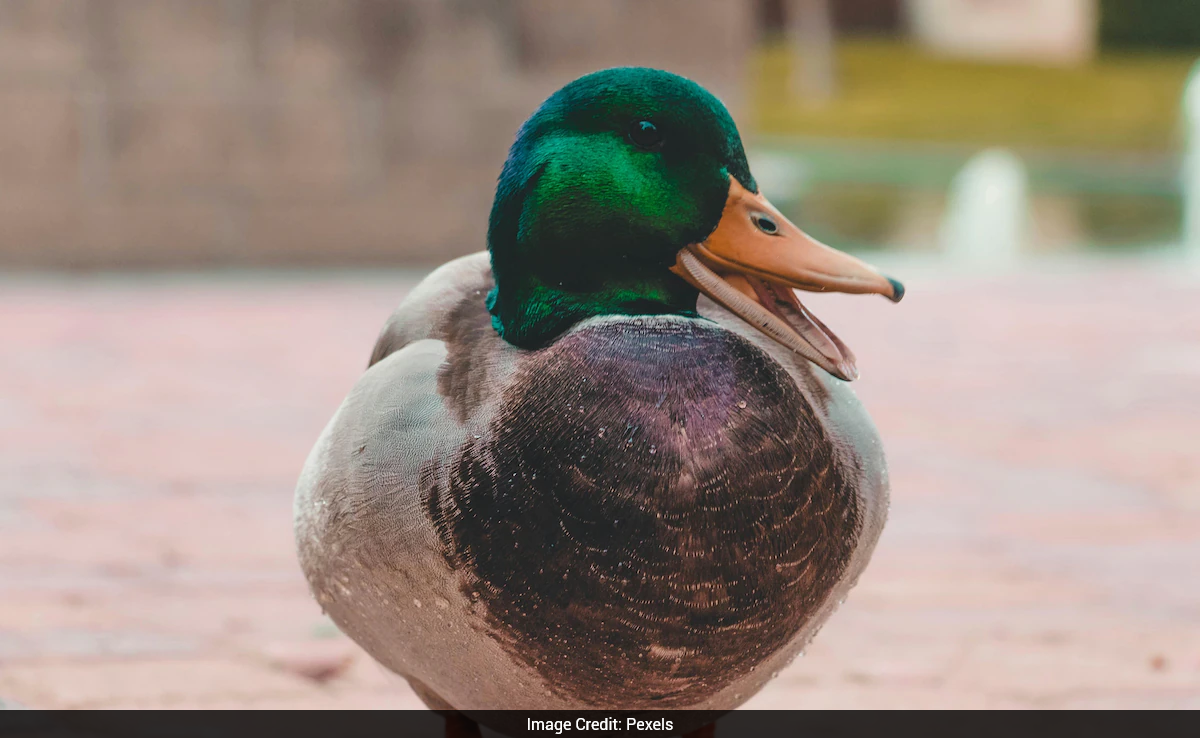
- A villager in Hunan found about 10 grams of gold in a duck's stomach in February
- The gold particles were tested and valued at around 12,000 yuan or Rs 1,65,821
- Ducks live near a gold-rich river, possibly ingesting gold-laden mud from the riverbank
A surprising discovery in central China has drawn attention after a villager found gold particles inside a duck while preparing it for slaughter. The unusual find has reminded many people of old practices related to gold collection in the region, reported the South China Morning Post.
This incident reportedly occurred in February in Longhui County, Hunan Province. A villager surnamed Liu discovered tiny gold particles inside the stomach of a duck while slaughtering it.
According to a report by the mainland media platform Xinwenfang, the particles were later burned and tested, confirming they were real gold. Their total weight was reported to be approximately 10 grams, and their value is estimated at approximately 12,000 yuan (approx Rs 1,65,821).
Liu's father described the discovery as an auspicious sign for the coming year.
According to Liu, the ducks in the village are raised outdoors and live near a river that was previously known to contain gold. He believes the ducks may have ingested mud from the riverbank, which may contain tiny particles of gold.
Experts say that the human or animal body cannot digest or absorb gold. Gold generally passes through the digestive tract without harm. However, if the gold pieces are large or contain impurities, they can cause problems such as intestinal blockage or poisoning.
Liu said that he is not the first person to make such a discovery. He said that other villagers have previously found small amounts of gold inside ducks, but none in the quantity he found.
Officials from the Natural Resources Bureau of Longhui County told Jiupai News that a professional investigation would be necessary to confirm whether these particles are actually gold.
Officials also said that such a discovery is possible in this area. They said that last year, villagers found more than 10 grams of gold while washing sand in the same river.
The county's Chenshui River flows from north to south and was once famous for its gold deposits in the area. From the 1970s to the 1990s, the river led to a surge in local gold prospecting.
The government subsequently banned private gold mining activities.
According to Chinese law, all underground resources, including minerals and cultural heritage, are considered state property. Officials told The Paper that determining the ownership of the gold found in the duck's stomach will not be easy.
This unique phenomenon also reminds some of an ancient tradition dating back to the Tang Dynasty, which lasted from 618 to 907. At that time, some farmers used to collect gold particles from the droppings of ducks and geese that had swallowed gold-rich soil.

