For decades, the big fat Indian wedding has reigned supreme. Think blinding fairy lights, heavy lehengas, endless Bollywood playlists at sangeet functions, plates piled high with food catering to different tastes, and emotions dialled up to the maximum. In India, weddings weren't just events; they were full-blown productions.
But in 2025, something unexpected happened. The wedding party broke free from the wedding itself.
Across India's biggest cities, people started showing up for the celebration - without a bride, without a groom, and without a single ritual in sight. No pheras. No family politics. No awkward small talk with distant relatives you've been avoiding like the plague. Just music, dancing, dressing up and vibes.
Welcome to the era of fake weddings - a trend that didn't just arrive quietly, but took over social feeds, party calendars, and group chats almost overnight.
The Wedding Party, Minus The Pressure
Fake weddings are exactly what they sound like: wedding-themed parties that deliver all the fun of a traditional Indian shaadi without any of the stress that comes with a real one.
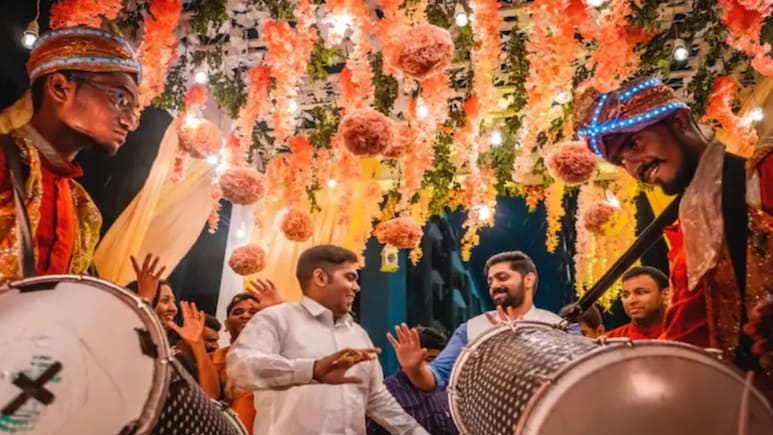
Hotels, clubs, brands and independent organisers hosted ticketed events designed to feel like a full wedding celebration. Think grand entrances, sangeet-style dance floors, dhol beats, ethnic dress codes and wedding decor that begs to be photographed.
By mid-2025, fake weddings were popping up everywhere - Delhi, Mumbai, Bengaluru and beyond. The crowd? Mostly Gen Z and young millennials, but surprisingly, not just them. Many events saw people in their 40s and beyond joining in too, all there for the same reason: to dance, dress up and enjoy the vibe.
No duties. No obligations. Just show up and celebrate.
Why Gen Z Made Fake Weddings A Thing
If there's one generation that turned fake weddings into a movement, it's Gen Z.
For them, the appeal was simple. Weddings usually come with some unsaid rules - how to behave, what to drink, when to dance, who to talk to and when to sit down. Fake weddings flipped that script entirely.
These parties offered freedom. No judgmental relatives watching from the sidelines. No whispers about outfits, weight or life choices. No pressure to perform emotional labour.
Instead, there was loud music, shared dance floors, laughter, chaos and a strong sense of community. People came with friends, partners or even solo, knowing they could just blend into the celebration.
And yes, it helped that fake weddings were extremely Instagrammable.
Aesthetic Over Everything
Let's be honest. A big reason fake weddings blew up was because how good they look.
Guests dressed in their finest ethnic wear, even if the only agenda was dancing till midnight. Decor leaned hard into wedding aesthetics: fairy lights, colourful umbrellas hanging from ceilings, and stage setups straight out of a sangeet night.
DJs played wedding classics on loop - Punjabi hits, Bollywood bangers and tracks that demand group dancing. At times, venues got so packed that moving was optional unless the music carried you.
Phones were constantly out. Mid-dance reels. Outfit checks. Group selfies. Slow-motion twirls under warm lights. In many ways, the phones became guests of honour themselves.
After all, did you really attend a shaadi if you didn't get at least one perfect reel out of it?
3Cs Of Fake Weddings: Content, Community, Culture
Fake weddings didn't just happen offline - they thrived online.
Instagram was flooded with clips of mock sangeet moments, choreographed dance entries and baraat-style madness. Content creators, designers and brand owners leaned into the trend, using these events as backdrops for fashion shoots and viral reels.
Some even arrived in groups wearing outfits from the same label, turning the dance floor into a moving lookbook.
FOMO played a massive role too. Once people saw friends attending fake weddings every other weekend, curiosity kicked in. Everyone wanted to know what the hype was about and whether it was really as fun as it looked online.
Spoiler: it was.
Brands Join The Shaadi Season
As the trend picked up pace, brands began to take notice.
Quick-commerce platform Zepto tapped into the moment with its own large-scale fake wedding celebration. Speaking about the idea, Zepto's Chief Brand Officer Chandan Mendiratta summed it up neatly, explaining that fake weddings work because they turn participation into a shared cultural moment.
"The fake wedding phenomenon has evolved from small, creator-led experiments into large-scale cultural moments because social media has turned participation into performance and community into currency.
"Given the cultural traction and creator appetite, this is only the beginning, and future editions will likely evolve into more scalable, multi-city, content-rich formats that continue to blend culture, commerce, and community without losing authenticity," Chandan told NDTV.
Social Media Couldn't Stop Talking About It
By late 2025, fake weddings were everywhere online. Instagram comments were filled with people asking, "When is the next one?"
Creators debated whether it was a passing fad or the future of party culture. Reels hit millions of views with captions asking, "Would you attend a wedding with no bride or groom?"
The answer, judging by the turnout, was a loud yes.
Fake weddings became conversation starters - something everyone had an opinion on. Some called it peak Gen Z behaviour. Others praised it for making the celebration more inclusive and stress-free. Either way, people were talking, sharing and showing up.
Is This Just A Trend Or The Future Of Party Culture?
Fake weddings hit the sweet spot between nostalgia and novelty. They kept the cultural energy alive while cutting out the pressure, making them perfect for a generation that values experience over obligation.
Will they replace real weddings? Probably not. But will they continue to exist alongside them? Almost certainly.
In 2025, fake weddings proved that sometimes, all people really want is the celebration and not the ceremony. And if that celebration comes with great music, great outfits, and zero stress, who's complaining?
Certainly not Gen Z.
ALSO READ: How Indians Made Wellness A Luxury Industry Worth 28 Billion Dollars In 2025
Track Latest News Live on NDTV.com and get news updates from India and around the world
