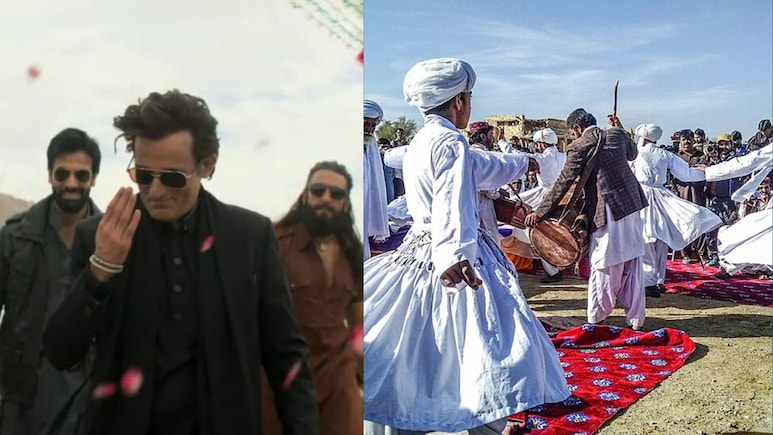
It will not be an exaggeration to say that Dhurandar's FA9LA song is now literally everywhere.
From reels to playlists, Akshaye Khanna's striking entry set to the pulsating Bahraini hip-hop track has become one of the most talked-about moments of the film.
While much has already been said about the song's infectious energy and global appeal, what has quietly slipped into the background is the powerful and beautifully portrayed dance form that accompanies it.
The Chaap Baloch dance seen in the film (twice) carries meaning, memory and a history that stretches back thouands of years.
Before diving into its long and layered past, it is worth understanding what Chaap actually means and why it matters.
What Is Chaap Dance And What It Symbolises
Chaap Baloch, also known as Balochi Chaap, is a traditional folk dance of the Baloch people from Balochistan. The word "chaap" literally means clapping in Balochi, and that action sits at the heart of the dance.
Performed in a circle, Chaap involves rhythmic clapping combined with coordinated movements of the feet, head and torso. Dancers move in perfect sync to the beat of traditional instruments like the dhol, sorna and nar sur. Men and women usually perform in separate circles, each group reinforcing a strong sense of collective identity.
Symbolically, the circular formation represents equality and unity. No single dancer leads from the front. Everyone moves together, claps together and responds to the same rhythm. The clapping itself is a metaphor for endurance and resilience, echoing the shared struggles and strength of the Baloch people. Today, Chaap is widely performed at weddings, festivals and cultural gatherings, making it a sign of joy, brotherhood and pride.
Different variations such as Do-chapi (two claps), Se-chapi (three claps) and Char-chapi (four claps) add layers of rhythm and meaning, but the core idea remains the same. Togetherness above all else.
From War Signal To Celebration
What makes Chaap particularly fascinating is how dramatically its purpose has evolved. Long before it became a celebratory dance, Chaap was a war ritual.
In ancient Baloch society, tribes performed Chaap to boost people's morale before battle. The synchronised clapping and movement were meant to strengthen unity among warriors and instill courage.
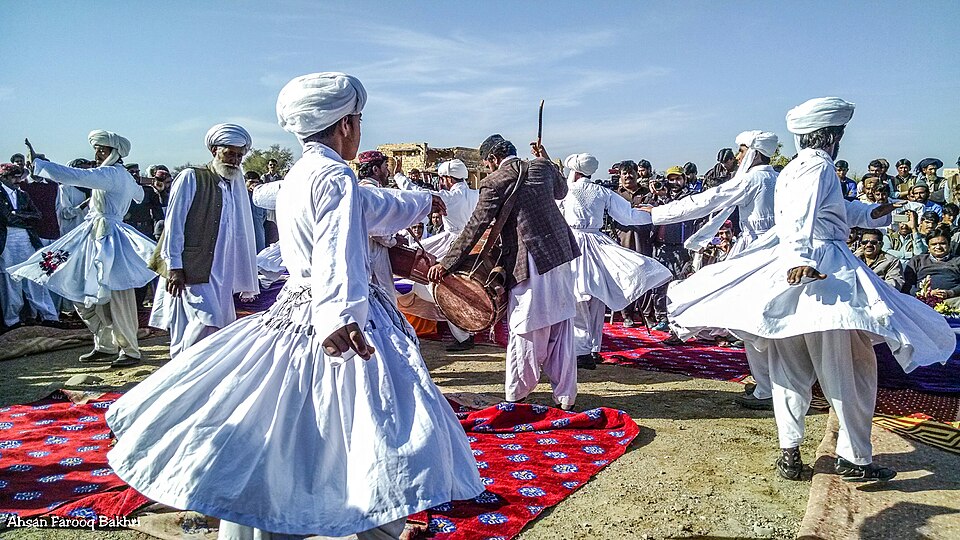
Chaap's purpose has evolved over time. Photo: Wikicommons
According to Balochi oral traditions, Chaap also functioned as a signal. When one tribe performed it, the sound and rhythm acted as a message to neighbouring tribes that warriors were on the move. It was both encouragement and communication rolled into one powerful collective act.
A YouTube video explains how Chaap once served as a clear sign of impending conflict, while simultaneously reinforcing brotherhood among those who performed it.
So, when Akhsaye goes to meet the Baloch leader, he is "welcomed to the tribe" with this dance.
Over time, as tribal conflicts faded and societies evolved, Chaap shed its association with war. What remained was the spirit of unity.
The same movements that once prepared men for battle were reimagined as a way to celebrate life's milestones. Weddings replaced warfields, and festivals replaced battlegrounds.
A History That Goes Back Thousands Of Years
Even though the exact history of the Chaap dance is difficult to trace, some say the roots of Chaap Baloch are believed to date back to pre-Islamic times. Balochi folklore often links its origins to the era of King Yama, placing the dance firmly in ancient history. Regions such as Makran and Chaghi are frequently mentioned in oral accounts as early centres where Chaap was performed.
Balochi traditional dance is called Dho Chapi , the famous “double clapping” dance of Baloch culture.
— Shahaan Baluch (@Shahaanbaloch95) December 12, 2025
It was also shown in the #Dhurandhar movie.
Baloch have a completely distinct culture, identity and lifestyle from Pakistan.
While Pakistan is only around 70 years old, the… pic.twitter.com/jtEYFKr5S9
By the early 20th century, Chaap began appearing in ethnographic records. Works like Customs of the World from around 1913 describe men forming circles, clapping in unison and moving rhythmically during communal gatherings. These written accounts helped cement Chaap's place as a cornerstone of Baloch cultural life.
Today, the dance continues to be passed down from generation to generation and is still predominantly performed by men as a symbol of brotherhood and collective pride.
READ MORE: Why Akshaye Khanna's Viral Dhurandhar Song With Bahraini Roots Became A Hit
Track Latest News Live on NDTV.com and get news updates from India and around the world
